 Whalesbook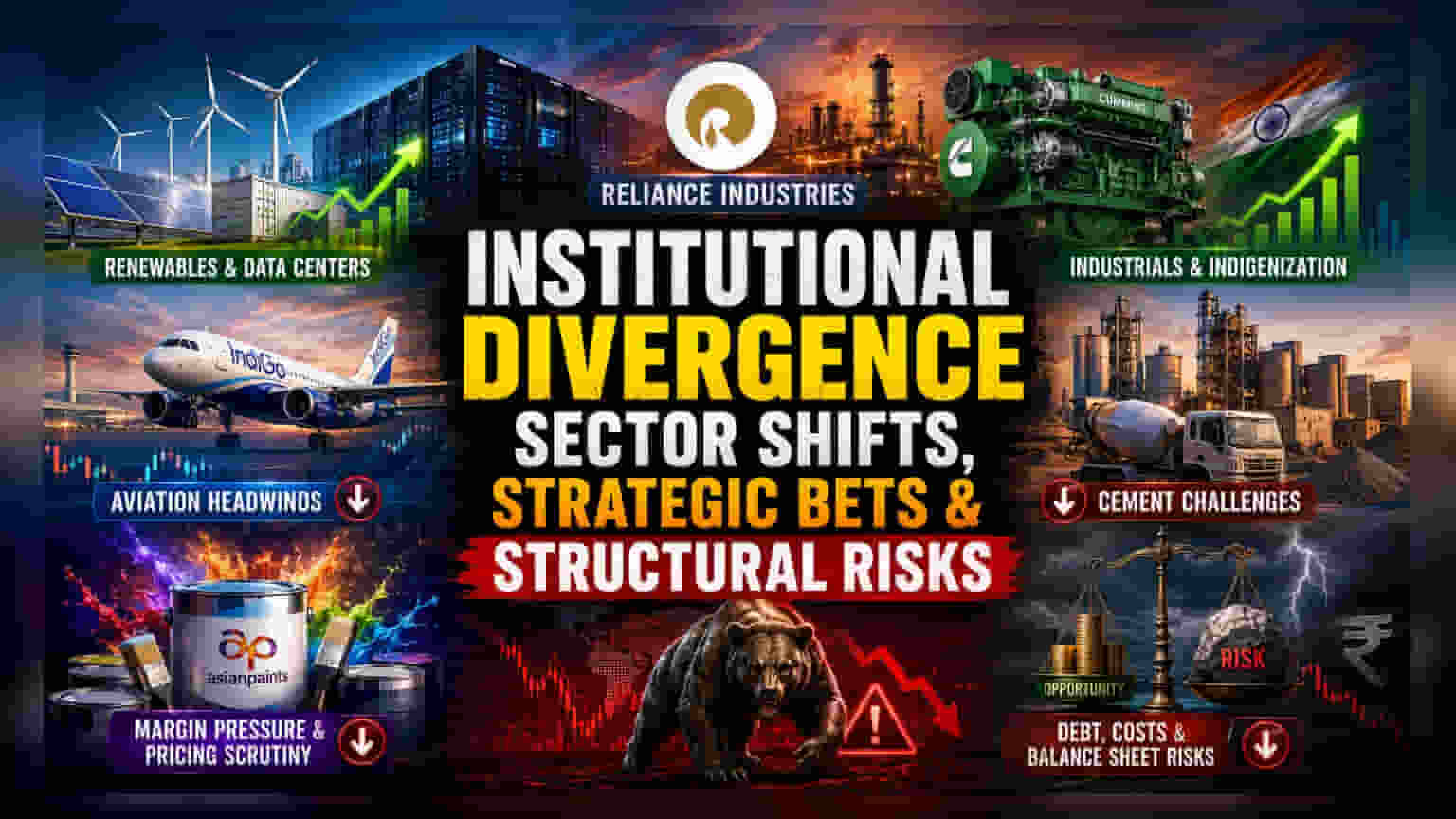


The Institutional Divergence
Recent equity research updates reveal a calculated divergence among institutional investors regarding the Indian market. While capital allocation into renewable energy and data center infrastructure is accelerating, the underlying structural risks in aviation and cement manufacturing continue to invite scrutiny. Investors are shifting focus from top-line revenue expansion to the sustainability of operating margins and the efficacy of debt management, particularly as high-cost environments pressure the bottom line for service-heavy sectors.
Strategic Shifts in Heavy Industry and Tech
Reliance Industries remains a primary focus for long-term capital, with recent analyst commentary emphasizing the integration of green energy initiatives with massive existing infrastructure. The strategic pivot toward a 1GW data center capacity effectively positions the firm as a proxy for the broader digitization of the Indian economy. However, the financial reality remains tethered to the balance sheet, where roughly 30% of debt obligations are set to cycle within the next twelve months. While current funding costs are forecasted to trend downward, the efficacy of the massive capital expenditure toward battery gigafactory operations remains the ultimate test of long-term solvency and market leadership.
Simultaneously, the industrial sector is seeing a massive valuation re-rating, particularly for firms like Cummins India. The shift in outlook from major brokerage houses centers on the democratization of data centers and the move toward domestic supply chain independence. By increasing the indigenization of high-content engine components, the firm is effectively hedging against currency fluctuations and import dependency, a strategy that has prompted significant target price revisions upward.
The Aviation and Cement Paradox
Interglobe Aviation, operating under the brand Indigo, continues to dominate the domestic market despite persistent headwinds. The narrative of 'buying the dip' relies heavily on the firm's ability to maintain a superior cost-per-seat metric compared to its peers. Yet, the aviation sector faces a structural bottleneck; while Indigo remains profitable, the wider market environment suffers from acute capital strain and high operating costs. Analysts are increasingly wary of how long such a cost advantage can be maintained in an environment where fuel prices and airport fees remain volatile.
Conversely, the cement industry displays signs of stagnation. The case of Heidelberg Cement India highlights the dangers of limited capacity expansion. With utilization rates hovering at near-peak levels and a lack of aggressive expansion, the firm faces a critical disadvantage against competitors who are scaling up. The risk of market share erosion is no longer theoretical but reflected in cautious 'reduce' ratings that prioritize companies with more flexible production capabilities.
The Forensic Bear Case: Structural Risks
Beyond the optimistic target prices, the institutional landscape harbors significant structural risks that investors cannot ignore. For Asian Paints, while recent EBITDA performance provided a short-term boost, the reliance on 11% price increases to drive realizations suggests a lack of volume-driven organic growth. Furthermore, the 3-4% margin drag expected from product mix changes signals that the company is struggling to maintain its premium status in a price-sensitive market. Regulatory scrutiny over pricing power, combined with intense competition in the decorative paints segment, limits the room for further margin expansion. Investors should remain cautious that current buy ratings may be predicated on peak-cycle performance that is increasingly difficult to replicate in the upcoming fiscal year.