 Whalesbook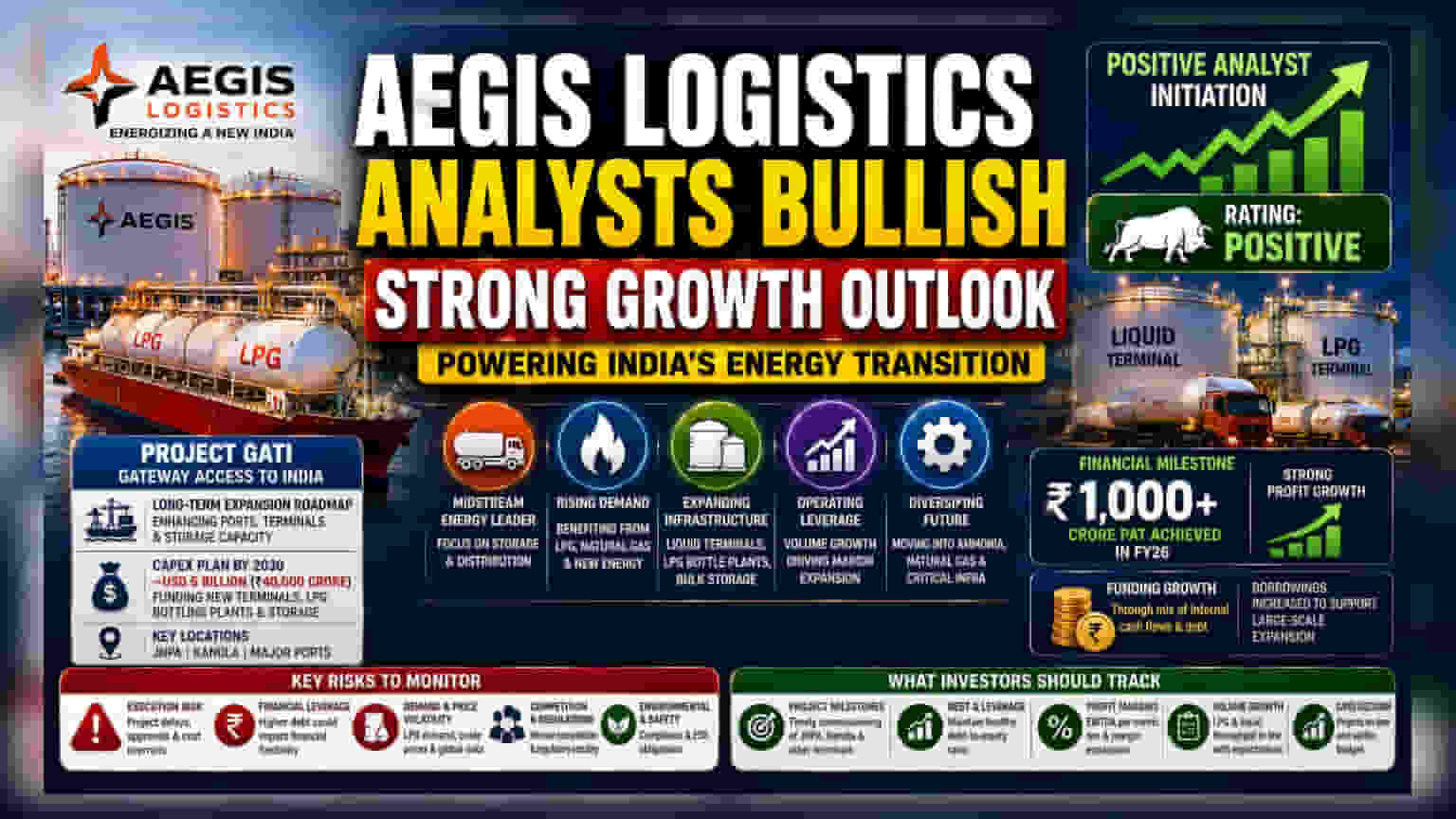
Analysts have started coverage on Aegis Logistics with a positive outlook, highlighting its infrastructure expansion and energy sector growth. While the company's long-term Project GATI targets major capacity increases, investors should also watch the resulting debt levels and project execution timelines.
What Happened
Analysts have recently initiated coverage on Aegis Logistics with a positive rating, citing a strong growth outlook for the company. The research reports highlight the firm's strategic focus on India's energy transition, specifically its expanding infrastructure for LPG (Liquified Petroleum Gas) and bulk liquid handling. The core of this growth story is the company’s long-term expansion roadmap, known as Project GATI, which aims to significantly enhance port operations and storage capacities across the country.
Why This Matters For Investors
Aegis Logistics acts as a midstream player in the energy sector, meaning it focuses on the storage and distribution of fuels rather than production. The positive analyst view is largely built on the idea that as India’s demand for cleaner energy sources like LPG and natural gas grows, Aegis is well-placed to benefit. The company has invested heavily in creating a network of terminals across major ports. For investors, the main interest lies in whether this infrastructure can translate into sustained volume growth and higher profit margins, especially as the company pivots toward new energy segments like ammonia and natural gas storage.
The Growth Strategy and Project GATI
The company’s expansion strategy, often referred to as Project GATI (Gateway Access to India), is an ambitious long-term plan. Reports indicate the group is targeting a massive, multi-year investment, aiming for a cumulative capital expenditure of approximately USD 5 billion (roughly ₹40,000 crore) by 2030. This spending is intended to fund the development of new liquid terminals, LPG bottling plants, and storage facilities at key locations like JNPA and Kandla.
However, this scale of spending is significant for a company of this size. Investors should understand that this is not a short-term project but a multi-year effort that will be funded through a mix of internal cash generation and debt. The success of this strategy depends heavily on the company's ability to complete these projects on time and within budget, without allowing interest costs to spiral.
Financial and Execution Context
Aegis Logistics recently reached a financial milestone, crossing ₹1,000 crore in annual profit after tax for the first time in FY26. While profit growth has been robust, the company has also increased its borrowings to fund these expansion plans. As of the recent financial reports, total borrowings have risen to support the capital expenditure needs.
Analysts often point to 'operating leverage' as a key driver here. This means that as the company completes its new terminals and volume throughput increases, the cost of running the business does not rise as fast as revenue, potentially leading to better profit margins. Investors should track whether the company can achieve this expected margin expansion while managing the debt taken on to build these assets.
Risks and Concerns
While the growth potential is clear, there are specific risks that shareholders should monitor. First is the execution risk: large infrastructure projects often face delays due to regulatory approvals, environmental clearances, or supply chain issues. Any delay can push back the revenue contribution from these new assets.
Second is financial leverage. The company’s move to use debt to fund massive expansion means that any slowdown in demand for LPG or liquid storage could make it harder to service that debt. Additionally, the company faces sector-specific challenges, including global raw material price volatility and competition from other logistics and terminal operators. Regulatory and environmental policies regarding hazardous materials also remain a constant factor for the business.
What Investors Should Track
Moving forward, the primary monitorables for investors will be the progress of the projects under Project GATI. Key updates to look for include:
- Project Milestones: Are the new terminals at JNPA and Kandla being commissioned on schedule?
- Debt Levels: Is the company able to maintain a comfortable debt-to-equity ratio as it continues its capital spending?
- Profit Margins: Is the EBITDA per metric ton actually increasing as projected by analysts?
- Demand Trends: Are LPG and liquid distribution volumes growing in line with expectations?
Investors should keep these factors in mind, as the long-term potential of the company remains tied to its ability to turn these large investments into steady, profitable operations.