

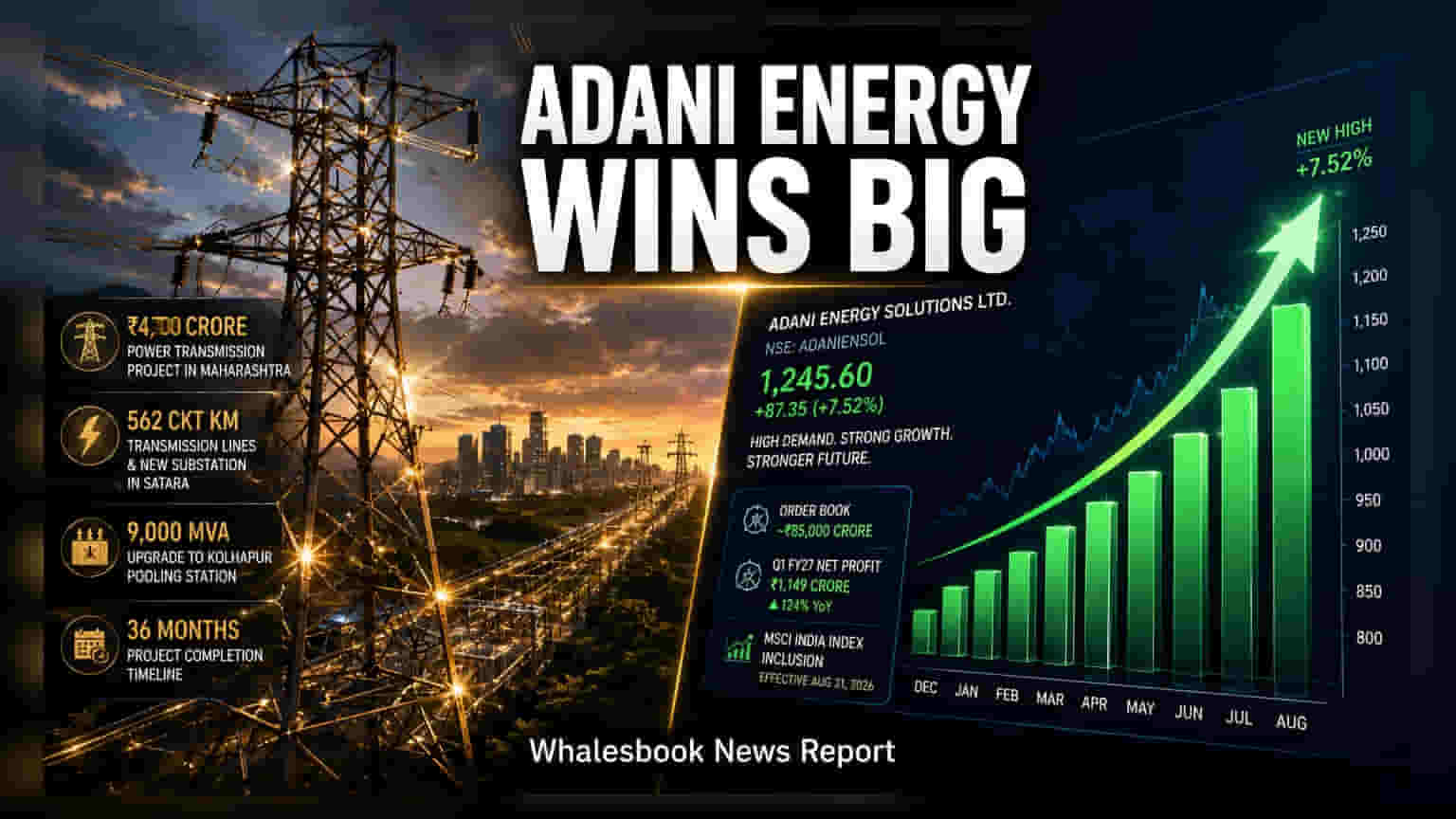
Adani Energy Solutions has secured a ₹4,700 crore transmission contract in Maharashtra to support renewable energy infrastructure. This win pushes the company's total transmission order book to ₹85,000 crore. Investors may monitor the 36-month project timeline and the company's upcoming inclusion in the MSCI India Index.
Adani Energy Solutions Ltd. (AESL) has secured a major power transmission project in Maharashtra valued at approximately ₹4,700 crore. The contract was awarded through the Tariff Based Competitive Bidding (TBCB) process, where the company emerged as the lowest bidder. This infrastructure development is intended to create a critical link for evacuating renewable and pumped-storage power from Karnataka to key load centres in Maharashtra, including the Mumbai Metropolitan Region, Pune, and Satara.
Project Scope and Timeline
The project involves the construction of 562 circuit kilometres of transmission lines and the establishment of a new substation in Satara. Additionally, the scope includes an upgrade to the Kolhapur pooling station to enhance transformation capacity by 9,000 MVA. The company has set a 36-month timeline for the completion of this infrastructure. This project is vital for the state's energy grid, as it connects renewable generation assets to industrial clusters that have high electricity demand.
Order Book and Financial Context
With this new contract, Adani Energy Solutions has expanded its total transmission order book to approximately ₹85,000 crore. This growth in order inflow complements the company’s recent financial performance. In the first quarter of FY27, the company reported a net profit of ₹1,149 crore, marking a 124% increase compared to the same period in the previous year. The consistent addition of new transmission projects remains a primary driver for the company’s revenue growth, as it continues to expand its footprint in the national power grid.
In addition to the operational news, the company is set to be included in the MSCI India Index effective August 31, 2026. Such index inclusions often attract attention from global institutional investors, which can influence liquidity and trading patterns in the stock.
Risks and Execution Factors
While the order book provides visibility, investors should be aware of the inherent risks associated with such large-scale infrastructure projects. The 36-month execution timeline carries the risk of potential delays, which can affect project costs and profitability. Furthermore, the TBCB process is highly competitive, which may sometimes lead to tight bidding margins, putting pressure on overall project returns. Success for this project is also dependent on the timely completion of the linked renewable energy and pumped storage projects that it is designed to serve. If those generation projects face delays, the utilization of this new transmission infrastructure could be impacted. As with any infrastructure-heavy business, the company’s ability to manage debt levels while simultaneously funding large capital expenditures remains a key factor for long-term monitoring.