 Whalesbook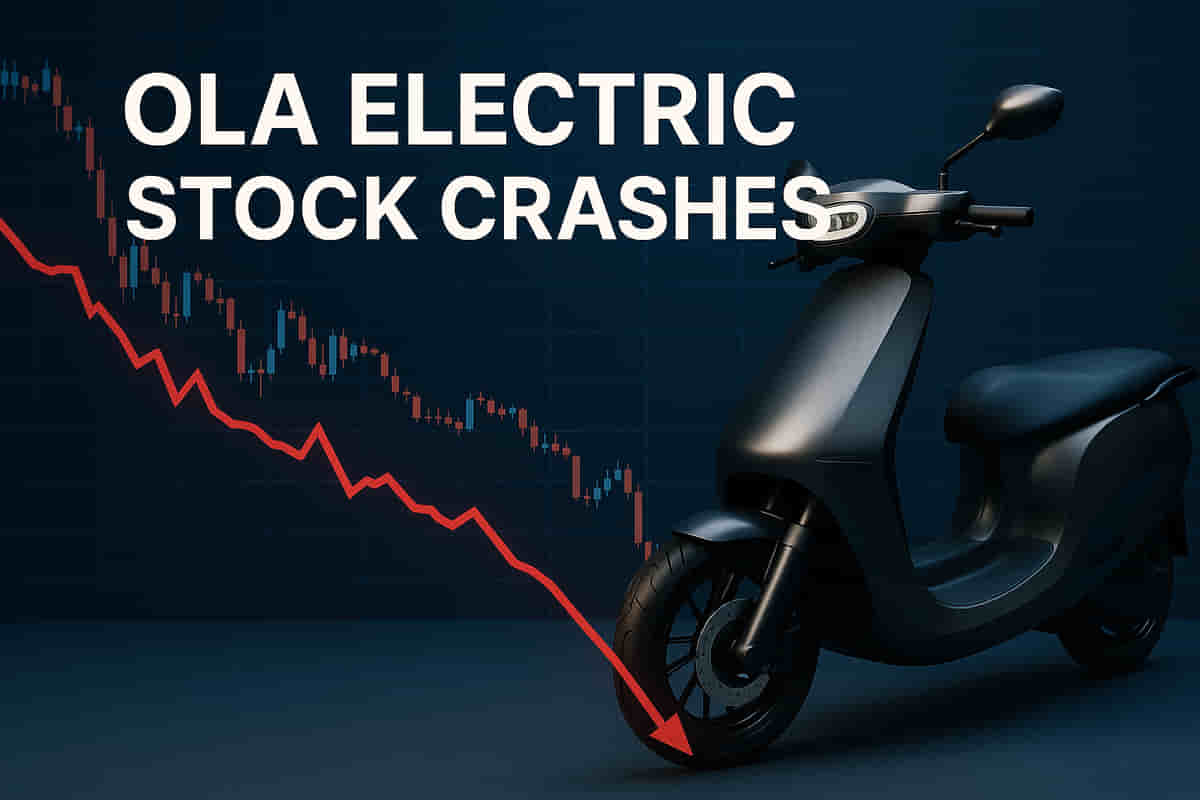


Ola Electric Shares Hit Fresh All-Time Low Amid Investor Woes
Ola Electric, a prominent player in the electric vehicle market, is currently experiencing a severe downturn in its stock performance. The company's shares touched a fresh all-time low of INR 33.81 during intraday trading on the BSE today, marking a significant 4.76% decline. This fall brings the total depreciation to approximately 55% from its Initial Public Offering (IPO) price of INR 76, which was set when the company went public in August 2024.
Stock Price Movement
- Ola Electric's stock fell 4.76% to INR 33.81 during intraday trading on the BSE.
- This represents an all-time low for the company's shares.
- The current price is about 55% lower than its IPO price of INR 76.
- At 12:42 IST, the shares were trading 4.31% lower at INR 33.97.
- The company's market capitalization stood at INR 14,996 crore (approximately $1.8 billion).
- On a year-to-date basis, the stock has seen a drastic fall of nearly 60%.
Reasons for Decline
- The stock's sharp decline is attributed to several factors, including high operational losses.
- Regulatory challenges have also weighed on investor sentiment.
- A noticeable decrease in Ola Electric's market share within the electric two-wheeler (E2W) segment has contributed to the downturn.
Investor Sentiment and Exits
- Major investors have been reducing their stakes, signaling a lack of confidence.
- Last week, early backer Z47 (formerly Matrix Partners) reportedly exited the company, with its stake no longer appearing in the shareholder list for the September 2025 quarter.
- Z47 had held a 1.93% stake at the end of the June quarter.
- Both Z47 and Tiger Global diluted their holdings in the first quarter of FY26.
- In September, Japanese investor SoftBank also decreased its stake by selling 9.4 crore equity shares, representing a 2.15% holding.
Financial Performance
- Despite the stock market struggles, Ola Electric has managed to narrow its net loss.
- For Q2 FY26, the net loss was reduced by 15% to INR 418 crore, down from INR 495 crore in the corresponding quarter last year.
- However, the company's revenue experienced a significant drop.
- Revenue declined by 43% to INR 690 crore in Q2 FY26, compared to INR 1,214 crore in Q2 FY25.
Company's Strategic Shift and Developments
- Amid declining E2W sales, Ola Electric is pivoting its focus.
- The company is now emphasizing battery energy storage systems for both residential and commercial applications.
- Shareholders recently approved a plan to raise up to INR 1,500 crore.
- Funds will be used to ramp up its cell business, expand battery energy storage systems, strengthen post-sales production, and support new product development.
- Mass deliveries of EVs powered by its in-house produced 4680 Bharat Cell have commenced.
- The S1 Pro+ is the first product to feature the 4680 Bharat Cell battery pack.
Management Changes
- Ananth Sankaranarayanan resigned as a non-executive independent director last week.
- He cited increasing professional commitments as CEO and founder of Mensa Brand Technologies Ltd.
- Ola Electric has appointed Navalur Dattatreya Singh Shashank, co-founder and CEO of Practo, as his replacement.
Impact
- The continued sharp decline in Ola Electric's stock price significantly impacts its existing shareholders, leading to substantial paper losses.
- It may also affect investor confidence in the broader Indian EV and startup ecosystem, potentially making future fundraising more challenging.
- The company's strategic shift towards battery storage could signal a diversification trend within the EV sector.
- Impact Rating: 7/10
Difficult Terms Explained
- BSE: Bombay Stock Exchange, one of India's leading stock exchanges.
- Intraday Trading: Buying and selling of a security on the same trading day.
- IPO: Initial Public Offering, the process by which a private company first sells shares to the public.
- Market Capitalisation: The total market value of a company's outstanding shares.
- Year-to-date (YTD): A period from the beginning of the current calendar year to the present.
- VC Firm: Venture Capital firm, a type of private equity firm that invests in startups and small businesses with long-term growth potential.
- Diluted their stakes: Reduced their ownership percentage in a company by issuing new shares or selling existing ones.
- E2W: Electric Two-Wheeler, such as scooters and motorcycles.
- Battery Energy Storage Systems: Technologies that store electrical energy generated from renewable sources or the grid for later use.
- Equity Shares: A type of security that signifies ownership in a corporation.
- Non-executive Independent Director: A board member who is not involved in the day-to-day management of the company and has no significant financial ties to it, providing objective oversight.
- Net Loss: The total expenses of a company exceed its total revenues over a period.
- Revenue: The income generated from the normal business operations of a company.