 Whalesbook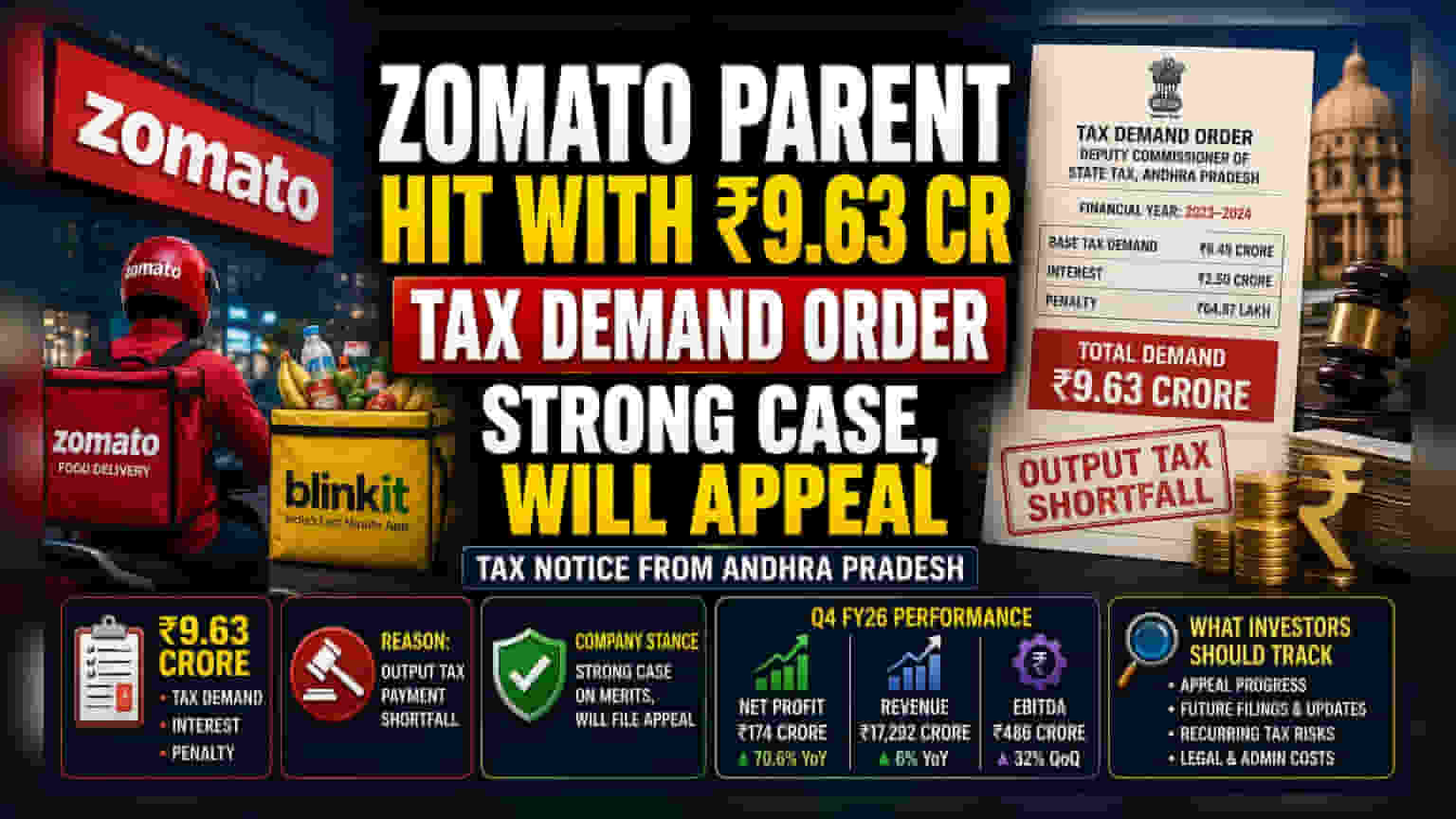


Zomato's parent company has received a ₹9.63 crore GST demand order from Andhra Pradesh authorities for the 2023-2024 period. While the company is reporting strong financial growth, including a 70.6% rise in quarterly net profit, investors should watch how the ongoing regulatory and tax disputes affect the business. The company plans to file an appeal to contest the order.
What Happened
Zomato’s parent company, which manages the food delivery platform and the quick commerce business Blinkit, has been served a tax demand order by the Deputy Commissioner of State Tax in Andhra Pradesh. The total demand amounts to ₹9.63 crore. This sum covers tax liabilities, interest, and penalties related to the financial year 2023-2024. Specifically, the order includes a base tax demand of ₹6.49 crore, along with ₹2.50 crore in interest and a penalty of ₹64.87 lakh. The authorities have flagged a shortfall in output tax payments as the reason for this demand.
Why This Matters For Investors
For shareholders, regulatory and tax notices are a standard part of doing business for large, multi-state companies. However, they represent a recurring operational risk. When a company is asked to pay a significant tax amount, it can lead to uncertainty regarding future cash flows if the company is unsuccessful in its legal arguments. The company has stated it believes its case is strong on merits and will file an appeal with the appropriate authorities. This means the legal process is likely to be ongoing for some time, and the final financial impact will depend on the outcome of these proceedings.
Financial Performance Context
This tax development comes at a time when the company is reporting robust financial growth. In its latest quarterly results for the fourth quarter of fiscal year 2026, the company posted a net profit of ₹174 crore, which is a 70.6% increase compared to the previous year. Revenue also grew, reaching ₹17,292 crore for the quarter, reflecting a 6% rise. Additionally, the company saw its operating profit, or EBITDA, grow by 32% quarter-on-quarter to ₹486 crore. While the ₹9.63 crore GST demand is a notable figure, it is relatively small when viewed against the company’s recent quarterly profits. However, investors often track these tax disputes to understand the company's compliance health and how much management time is being spent on legal matters.
How Investors May Read This
In the digital platform and quick commerce sectors, companies often face complex tax interpretations regarding how their services are classified and taxed across different states. Investors should look at this news as a reminder of the regulatory environment in which the company operates. It is not uncommon for large platforms to face such scrutiny, and companies frequently use the legal appeal process to clarify these tax liabilities. The fact that the company has publicly expressed confidence in its legal standing and plans to contest the order suggests management does not currently view this as a material threat to the overall business model.
What Investors Should Track
Going forward, the most important development to monitor is the progress of the legal appeal. Investors should watch for any future filings that provide updates on the status of this case or any potential changes in how the company accounts for similar tax liabilities. While the immediate financial impact of this specific demand appears manageable given the company's profit levels, persistent tax issues or similar demands from other states could potentially increase the administrative burden and legal costs for the business over the long term.