

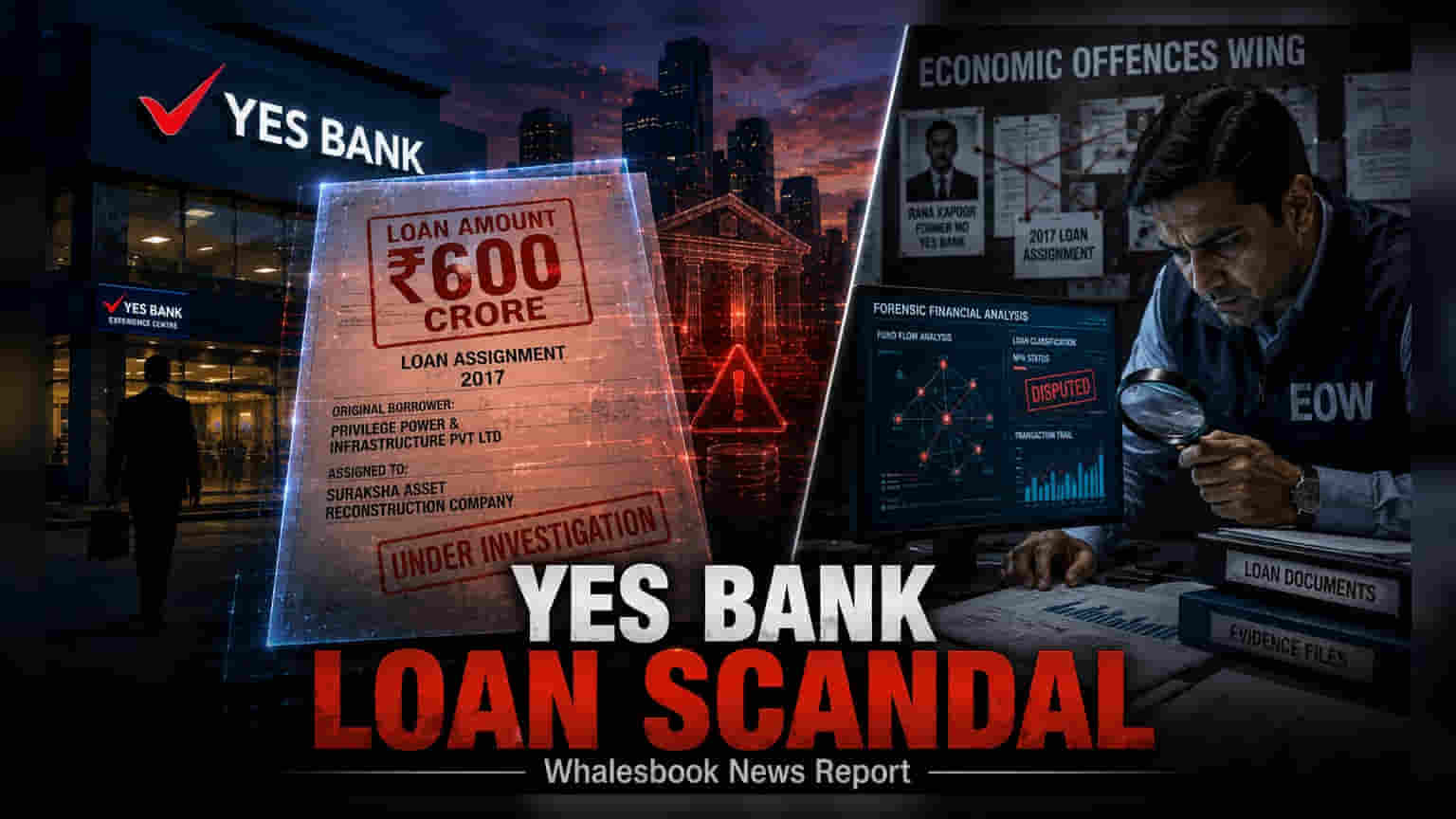
A fresh complaint filed with the Mumbai Police's Economic Offences Wing has brought a 2017 loan assignment between Yes Bank and Suraksha ARC under investigation. The case highlights ongoing regulatory scrutiny into legacy lending practices from the bank's past. Investors are watching how these lingering legal issues and potential asset recovery challenges might impact the bank’s ongoing transformation.
The Mumbai Police's Economic Offences Wing (EOW) is currently reviewing a fresh complaint concerning a Rs 600-crore loan assignment involving Yes Bank. The dispute centers on a transaction from 2017, where a loan originally extended to Privilege Power and Infrastructure Pvt Ltd (PPIPL) was transferred to Suraksha Asset Reconstruction Company (Suraksha ARC).
The complaint was filed by Rakesh Kumar Wadhawan, a suspended director of PPIPL. It challenges the legal and financial process of this transfer, specifically questioning how the loan was valued and classified before it was sold to the reconstruction company. The allegations include claims that the loan was not properly classified as a non-performing asset (NPA) at the time of the assignment, and it raises concerns regarding the bidding process and the funding structure used for the transaction.
For investors, this news serves as a reminder of the regulatory overhang that has persisted due to the bank's legacy book. While the current leadership team has focused on cleaning up the balance sheet and improving risk management, the bank continues to navigate the legal fallout of lending decisions made during the tenure of former MD Rana Kapoor. The Enforcement Directorate (ED) has been conducting broader, separate investigations into various loan assignments and alleged circular fund movements from that period, with several entities and individuals linked to these historic transactions currently under scrutiny.
This specific EOW complaint adds another layer of complexity to the bank's efforts to resolve stressed assets. The primary risk for shareholders involves potential litigation costs and uncertainty regarding the final recovery value of these legacy loans. If regulatory bodies or courts find that these past assignments were conducted improperly, it could lead to further probes or challenges to the validity of the debt transfers.
However, it is important to view these developments in the context of the bank's broader operational changes. In recent years, Yes Bank has made efforts to strengthen its governance and capital structure. A significant highlight for the bank has been the entry of Sumit Mitsui Banking Corporation (SMBC) as a 24.9 per cent stakeholder. Management has consistently stated in investor presentations and annual meetings that this partnership is part of a larger strategy to improve internal risk controls, credit underwriting, and overall governance standards, effectively distancing the current entity from the practices of the past.
Investors should monitor how the EOW and other investigative agencies progress with these inquiries. The key monitorable will be whether these legacy disputes result in any material financial liability or if they remain confined to past transactions that have already been largely provisioned for by the bank. Future updates from the bank on the status of these legacy assets, alongside legal developments, will be essential for assessing the ongoing cleanup of the balance sheet.