 Whalesbook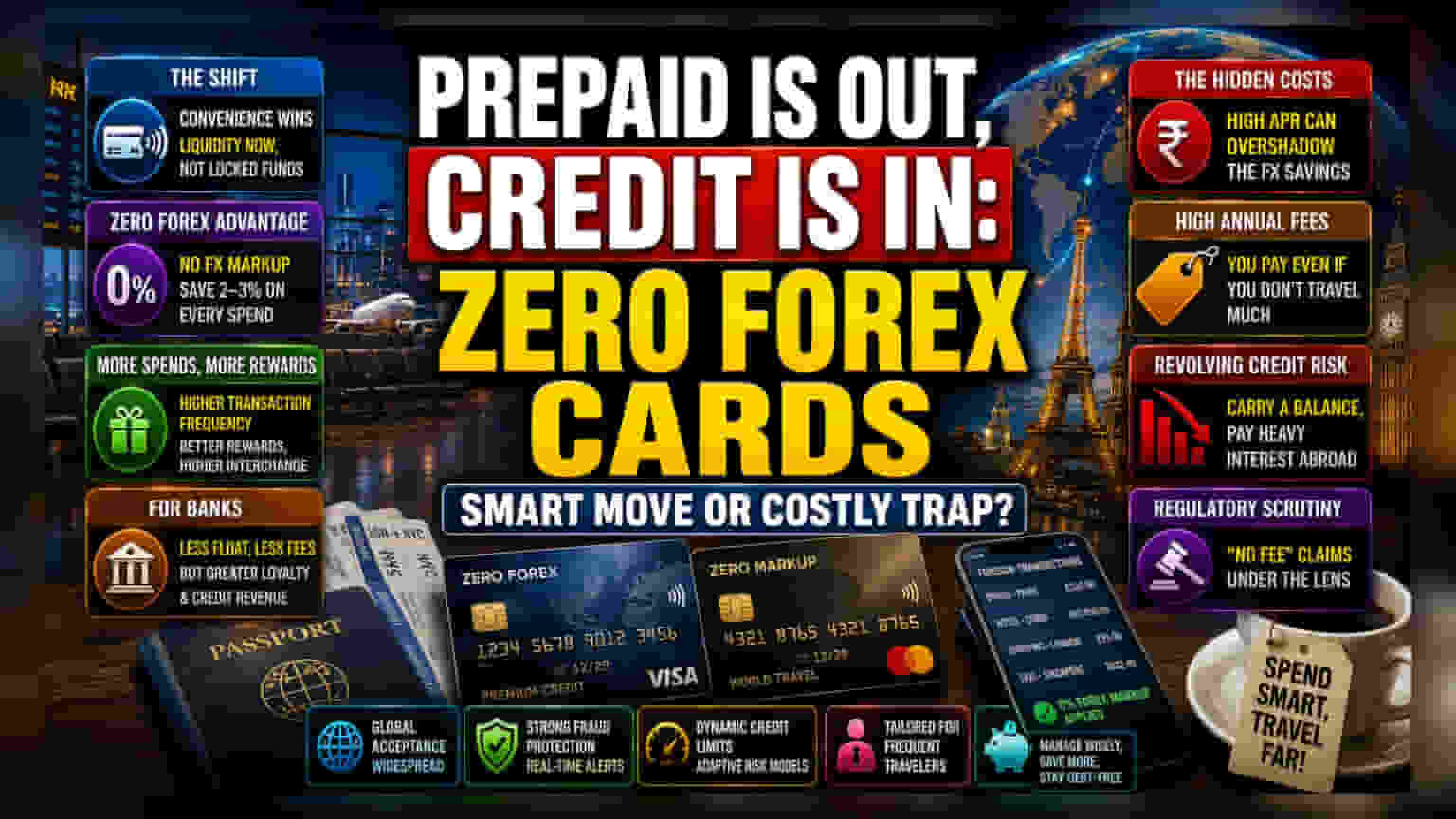


The Efficiency Shift in Retail Banking
The migration toward credit products specifically designed for international use represents a fundamental change in how consumers manage cross-border expenditure. While the prepaid model historically served as a barrier against overspending, the current economic environment favors the convenience and immediate liquidity of credit lines that waive foreign transaction markups. Banks have increasingly leaned into this product segment to capture high-net-worth frequent travelers, sacrificing immediate fee revenue in exchange for greater long-term customer loyalty and higher interchange volumes.
The Economics of Transactional Friction
Traditional prepaid forex cards act as a locked-in deposit for issuers, providing low-cost capital for banks to hold while consumers wait to spend. Conversely, zero-forex credit cards invert this dynamic. Issuers lose the float benefit and the immediate revenue from conversion spreads, but they gain from higher transaction frequency. When users carry a balance on these cards, the high annual percentage rates (APR) easily offset the waived 2-3% foreign markup fees. Competitor analysis shows that while regional banks still push prepaid cards for students and casual travelers, dominant credit card issuers are using the 'zero-markup' feature as a competitive moat to steal market share from fintech-driven travel wallets.
The Operational Reality for Issuers
Transitioning from a prepaid-heavy retail portfolio to a zero-forex credit portfolio exposes financial institutions to different risk profiles. Prepaid cards are non-recourse for the issuer—if the money is gone, it is gone. Credit products, however, require rigorous underwriting and real-time monitoring of credit quality. As cross-border payment volumes hit record levels, banks are under pressure to balance the acquisition cost of these premium cardholders against the potential for bad debt if economic conditions deteriorate. Unlike the passive management of prepaid accounts, managing a zero-forex credit portfolio requires sophisticated, automated risk-scoring models that adjust credit limits based on international travel patterns.
Structural Weaknesses in the Credit Model
The primary downside for the consumer—and a source of yield for the bank—lies in the interest rate structure. These products often come with high annual fees that act as a surrogate for the lost forex markup revenue, effectively taxing the consumer regardless of their actual travel volume. Furthermore, if a traveler fails to manage their billing cycle, the accrued interest on a foreign transaction can be significantly more punitive than the upfront conversion fee they sought to avoid. Regulatory bodies are increasingly scrutinizing the transparency of these 'no fee' products, particularly regarding how banks advertise the waiver while obscuring the high cost of revolving credit.