

Securing a college admission is only the first step in financing higher education. Banks rigorously evaluate co-borrower credit, course viability, and documentation, leading to rejections if criteria are not met. Understanding these banking standards is essential for families to avoid delays in funding plans.
Many students and parents believe that getting into a reputed college automatically ensures an education loan approval. In reality, banks and non-banking financial companies (NBFCs) treat education loans as serious financial products, applying strict underwriting standards before disbursing funds. A rejection can happen even after a student has secured a seat, leaving families to scramble for alternative funding at the last minute.
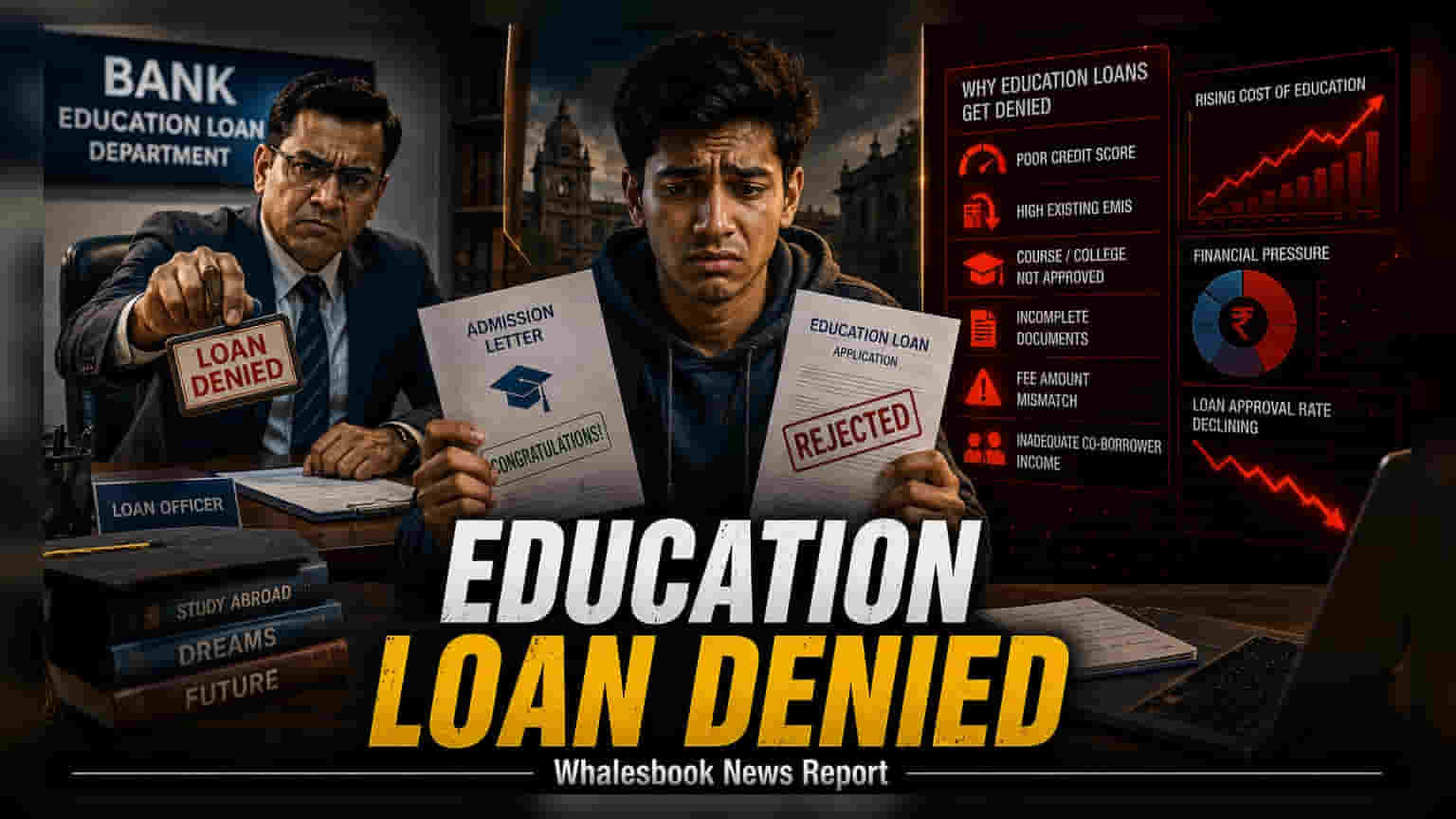
One of the most common reasons for rejection is the financial profile of the co-borrower, who is typically a parent or guardian. Since most students do not have an independent income stream or a long credit history, the lender relies heavily on the co-borrower’s repayment capacity. If the parent has a poor credit score, high existing EMI burdens, or a history of missed payments, the bank may view the loan as high-risk. Before applying, it is practical to review the co-borrower’s credit report to ensure there are no errors or outstanding dues that could trigger a denial.
Lenders also maintain specific internal lists of approved institutions and courses. Not every recognized degree program qualifies for the same loan terms. Banks often categorize institutions based on their ranking, placement records, and accreditation. A course or college that does not meet these internal benchmarks may lead to the rejection of an unsecured loan application. Furthermore, the Reserve Bank of India (RBI) mandates that lenders verify the future earning potential and cash flows of the borrower, making the course's employability a quiet but significant factor in the bank's decision.
Documentation remains a frequent stumbling block. Incomplete applications, discrepancies in the spelling of names across different documents, or mismatches between the fee structure provided by the college and the amount requested can cause processing delays or rejections. Banks require clear evidence of the fee structure, admission proof, and documented proof of income for the co-borrower. Requesting an amount that is significantly higher than the documented academic costs can also complicate the approval process, as the bank must justify the loan amount against the actual requirement.
While government-backed schemes, such as those under the PM-Vidyalaxmi framework, are designed to make higher education more accessible, they too operate within specific guidelines. Families applying for loans should focus on transparency and completeness. If an application is rejected, it is rarely due to a single arbitrary factor. Understanding the specific reason—whether it is credit history, course eligibility, or collateral requirements—is vital. Addressing these issues before submitting a new application is the most effective way to improve the chances of securing the necessary funding.