

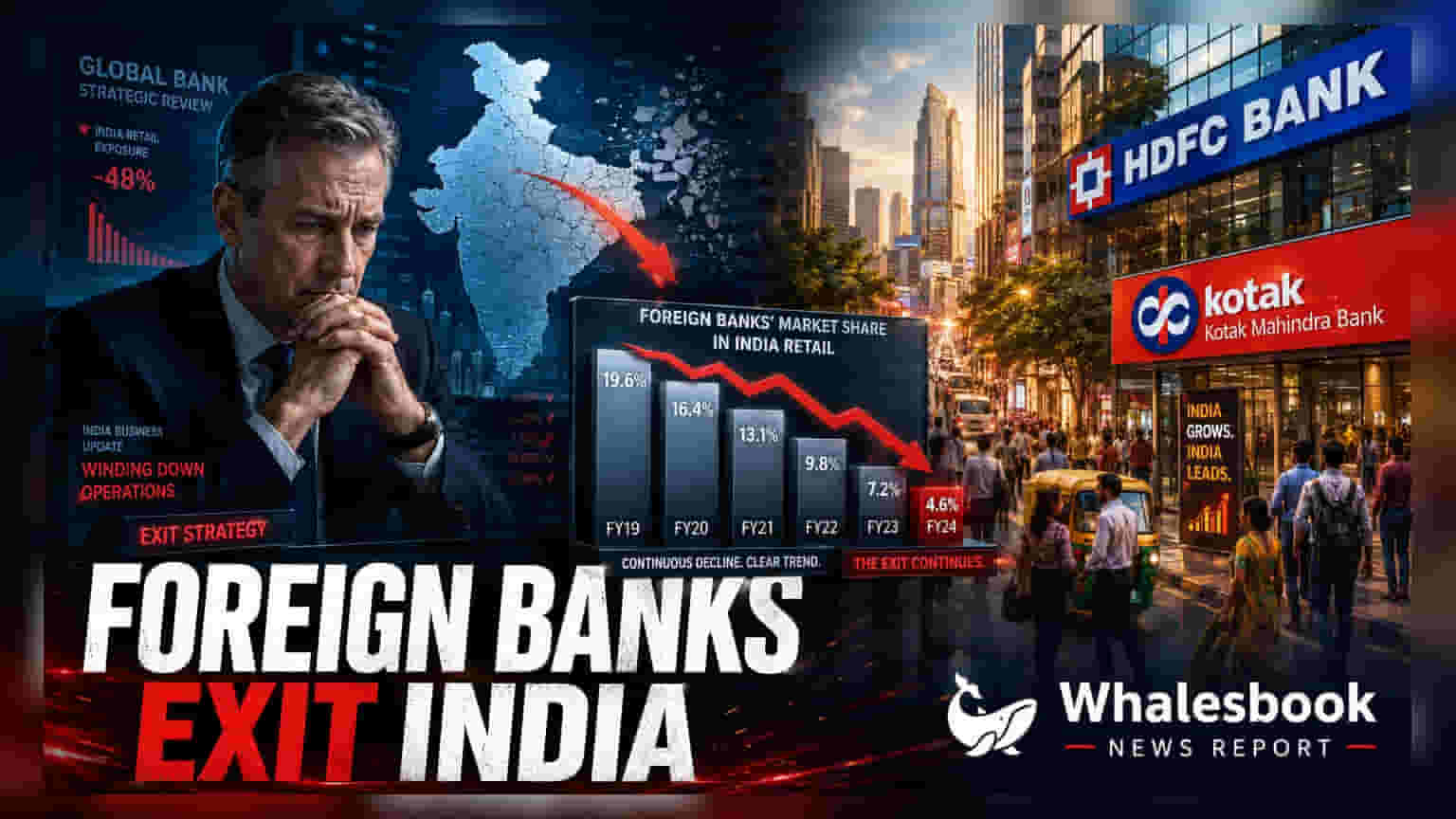
Global banks are moving away from Indian retail banking to focus on corporate and wholesale services. This strategic shift follows challenges in competing with the massive scale and reach of large domestic lenders like HDFC Bank and SBI.
A major shift is reshaping India’s banking sector as international players step back from retail operations to prioritize corporate and institutional banking. Recent transactions, such as Kotak Mahindra Bank’s acquisition of Deutsche Bank’s India retail and wealth management business—covering approximately ₹29,000 crore in loans and ₹16,000 crore in deposits—highlight this ongoing trend.
The Scale and Competition Factor
For foreign banks, the primary hurdle in India’s retail market is the dominance of large domestic institutions. Banks like State Bank of India, HDFC Bank, ICICI Bank, and Axis Bank have built extensive physical branch networks and deep digital penetration that are difficult for international players to replicate. While Indian giants operate thousands of branches across the country, the collective footprint of all foreign banks in India remains below 800 branches. This limited reach makes it difficult to attract low-cost retail deposits, which are essential for maintaining healthy profit margins in consumer banking.
Regulatory and Operational Pressures
Beyond competitive pressures, foreign banks face unique regulatory requirements, including mandates for priority-sector lending. While these rules are designed to ensure broad financial inclusion, they often require significant management attention and capital that foreign banks prefer to deploy in their stronger areas. Additionally, the opportunity cost is high; international banks often find that their global networks and cross-border expertise provide much higher returns in wholesale banking, investment banking, and treasury services compared to the capital-intensive nature of local retail banking.
A Pivot to Specialized Services
This trend is reflected in the actions of several major global institutions. Citi, for instance, completed the sale of its Indian consumer business to Axis Bank, while choosing to retain its corporate and institutional client services. Similarly, Japanese lenders such as MUFG Bank, Mizuho Bank, and SMBC are increasingly focusing on specialized corridor banking, which helps facilitate trade and investment flows specifically between India and Japan. By narrowing their focus to these segments, foreign banks are playing to their strengths in global liquidity and multinational client management.
Impact on the Indian Banking Landscape
For the Indian banking sector, this transition signals the growing maturity and competitiveness of domestic lenders. With improved technology and robust balance sheets, Indian banks have successfully captured the bulk of the domestic deposit and credit market. As foreign banks exit the retail space, domestic lenders are likely to consolidate their position as the primary providers of consumer financial services. Investors in the banking sector may continue to track how domestic banks absorb these portfolios and whether they can maintain margins while integrating these new customer bases.