

Fugitive businessman Vijay Mallya has challenged India's debt recovery transparency, citing the recent NCLT-approved settlement for Subhash Chandra. Mallya claims his recovered assets exceed his adjudicated debt, contrasting his situation with the substantial debt reduction accepted in the Zee Group founder's case.
Fugitive businessman Vijay Mallya has publicly challenged the transparency of India’s debt recovery mechanisms, drawing a comparison between his ongoing legal battles and the recent insolvency settlement involving Zee Group founder Subhash Chandra. Mallya argues that the wide disparity in how debt is settled across different cases warrants an independent investigation into recovery figures provided by financial institutions and government authorities.
The core of the discussion stems from the National Company Law Tribunal’s (NCLT) recent approval of a personal insolvency plan for Subhash Chandra. In this settlement, creditors agreed to recover a significantly smaller amount compared to the total claims filed. Chandra has clarified that the high claim figures reported were related to his role as a personal guarantor for Essel Group entities, rather than direct personal loans, and that the actual contested debt was much lower than the initial estimates.
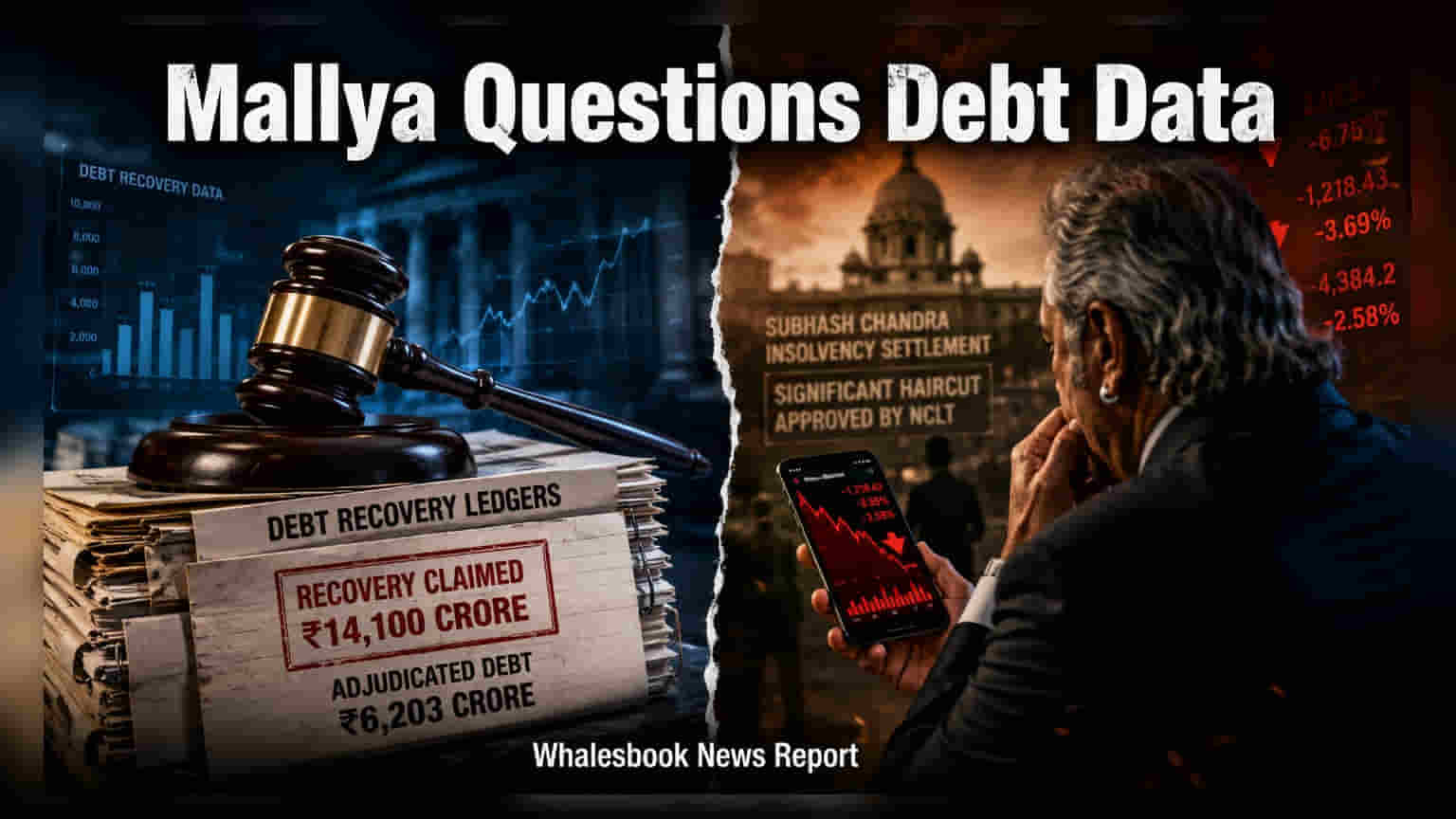
Mallya, however, has used this case to highlight his contention that he has been treated differently by the system. He claims that official government records indicate a recovery of ₹14,100 crore from his assets. He argues that this figure is significantly higher than his adjudicated debt of ₹6,203 crore. Mallya has repeatedly called for an itemized reconciliation of the credits applied to his liabilities, asserting that the data provided to the public and Parliament has been inconsistent.
For investors and the broader market, these arguments highlight ongoing questions surrounding the predictability and transparency of the Insolvency and Bankruptcy Code (IBC) framework. The IBC was designed to provide a structured way for lenders to recover money from distressed assets. However, high-profile cases involving personal guarantees and large-scale settlements often draw scrutiny regarding how effectively and equitably the law is applied.
The central issue for observers is the difference in how 'haircuts'—or the reduction in debt repayment—are handled. When lenders agree to settlements that involve large discounts on the original debt, it impacts the balance sheets of public sector banks, which are the primary creditors in such high-value distressed cases. Continued public debate over the fairness of these processes can affect sentiment regarding how well the financial system handles non-performing assets.
The next important development to watch will be whether regulatory or judicial authorities provide a formal, itemized explanation of the recovery claims against Mallya to address these concerns. Investors and market observers will also continue to monitor how the NCLT’s approach to personal guarantees in the Subhash Chandra case sets a precedent for future insolvency proceedings in India.