

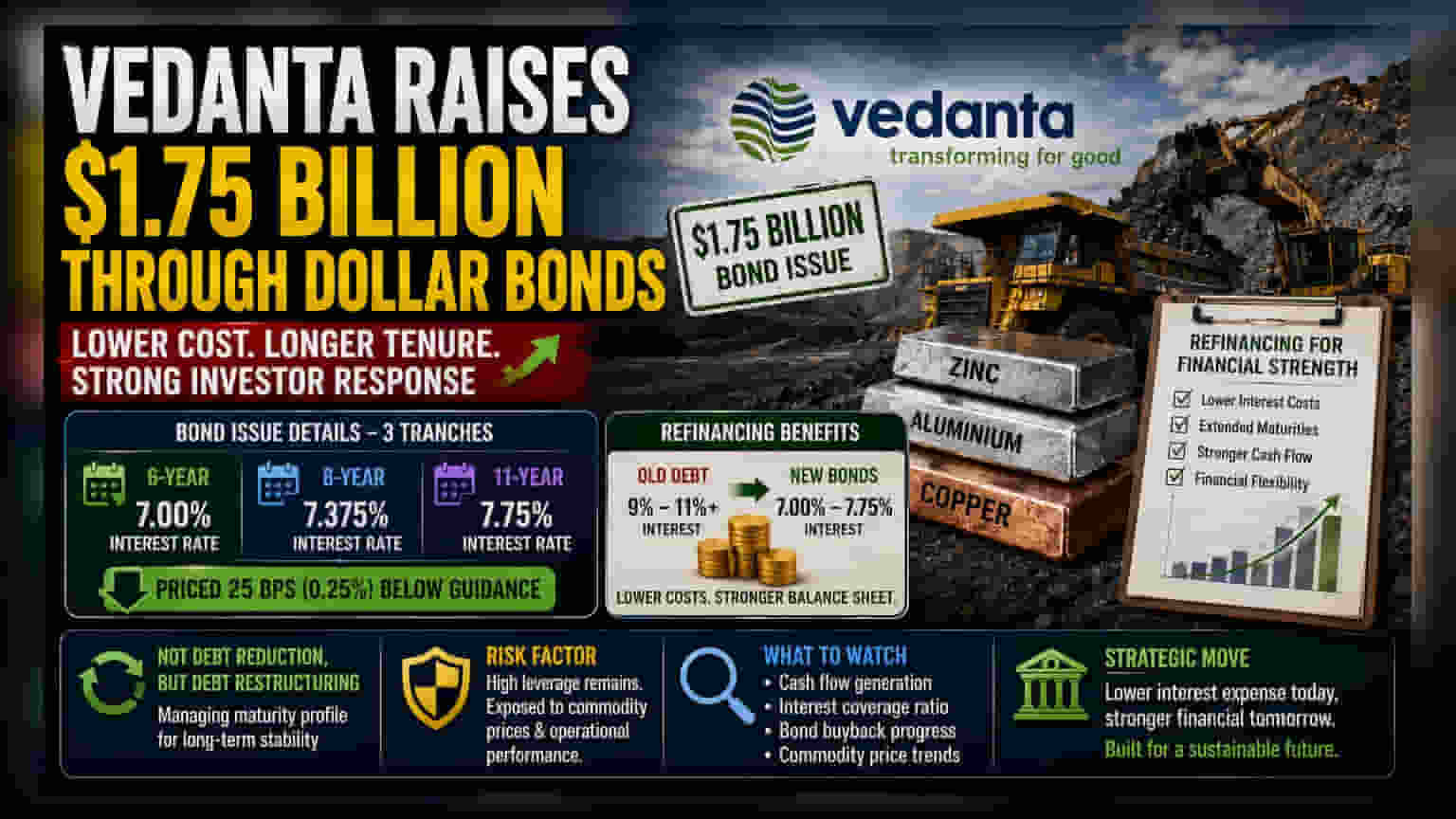
Vedanta Resources Finance II has raised $1.75 billion through a new dollar bond issue to replace older, high-interest loans. This move aims to lower the group's annual interest burden by swapping expensive debt for new notes with lower rates. For investors, this marks a step in the company's efforts to manage its heavy borrowing profile and improve financial flexibility.
What Happened
Vedanta Resources Finance II, a subsidiary of the mining conglomerate, has secured $1.75 billion by issuing dollar-denominated bonds. The company successfully split this funding into three parts, known as tranches, to attract investors. The six-year bonds were issued at a 7.00% interest rate, the eight-year bonds at 7.375%, and the 11-year bonds at 7.75%. The company managed to price these bonds at 25 basis points—or 0.25%—below its initial guidance, signaling that investors were willing to accept slightly lower returns than originally expected.
Why Refinancing Matters
The primary reason for this bond issue is to replace older, more expensive debt. Vedanta is looking to pay back loans that carry interest rates significantly higher than the new bonds. Specifically, the proceeds will be used to repurchase older notes that carried interest rates ranging from roughly 9% to over 11%. By replacing this high-cost debt with new bonds at 7.00% to 7.75%, the company aims to reduce its annual interest expense. This is a common strategy in corporate finance to free up cash flow that would otherwise go toward high interest payments.
Debt Management Context
For investors, it is important to understand that this is not a reduction of the total debt, but rather a restructuring of it. The company is trading one set of loans for another. Vedanta has been focused on managing its debt maturity profile, which means ensuring that it does not have too many large repayments due in the same year. By issuing these new bonds, the company is pushing back the repayment dates for a significant portion of its liabilities, giving it more time to generate cash from its operations.
The Risk Factor
While lowering interest costs is a positive development, the company remains highly leveraged. Investors should remain aware that these new bonds still represent a long-term obligation that must be repaid. The ability of the company to consistently meet these interest payments and eventually the principal repayment depends heavily on its operational performance and the prices of commodities like zinc, aluminum, and copper. If commodity prices fall or if operating costs rise, the pressure on the company's cash flow could increase, regardless of the interest rate on the debt.
What To Watch Next
The key monitorable for investors is the company's ability to maintain its operational efficiency and generate enough cash to meet both the new interest obligations and its remaining debt repayments. Future filings will likely provide updates on the success of the bond buyback program and the impact of these changes on the company's overall interest coverage ratio. Investors will also look for management commentary on how these lower borrowing costs translate into improved financial stability over the coming quarters.