

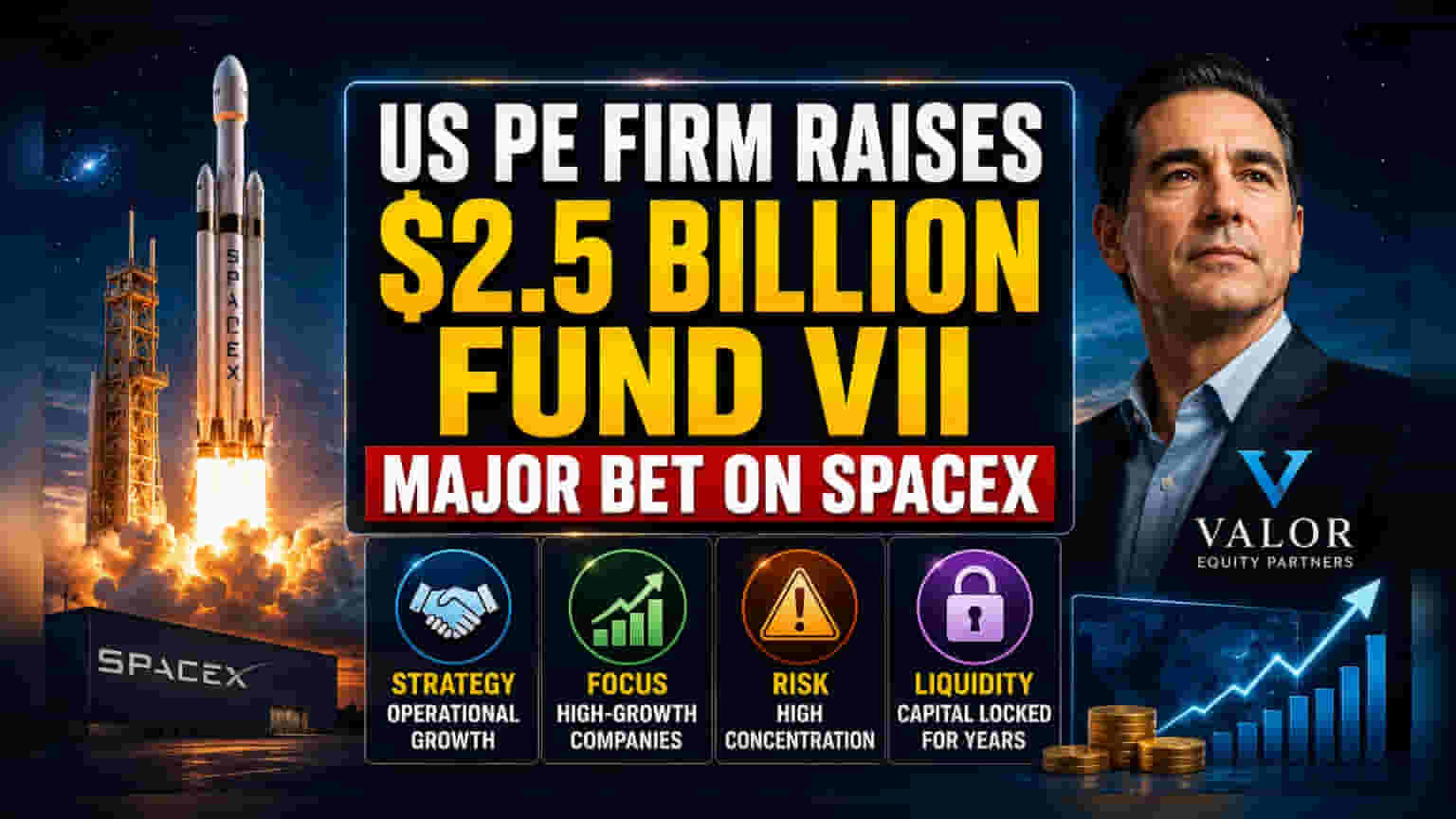
US-based firm Valor Equity Partners is raising $2.5 billion for its seventh fund, with plans to allocate capital toward SpaceX. The move highlights the firm's concentrated investment strategy and its long-standing history of backing Elon Musk's ventures. Investors often track such funds to understand how capital is deployed into high-growth, private technology companies.
What Happened
Valor Equity Partners, a private equity firm based in the US, has begun raising capital for its seventh fund, known as Fund VII. The firm is targeting at least $2.5 billion for this new investment vehicle. A significant portion of this capital is expected to be allocated to SpaceX, the aerospace company founded by Elon Musk. Valor Equity Partners, led by founder Antonio Gracias, has been one of SpaceX's earliest and most consistent supporters, maintaining a long-standing financial and strategic relationship with the company.
The Strategy: Operational Growth
Valor Equity Partners is known for a strategy it calls "operational growth." Unlike firms that provide only financial capital, Valor often acts as a partner that helps portfolio companies improve their day-to-day operations. This includes deploying engineers, data scientists, and manufacturing experts to help companies scale their production or improve efficiency. The firm’s historical investments reflect this approach, with a portfolio spanning space technology, robotics, and food logistics. By raising this new fund, the firm aims to continue supporting companies that are in their growth and expansion phases.
Why Investors Watch Concentration Risk
For investors or market observers, the key angle in this story is concentration. Private equity firms typically aim for a diversified portfolio to spread out risk. However, Valor’s strong focus on SpaceX—where it holds a substantial stake—stands out as a concentrated bet. While this has historically led to significant gains, it also creates a risk profile where the fund’s performance is heavily tied to the success and valuation of a single company. If the aerospace sector faces headwinds or if SpaceX’s valuation faces pressure, the fund’s overall returns could be affected more significantly than a broader, more diversified fund.
The Liquidity and Time Factor
Investors looking at private equity funds like this should understand the nature of the investment. Unlike stocks that can be bought or sold on an exchange, capital committed to a private equity fund is typically locked in for several years. This means investors in Fund VII will likely not be able to access their money for an extended period, relying on the firm to eventually "exit" these investments through an IPO or sale to another company. While the firm has a history of successful exits, the timing of such returns is often uncertain and depends on market conditions.
What Investors Should Track Next
As Valor Equity Partners moves forward with its fundraising, the key monitorables include the final size of the fund and the specific diversity of the remaining portfolio. While the focus on SpaceX is clear, the firm’s ability to find and scale other high-growth opportunities will be a test of its strategy. Additionally, market participants will watch for any shifts in the firm's portfolio strategy as it balances its heavy reliance on its most successful bets with the need to identify the next generation of high-growth technology companies.