

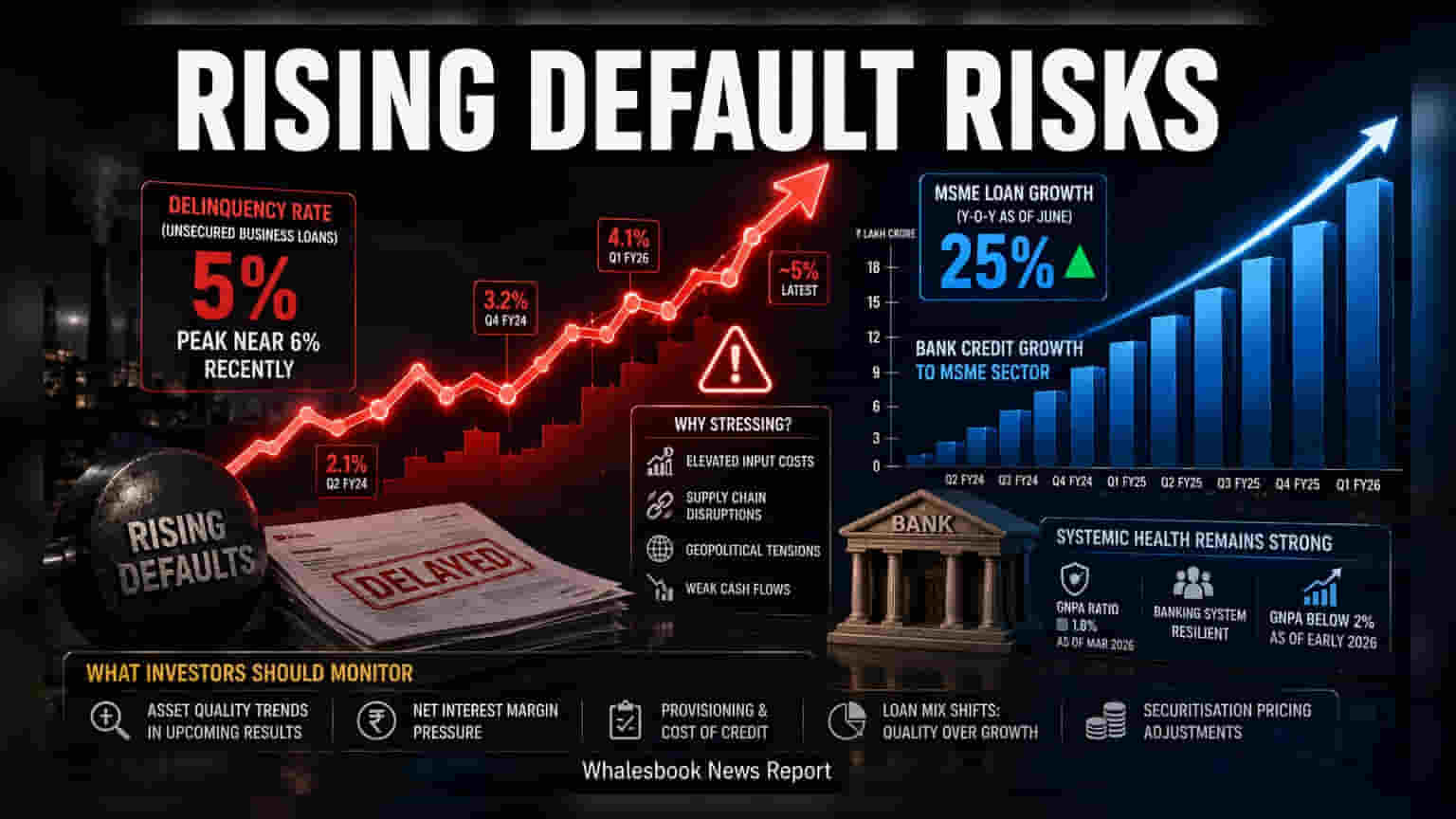
Delinquencies in unsecured business loans have reached 5-6%, prompting lenders to tighten credit standards. While the overall banking system remains stable with low NPAs, the rapid 25% surge in MSME credit is hitting a speed bump. Investors should monitor how lenders balance this risk to protect their profit margins in the coming quarters.
The banking and non-banking financial sector is witnessing a shift in strategy as stress emerges in the unsecured business loan segment. While overall banking asset quality remains resilient—with the Gross Non-Performing Asset (GNPA) ratio staying below 2% as of early 2026—certain pockets of the market are seeing rising repayment delays. This trend is particularly visible in portfolios of unsecured business loans, which are crucial for the securitisation market where lenders bundle loans to free up capital.
The Growth Versus Quality Trade-off
Over the past year, lenders aggressively expanded their MSME (Micro, Small, and Medium Enterprises) loan books, which grew by 25% year-on-year as of June. This growth pace significantly outstripped other credit categories, such as industrial or retail loans. However, this aggressive expansion is now being tempered by rising delinquency rates. Some seasoned loan transactions have reported delinquency peaks near 6% recently, though these figures have moderated slightly toward 5%. For investors, this signals that the initial phase of rapid, volume-driven credit expansion is giving way to a more cautious, quality-focused approach.
Why MSME Portfolios Are Feeling the Heat
Small businesses are facing a complex macroeconomic environment that limits their ability to repay debt. Elevated input costs, supply chain disruptions, and global geopolitical tensions have directly impacted cash flows for many MSMEs. Unlike secured loans, such as home or gold loans, unsecured business loans rely heavily on the borrower’s cash-flow health rather than physical collateral. When economic headwinds intensify, these borrowers are the first to face repayment challenges, which directly impacts the performance of the loan pools that lenders use for securitisation.
Systemic Health Remains Stable
Despite the specific stress in unsecured segments, the broader Indian banking system is in a strong position. Official data from the RBI’s Financial Stability Report indicates that the banking system’s gross NPA ratio stood at 1.8% as of March 2026. This reflects a significant difference between isolated stress in unsecured lending and the overall health of the banks. Furthermore, many lenders have been proactively deleveraging their unsecured retail and microfinance portfolios over the last 12 to 18 months to mitigate potential risks before they become systemic.
What Investors Should Monitor
Looking ahead, the primary monitorable for shareholders is how these banks and NBFCs manage their net interest margins and provisioning. As lenders tighten underwriting standards to reduce credit risk, they may slow down credit growth to favor safer, high-quality borrowers. Investors should look for updates in upcoming quarterly results regarding asset quality, the cost of credit, and any changes in the mix of their loan portfolios. Pricing adjustments in securitisation transactions may also occur as the market prices in the higher anticipated credit losses for these unsecured pools.