

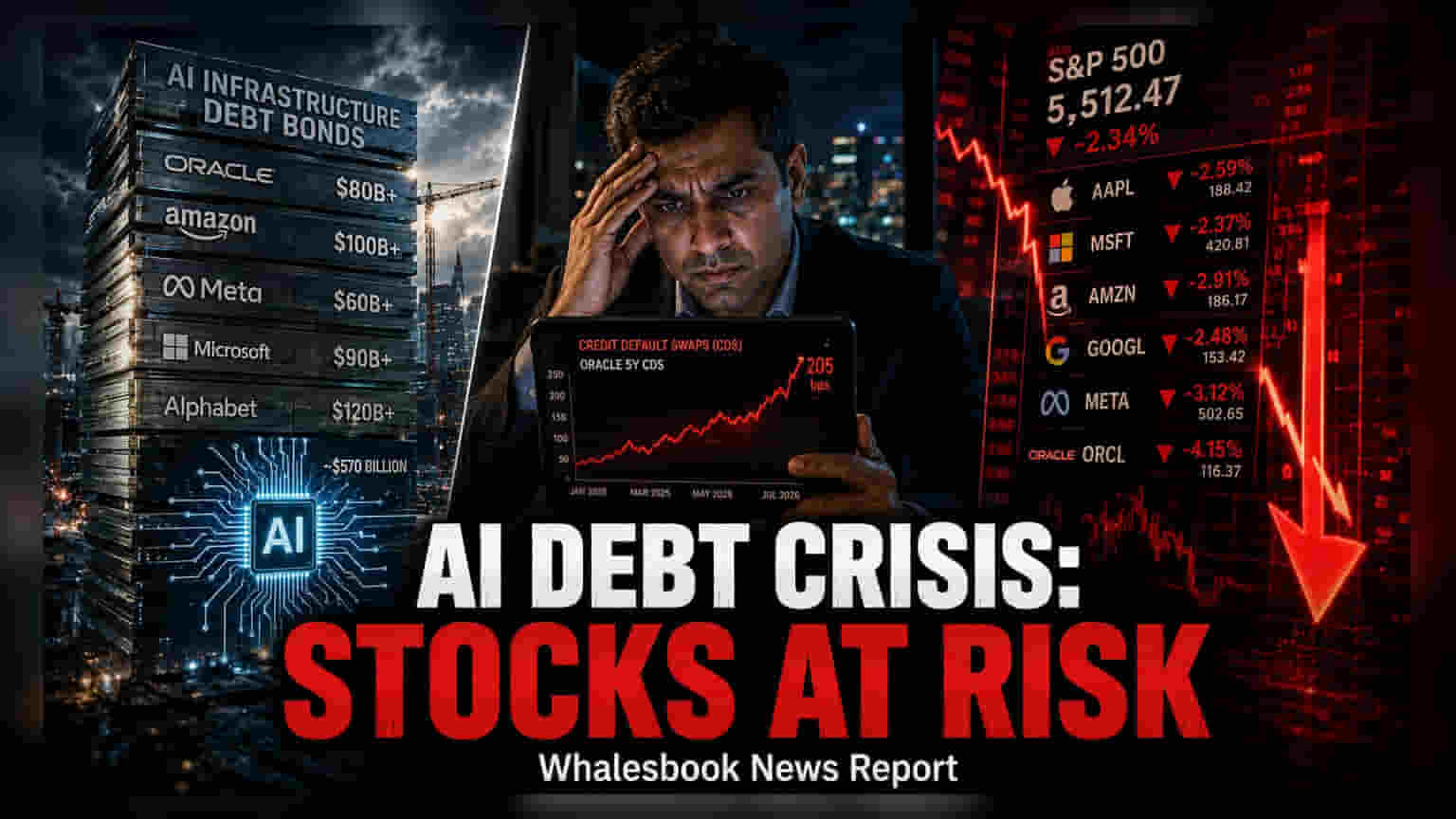
Major US tech companies are borrowing heavily to fund AI projects, with debt issuance hitting hundreds of billions in 2026. This aggressive spending is pressuring corporate credit ratings, as seen in recent downgrades and rising insurance costs against default. Investors are now closely watching these debt levels, as the potential instability of these tech giants could impact the broader stock market.
The global race to build artificial intelligence infrastructure has triggered a massive increase in corporate borrowing. Major technology firms, often called hyperscalers—including Alphabet, Amazon, Meta, Microsoft, and Oracle—are channeling hundreds of billions of dollars into AI-related projects. While these companies have historically been cash-rich, the sheer scale of investment required for AI data centers is now outpacing their ability to fund expansion through regular earnings alone.
Data from the current year shows that global AI-related debt issuance is on track to reach approximately $570 billion. This reliance on debt markets to fund expansion has caught the attention of bond investors and rating agencies, who are beginning to worry about the long-term financial health of these companies. The core issue is that while these firms are spending heavily to stay competitive in the AI race, the future returns from these investments remain uncertain.
Rising Credit Risks and Downgrades
The market’s concern is not just theoretical; it is showing up in credit metrics. Investors who buy corporate debt are demanding higher interest rates to compensate for the perceived risk. More notably, credit analysts are flagging the deterioration in balance sheets. In July 2026, Oracle’s credit rating was downgraded to BBB- by S&P Global, placing it just one notch above 'junk' status. This downgrade highlights the pressure that massive capital spending is placing on companies even with established business models.
Adding to the unease are Credit Default Swaps (CDS), which serve as insurance policies against a company defaulting on its debt. For companies like Oracle, the cost of this insurance has spiked significantly, exceeding 200 basis points in recent months. Rising CDS premiums indicate that the bond market is pricing in a higher likelihood of financial stress, even if the actual risk of default for these tech giants remains relatively low for now.
Impact on the Broader Stock Market
The financial health of these five hyperscalers is critical because they account for nearly 20% of the S&P 500 index. If their debt levels become unsustainable or if their free cash flows turn negative for an extended period, it could trigger a spillover effect. When a large portion of the market is driven by companies that are increasingly reliant on debt to fund growth, investors face a risk where credit market instability could bleed into equity valuations.
Market strategists have noted a growing inverse correlation between credit risk and stock valuations for these tech giants. In simple terms, as the cost of insuring their debt rises, investors may become less confident in their stock prices. Some analysts suggest that the focus is shifting away from traditional earnings per share (EPS) metrics toward credit health indicators like debt levels and CDS spreads.
What Investors Should Monitor Next
For investors, the key monitorable is the sustainability of this capital expenditure. The primary focus should be on whether these AI investments start generating enough cash flow to cover the rising debt burden. Future exchange filings and company updates on capital spending versus free cash flow will be essential. Additionally, any further credit rating actions or movements in CDS spreads for these tech leaders will likely serve as early warning signals for the broader market.