

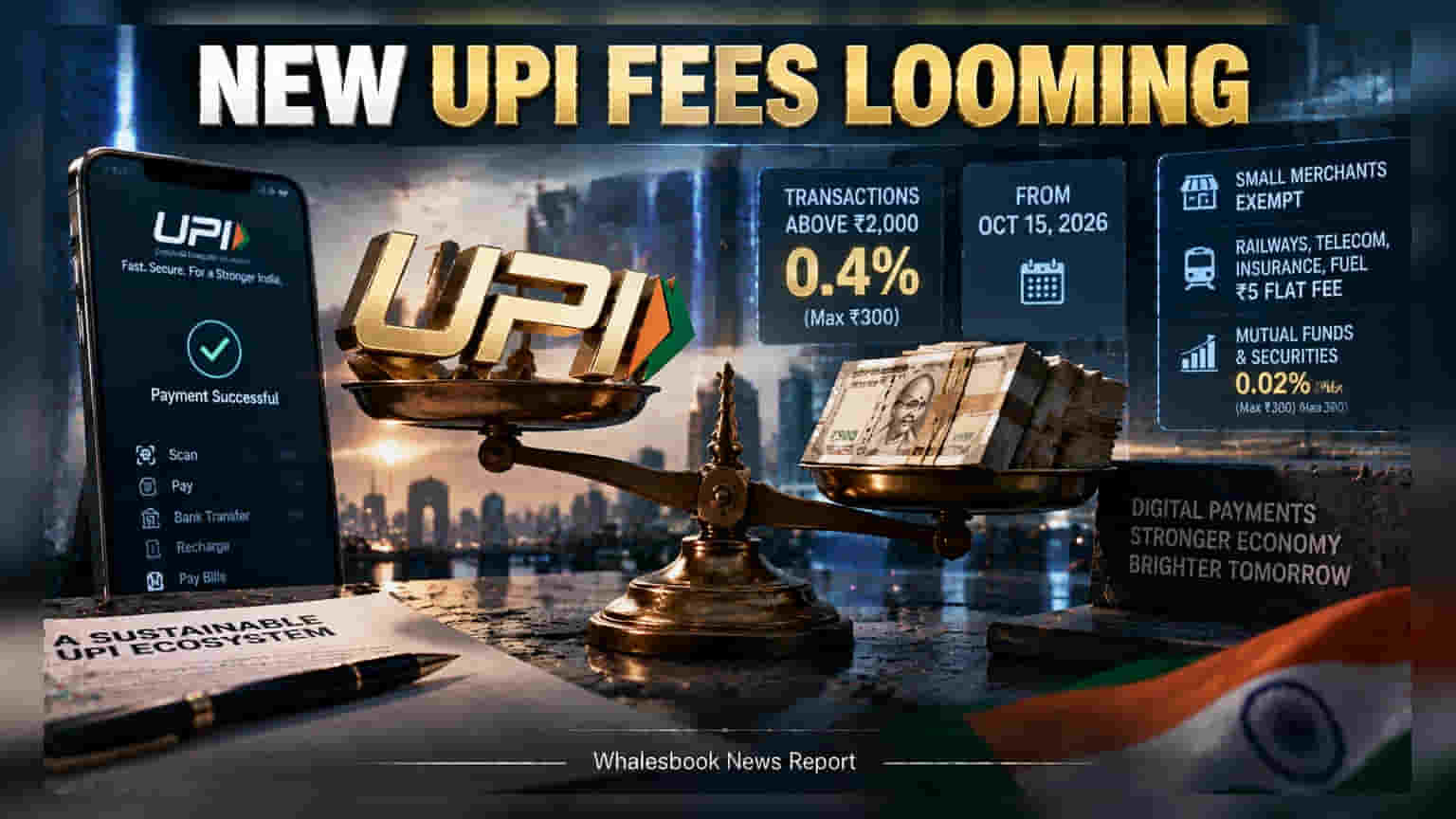
Starting October 15, 2026, transactions over ₹2,000 on UPI will incur a 0.4% merchant fee. The move, aimed at making digital payments sustainable, could generate ₹1,800 crore monthly for the banking system. Small merchants remain exempt.
The National Payments Corporation of India (NPCI) has announced a new fee structure for high-value UPI transactions, which will go into effect on October 15, 2026. Under the new policy, merchants will be charged a fee—known as the Merchant Discount Rate (MDR)—for receiving payments that exceed ₹2,000. This change marks a significant shift from the long-standing practice of zero fees on all UPI transactions in India.
For most transactions above the ₹2,000 threshold, the fee is set at 0.4%, with a maximum cap of ₹300 per payment. Industry analysts estimate this move could create a revenue pool of approximately ₹1,800 crore per month for banks and payment aggregators. The policy is specifically designed to focus on high-value commercial transactions, keeping the vast majority of everyday retail payments free of charge.
To prevent the new policy from affecting small businesses and retail consumers, the government has introduced several safeguards. Transactions of ₹2,000 or less will continue to be free of cost. Furthermore, small merchants who receive less than ₹1 lakh per month through P2PM QR codes are exempt from these charges entirely. This is intended to ensure that local grocery stores, street vendors, and small service providers do not face additional financial burdens.
There are specific rules for different sectors to manage the transition. Payments related to services such as railways, telecom, insurance, and fuel will attract a flat fee of ₹5 for transactions exceeding ₹2,000. Meanwhile, investments in capital markets, such as mutual funds and securities, will be subject to a lower fee of 0.02%, also capped at ₹300 per transaction. This tiered approach is meant to account for the different profit margins and transaction natures across these industries.
While the move aims to support the long-term sustainability of India's digital payment infrastructure, it introduces certain risks that the market will monitor. A key concern is whether some merchants might attempt to pass these new costs on to consumers, even though the government has explicitly advised businesses not to surcharge customers for UPI payments. Additionally, observers will watch to see if the introduction of these fees impacts the volume of large-value UPI transactions or causes a shift in payment behavior. The final success of this policy will depend on how effectively the industry implements these fees without disrupting the ease and popularity of digital payments.