

India has amended the Payment and Settlement Systems Act, 2007, enabling the potential introduction of a Merchant Discount Rate (MDR) on UPI. While this legal change removes past barriers, the government has confirmed UPI remains free for consumers and person-to-person transfers. Investors should track future implementation details, as fees on high-value merchant transactions could impact the revenue models of payment aggregators and mid-sized businesses.
The legislative landscape for digital payments in India has shifted following the passage of the Taxation and Other Laws (Amendment) Bill, 2026, earlier this month. This new law amends Section 10A of the Payment and Settlement Systems Act, 2007, effectively removing the statutory prohibition on charging a Merchant Discount Rate (MDR) for UPI transactions. While the amendment provides the legal framework for these charges, it does not mandate an immediate introduction of fees. The government has maintained that UPI will remain free for all individual consumers and person-to-person (P2P) money transfers.
For investors and market participants, the primary focus is now on how this enabling provision will be implemented. The current expectation, based on industry discourse, is that any future MDR would be threshold-based, likely targeting high-value merchant transactions rather than small, everyday payments. Because the specific fee percentages, transaction thresholds, and revenue-sharing mechanisms remain undefined, businesses are currently operating under a period of policy uncertainty.
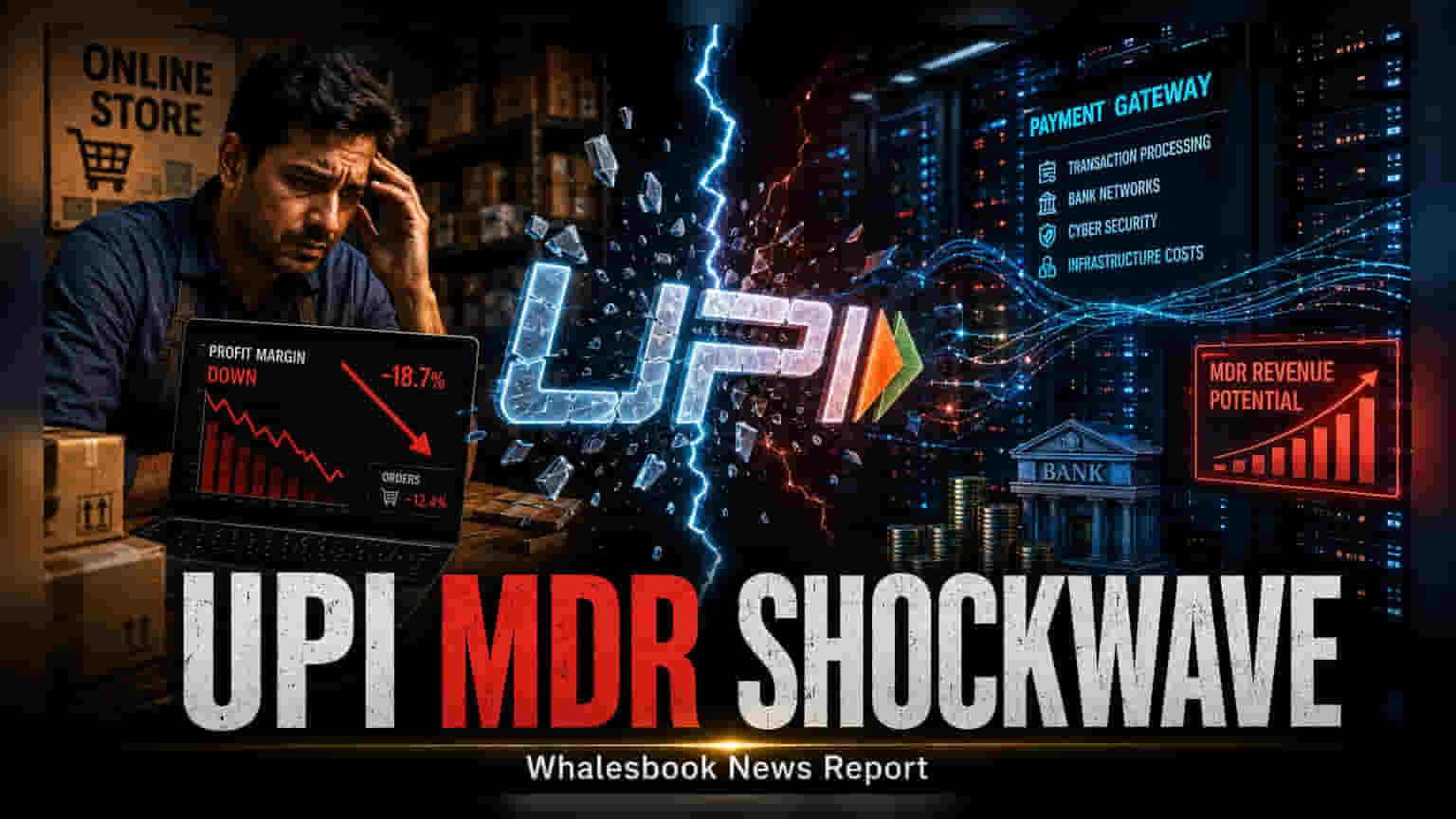
This development holds different implications for various segments of the financial ecosystem. For banks, the potential reintroduction of MDR is seen as a positive development, as they have historically borne the infrastructure, cybersecurity, and operational costs of processing UPI transactions without direct fee compensation. A fee-based model could provide banks with a new revenue stream, improving the unit economics of the payment network.
Conversely, payment aggregators and mid-sized merchants may face margin pressure. Many online merchants currently operate on thin profit margins and utilize payment aggregators to manage their transactions. If these aggregators face new costs that they cannot absorb, they may be forced to either increase their service fees or pass the costs on to merchants. In a competitive market where pricing is a key tool for acquiring merchants, fintech players might find it challenging to balance these potential new costs without affecting their profitability or market share.
The next crucial step for investors to monitor will be official notifications from the National Payments Corporation of India (NPCI) and the government regarding the specific implementation rules. Until the threshold for 'high-value' transactions and the actual fee structures are finalized, the full financial impact on payment aggregators and the broader e-commerce sector remains speculative. Market observers will be watching to see how the cost burden is distributed across the payment value chain.