

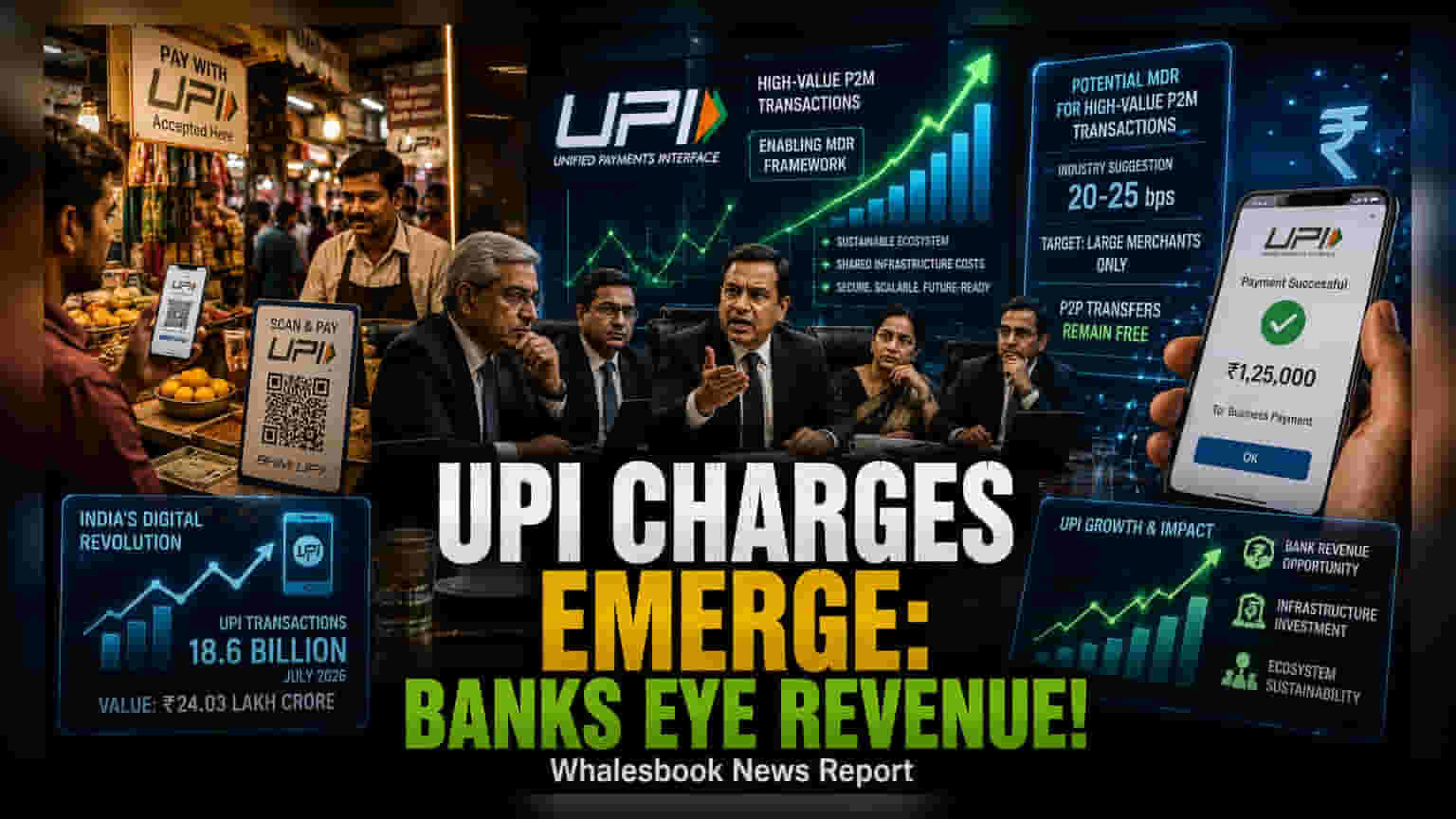
The Taxation and Other Laws (Amendment) Bill, 2026, has been passed, creating a framework for potential merchant fees on specific high-value transactions. Importantly, the government has confirmed that person-to-person UPI payments remain free. This bill acts as an enabling provision, allowing regulators to set future guidelines to support digital infrastructure sustainability.
The landscape for digital payments in India has seen a new development with the passage of the Taxation and Other Laws (Amendment) Bill, 2026. This legislation has introduced an enabling provision that empowers the government to potentially notify a Merchant Discount Rate (MDR) for specific, high-value person-to-merchant (P2M) UPI transactions. It is important for readers to understand that this bill does not automatically impose any new charges on UPI users. Currently, person-to-person (P2P) transfers remain entirely free for consumers, and the government has maintained this stance.
The Shift Toward Sustainability
For years, banks and payment service providers have invested heavily in building and maintaining the infrastructure that supports the Unified Payments Interface (UPI). Industry leaders have frequently pointed out that the current zero-fee model places the entire financial burden of maintaining this vast network on the service providers. By creating an enabling legal framework, the government is providing the flexibility to potentially introduce a fee structure for high-value business transactions in the future. This is aimed at ensuring that the digital payment ecosystem remains sustainable and capable of handling increasing volumes while maintaining security.
What Changes and What Stays the Same
Under the proposed framework discussed by the industry, any potential fees would likely target only a limited category of large-scale merchant payments. The industry's perspective, as shared by various banking executives, suggests that small vendors and individual users should not be impacted. The goal is to move toward an economic model similar to the one used for card payments, where larger merchants, who benefit from the convenience of digital payments, share a small portion of the transaction value to cover processing costs.
However, there is no final rate, transaction threshold, or implementation date that has been officially notified. The banking sector has suggested that a modest rate—some industry players have floated figures in the range of 20 to 25 basis points—could help offset infrastructure expenses. At the same time, some public sector bank leaders have suggested alternative approaches, such as using digital wallets for very small transactions, to reduce the operational strain on the system.
Risks and Monitorables
While the amendment is a structural change, the immediate risk is one of public perception. Misinformation regarding 'UPI charges' can potentially impact consumer sentiment, even though the government has clarified that individual use remains free. For investors and market observers, the key monitorable is the eventual notification from the government and the National Payments Corporation of India (NPCI) regarding the final structure of these charges. The market will be watching how the government balances the need for bank revenue with the goal of keeping digital payments affordable and widely adopted. Until clear guidelines are issued, the operational impact on banks or large merchants remains speculative.