

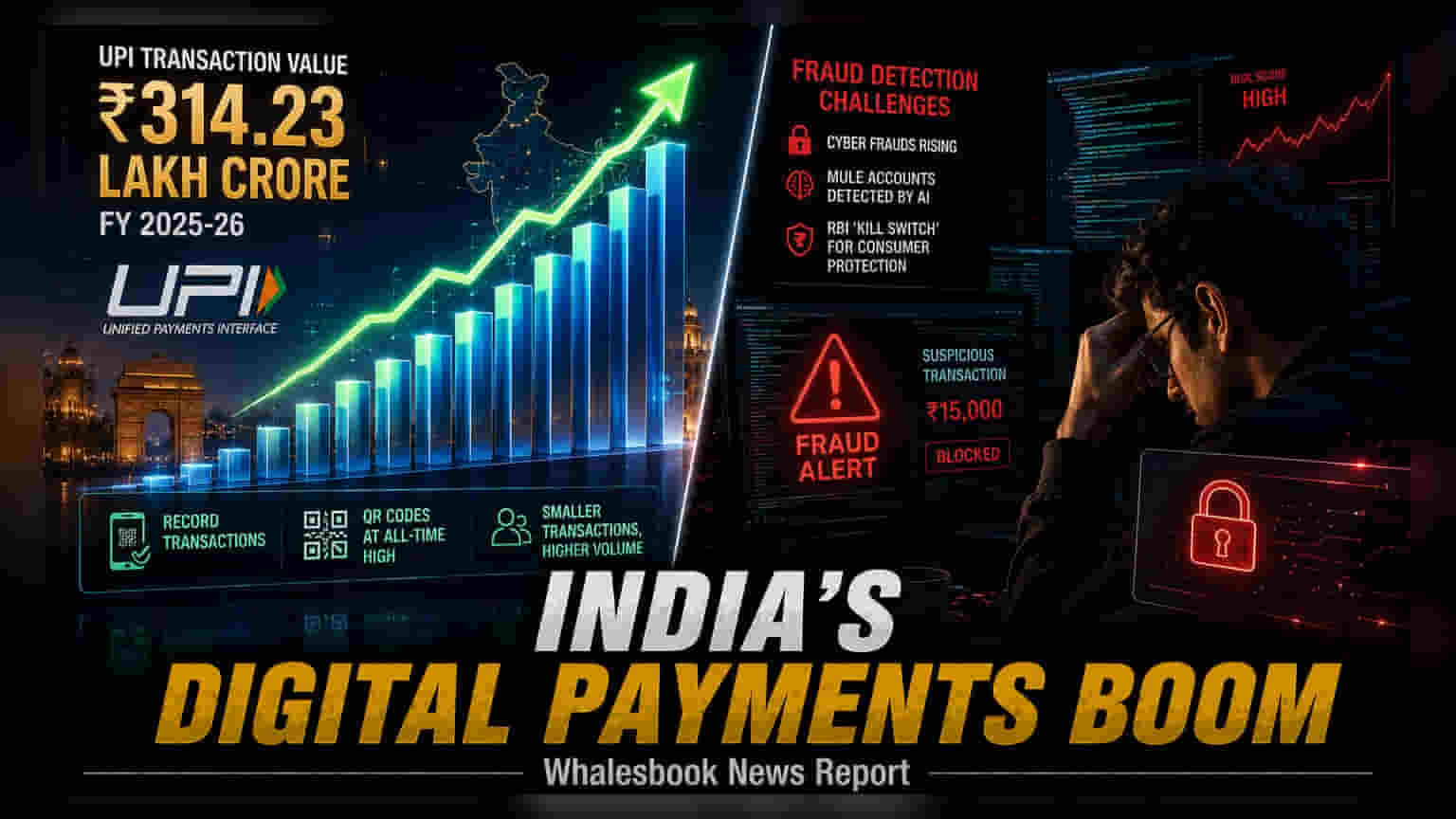
India's UPI network processed a record ₹314.23 lakh crore in FY2025-26, showing massive growth in digital payments. However, the ecosystem faces key changes as the government clears the path for merchant fees and the NPCI enforces stricter market share caps by year-end.
India’s digital payment landscape has reached a new peak, with the Unified Payments Interface (UPI) processing transactions worth ₹314.23 lakh crore in the 2025-26 financial year. This scale of activity highlights the deep penetration of digital payments in the Indian economy, driven by widespread QR code adoption and increasing consumer preference for cashless transactions.
While the total transaction value continues to grow at a compound annual rate of over 50%, the composition of these payments is also shifting. There has been a significant rise in small, frequent transactions, which explains why volume growth is occurring faster than value growth. The infrastructure supporting this is also expanding, with point-of-sale terminals and QR code deployments reaching new highs across the country.
Changing Revenue Landscape
Beyond the record numbers, the business model for digital payments is set to undergo a potential transformation. The recent passage of the Taxation and Other Laws (Amendment) Bill, 2026, has removed the previous legal block against charging a Merchant Discount Rate (MDR) on UPI and RuPay transactions. The MDR is a fee paid by merchants to process digital payments. For years, UPI transactions have been free for users and merchants, but this regulatory change now allows for potential fees to be introduced. This could reshape the revenue models for fintech companies and banks that have heavily invested in building payment infrastructure.
Market Competition and Regulatory Caps
For years, the UPI market has been highly concentrated, with PhonePe and Google Pay handling the vast majority of traffic. As of mid-2026, this combined market share has finally dipped below 80%, indicating that smaller players and new entrants are gaining ground. To ensure a more balanced competitive environment, the National Payments Corporation of India (NPCI) has set a 30% volume cap for third-party payment apps. Enforcement of this limit is now mandatory by December 31, 2026. This deadline is a critical monitorable for the industry, as it will force market leaders to manage their growth and encourage the distribution of transaction volume across a wider set of platforms.
Security and Fraud Risks
As transaction volumes rise, so does the focus on security. Cybersecurity and fraud incidence remain primary challenges, though the industry has deployed advanced tools like AI-based mule account detection to mitigate risks. The Reserve Bank of India (RBI) is also working on strengthening consumer protection, including proposed systems like a ‘Kill Switch’ to allow users to instantly block accounts during a cyberattack or security breach.
Looking ahead, investors and stakeholders will monitor how the introduction of potential merchant fees affects overall adoption rates. The transition period leading up to the December 2026 deadline for market share caps will also be a critical factor in determining how the digital payments market evolves in terms of competition and profitability for the various players involved.