

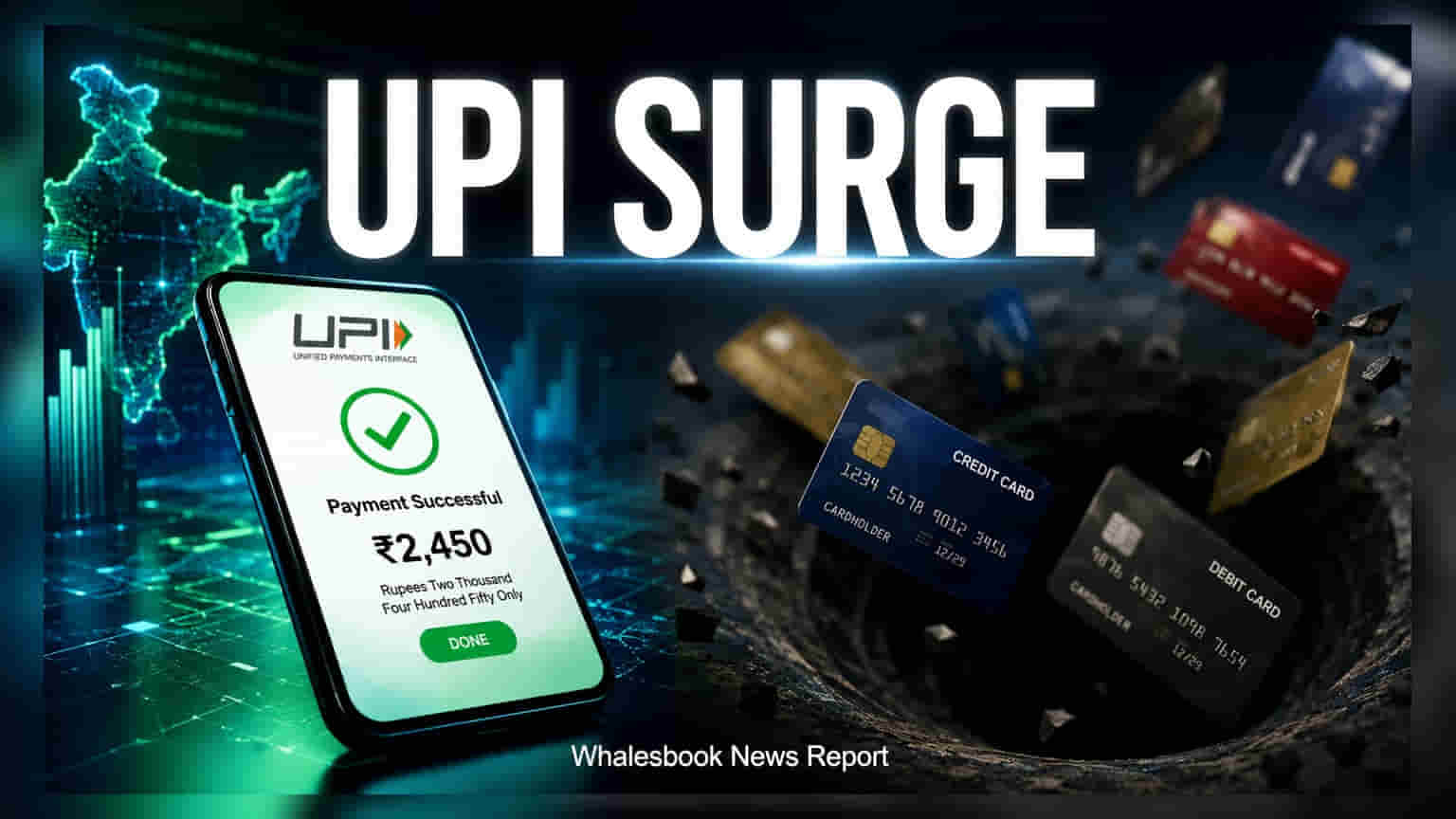
India’s digital payments market reached Rs 11.7 lakh crore in July 2026, with UPI processing 77.3% of merchant volume. While digital payments are growing, the sector faces a shift as regulators weigh potential fees on high-value UPI transactions, impacting long-term monetization strategies.
India’s digital payment landscape saw a significant shift in July 2026, with the Unified Payments Interface (UPI) cementing its status as the dominant rail for merchant transactions. Recent industry data shows UPI captured 77.3% of the total person-to-merchant transaction volume, while the total digital payment market expanded by 19.6% year-on-year to reach Rs 11.7 lakh crore.
As UPI usage has climbed, traditional payment methods have seen their influence wane. Credit cards accounted for 17.7% of merchant payment volume in July, reflecting a decline of 203 basis points compared to the previous year. Debit cards faced a more pronounced contraction, falling to 3.2% from 3.9% in the same period a year earlier. This trend highlights a fundamental change in consumer behavior, where users increasingly prefer the speed and account-to-account convenience of UPI over the friction associated with physical card terminals and POS systems.
Regulatory Shifts and Monetization Risks
While UPI continues to dominate in terms of volume, the sustainability of the zero-cost model is undergoing scrutiny. In August 2026, the government passed the Taxation and Other Laws (Amendment) Bill, which allows for the introduction of a targeted Merchant Discount Rate (MDR) on high-value UPI transactions. While no specific rates have been officially notified, the move signals a potential turning point for payment processors and fintech platforms that have relied on the growth of free-to-use digital infrastructure.
For investors and industry participants, the focus is shifting toward how this policy change might affect merchant adoption. If a fee structure is implemented, the challenge will be to balance cost recovery with the need to keep UPI accessible for small merchants. Furthermore, the overall pace of UPI growth has shown signs of normalization, moderating to 18.7% between April and August 2026, which suggests the need for new growth avenues beyond basic peer-to-merchant payments.
The Road Ahead for Digital Payments
Despite the rapid adoption of digital tools, physical cash remains a resilient part of the Indian economy, with circulation rising by 13% during the April-to-August 2026 window. This indicates that while digital payments are displacing cards, they are not yet fully replacing cash for all types of transactions.
Moving forward, the industry is increasingly betting on the integration of credit functionality into the UPI ecosystem. UPI-linked credit cards are being positioned as a key bridge to keep consumers within the digital loop while potentially offering banks and fintechs a way to earn revenue in an otherwise low-margin environment. The key updates to track will be the official notification of the MDR framework for high-value transactions and whether the integration of credit-on-UPI can sustain transaction growth rates in a maturing market.