

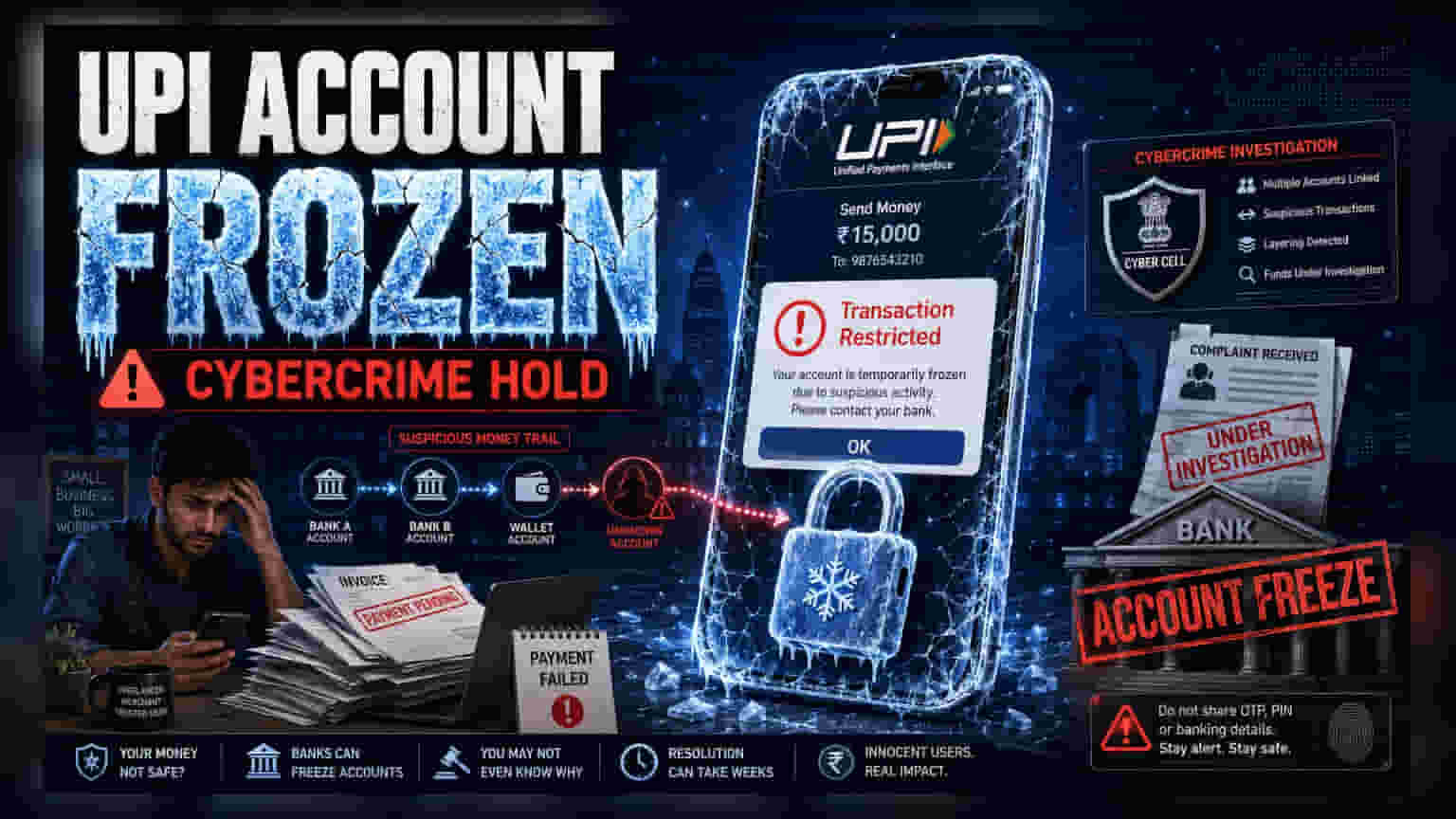
Banks are increasingly freezing UPI accounts as part of a crackdown on cybercrime, which can impact legitimate users who unknowingly receive funds from compromised sources. Understanding the reason for these blocks and maintaining clear transaction records is essential for account restoration.
What Happened
Many users of Unified Payments Interface (UPI) services are reporting unexpected account freezes. When customers attempt to make payments or transfer money, they may encounter errors indicating security restrictions or cybercrime-related holds. This disruption is not typically a technical glitch in the UPI app itself, but rather a direct result of banks enforcing directives from law enforcement agencies or cybercrime cells. As regulators and banks intensify efforts to trace and halt illegal financial activity, accounts that are part of the 'transaction chain' linked to reported fraud are often being blocked to prevent further movement of funds.
The 'Money Trail' Effect
To understand why an innocent account gets frozen, one must look at how digital fraud is investigated. When a victim reports a cybercrime, authorities attempt to trace the stolen money. If that money passes through several accounts, the law enforcement agency may issue a 'lien' or freeze order on all accounts involved in that specific trail. This can inadvertently trap small business owners, freelancers, or individuals who happened to receive a payment from someone who, unknown to them, was using compromised funds. The bank is legally mandated to comply with these investigative directives, leading to a freeze without advance notice to the account holder.
How Legitimate Users Are Caught
While the goal is to stop criminals, the automated nature of these anti-fraud systems can cast a wide net. Accounts with high transaction volumes, unusual payment patterns, or those receiving money from multiple unfamiliar sources are more likely to be flagged. For a freelancer or a small merchant, this means their working capital can be suddenly locked, leading to significant operational inconvenience. The system is designed to prioritize the containment of potentially illicit funds, which means the verification of innocent users often happens only after the account is already restricted.
Resolving the Issue
If an account is frozen, the first step is to contact the bank immediately to understand the specific nature of the restriction. Users should ask if the freeze is an internal security measure or a directive from a law enforcement agency. If it is related to a cybercrime investigation, the bank will typically provide details such as the complaint reference number, the name of the investigating authority, or the specific cyber cell contact information. Resolving the matter usually requires submitting proof of the transaction, such as invoices for services provided, purchase orders, or payment receipts, to the relevant investigating body to prove that the funds were received legitimately.
What Investors And Users Should Track
This trend highlights the tightening regulatory environment around India's massive digital payment ecosystem. While UPI has revolutionized convenience, the operational risks associated with digital transactions are rising as fraud prevention becomes more aggressive. For users, maintaining thorough digital records of all incoming payments is now a basic necessity rather than an optional habit. For the broader market, this increased focus on cyber-security and compliance by banks indicates a shift toward a more strictly monitored payment landscape, where the cost of operational compliance is rising for both financial institutions and end-users.