

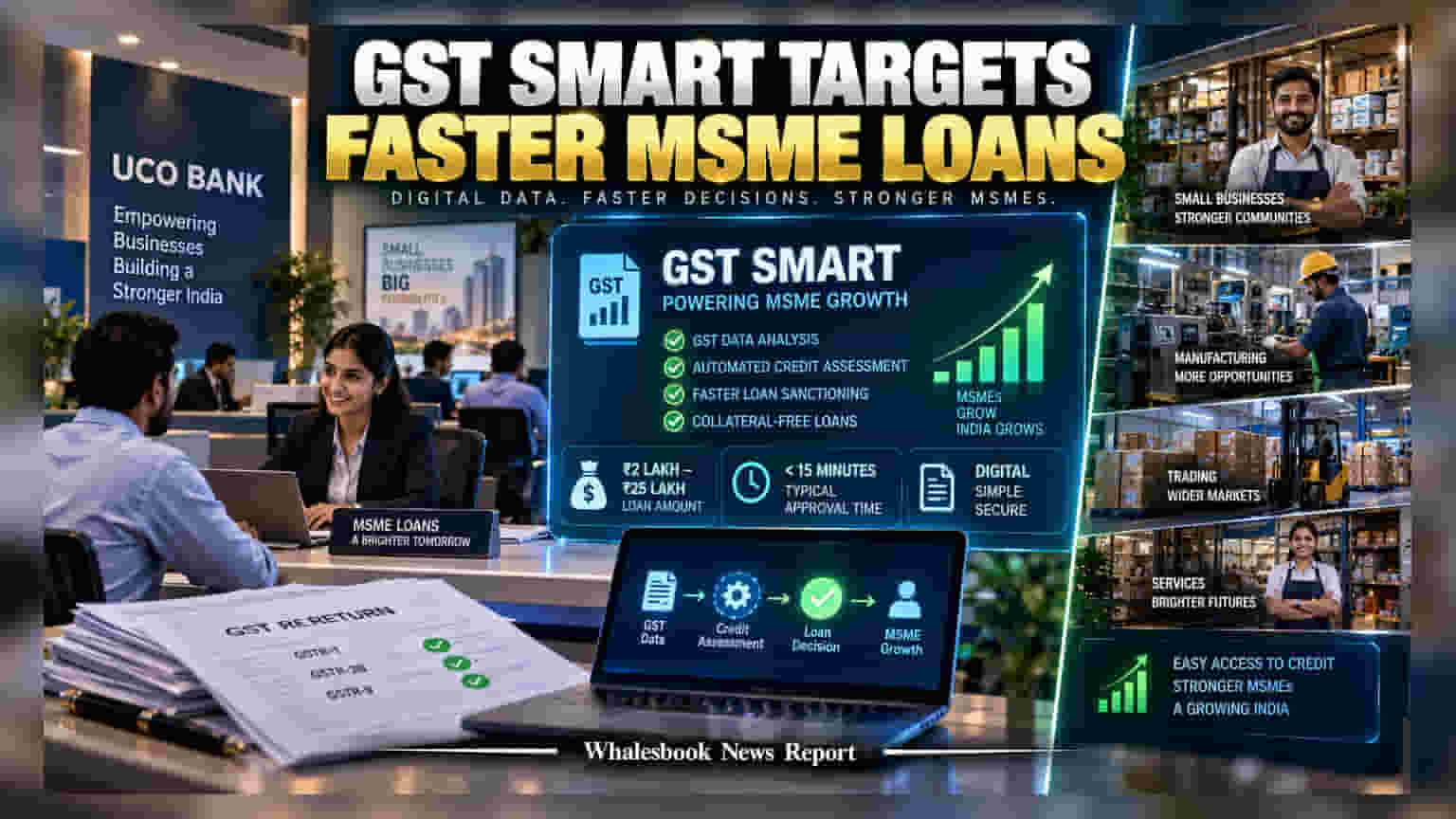
UCO Bank has launched its GST Smart platform to provide collateral-free MSME loans within 15 minutes by leveraging GST return data. While the initiative aims to boost digital lending efficiency, investors will be monitoring how the bank maintains asset quality and manages operational risks in this competitive segment.
UCO Bank has introduced its new 'GST Smart' platform, a digital lending initiative designed to fast-track credit access for Micro, Small, and Medium Enterprises (MSMEs). By leveraging data from GST filings, the bank is now able to offer collateral-free loans ranging from ₹2 lakh to ₹25 lakh. The system is built to automate the sanctioning process, bringing the typical waiting time for eligible borrowers down to less than 15 minutes. This move is part of the bank's broader strategy to digitize its loan book and reach smaller businesses that often struggle with the traditional, document-heavy application process.
For investors, the shift toward automated lending is a critical development. While it reduces operational costs and improves the speed of credit delivery, it also places greater importance on the accuracy of the bank's underlying credit policy. As the bank accelerates its lending process, the primary challenge will be to maintain asset quality. For context, UCO Bank reported that the non-performing assets (NPAs) within its MSME segment stood at 3.42% as of March 2026. Maintaining or improving this figure while simultaneously increasing the volume of digital loans will be a key performance indicator for shareholders in the upcoming quarters.
Operational and structural factors also play a role in the bank’s overall performance. Like other public sector banks, UCO Bank is subject to government-led strategic decisions, with the Government of India holding a significant stake of approximately 90.95%. Additionally, in the near term, the bank is navigating operational challenges, including recent union-led strike notices that can impact day-to-day service delivery. These factors, alongside the necessary investment in cybersecurity to protect digital lending data, are important considerations for anyone tracking the bank's progress.
Looking ahead, the bank has already disclosed intentions to potentially scale the loan limit of this platform up to ₹1 crore in the future. Investors may keep an eye on how quickly this product gains traction among its existing and new MSME client base. The true value of this technology layer, developed in collaboration with ScoreMe Solutions, will be proven by how effectively the bank manages its portfolio growth and whether it successfully lowers processing costs without seeing a rise in bad loans.