 Whalesbook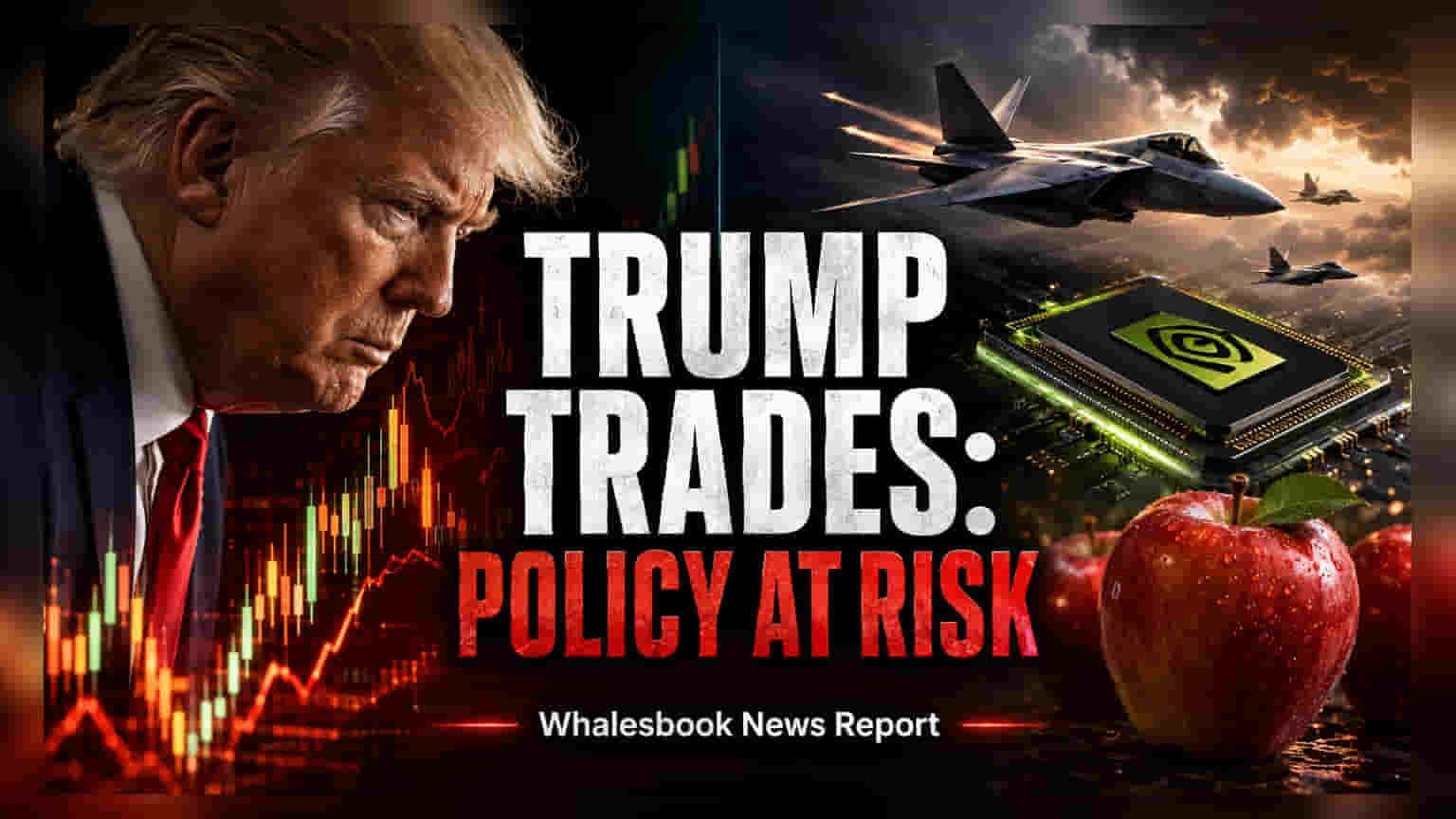


President Donald Trump has set a new precedent with an aggressive stock trading strategy during the first quarter, executing more than 3,600 buy and sell orders. Many of these transactions involved companies directly influenced by presidential policy, prompting significant ethical scrutiny.
Policy-Sensitive Holdings
Among the disclosed trades was an investment of up to $6 million in Nvidia, a chipmaker whose advanced technology Trump had previously authorized for sale to China. The portfolio also saw significant activity in US military contractors like Lockheed Martin, General Dynamics, and Northrop Grumman, companies whose operations are inherently tied to international conflict and government defense spending.
Ethical Concerns
Richard Painter, former chief White House ethics adviser, stated that while technically permissible for the president, such trading constitutes a "fundamental breach of trust." US law prohibits federal employees from holding assets that could be impacted by their work, though a specific exemption exists for the president. Critics argue that even the knowledge of these holdings could influence presidential decisions across various sectors, from healthcare policy to government contracts and military actions.
A spokesperson for the Trump family business asserted that an independent third party exclusively manages the president's portfolio. She added that neither President Trump, his family, nor The Trump Organization are involved in investment selection, direction, or approval, and they receive no advance notice of trading activity.
Portfolio Scale and Scope
The stock trading report spans over 100 pages, indicating transactions potentially exceeding $100 million in the three-month period. Trades occurred at a rapid pace, averaging 50 per day the markets were open. While purchases appeared to outnumber sales, the exact ratio remains unclear due to the use of broad value ranges.
Historically, Trump has maintained a relatively small stock market investment. However, this trend appears to be shifting, coinciding with reports of substantial cash inflows to the Trump Organization from overseas developers and cryptocurrency sales. The anonymity of some crypto purchasers raises questions about potential attempts to curry favor with the president.
Beyond Nvidia, the portfolio includes shares in major technology and manufacturing firms such as Apple, Boeing, and Tesla. Notably, the CEOs of these four companies accompanied Trump on a recent visit to China. Intel, a chipmaker in which the government took a stake last year, is also reportedly held. The portfolio also includes investments in fast-food chains like Shake Shack, Papa John's, and Cheesecake Factory.
Precedent Ignored
Previous US presidents have typically divested their stock holdings before entering office, opting for broadly diversified funds or blind trusts to avoid potential conflicts of interest. This practice was followed by George H.W. Bush, Bill Clinton, and George W. Bush, while Barack Obama utilized diversified mutual funds. Joe Biden did not engage in stock trading during his tenure. Donald Trump's approach marks a significant departure from these established norms.