

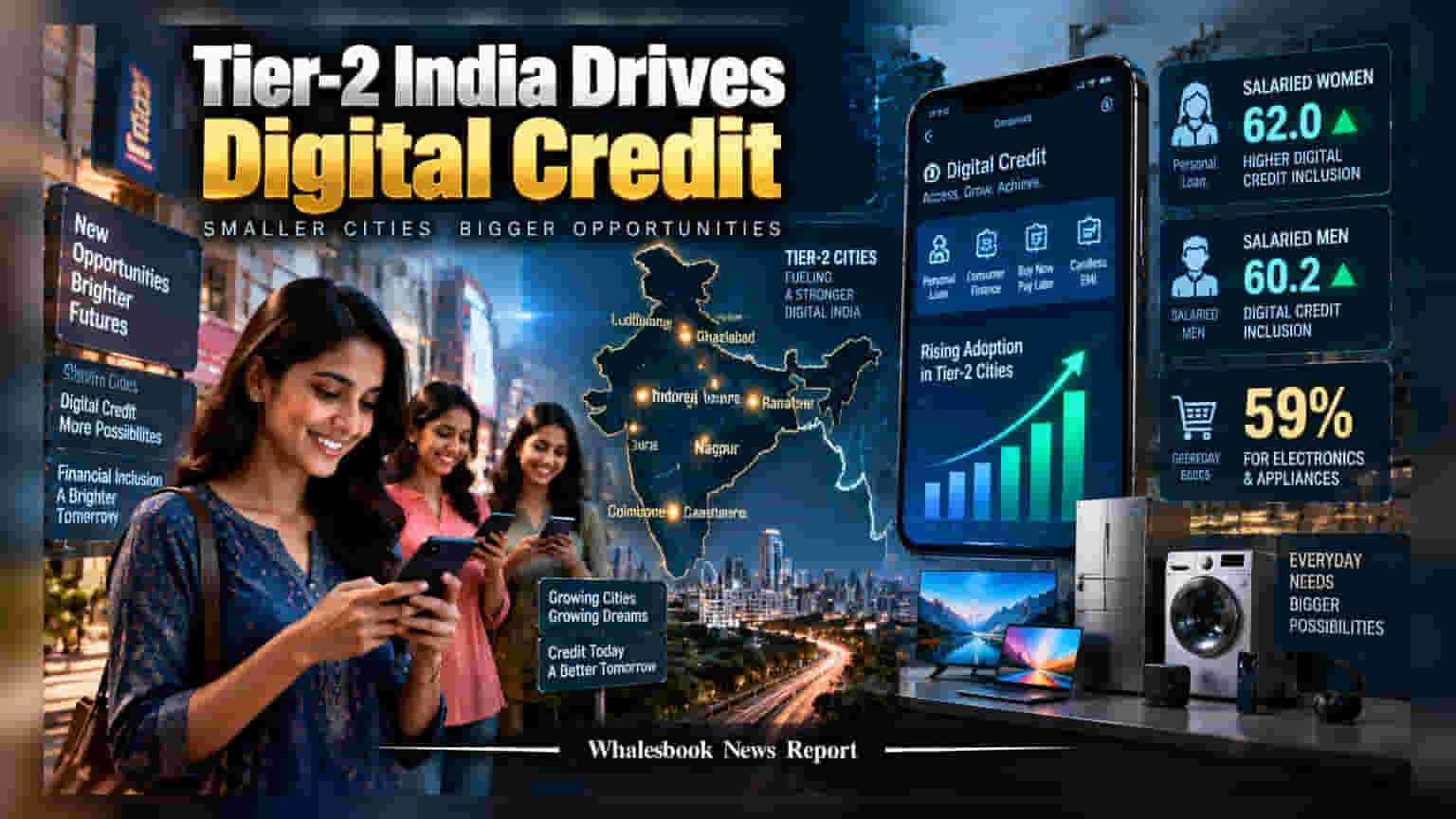
The Digital Credit and Inclusion Index 2026 shows Tier-2 cities are outpacing metros in digital credit adoption, with salaried women leading in financial inclusion scores. While adoption is rising, usage remains heavily focused on consumption rather than productive financial planning.
The 'Digital Credit and Inclusion Index 2026', released by the Pahle India Foundation in collaboration with Amazon Pay, highlights a significant shift in India’s financial landscape. The report reveals that Tier-2 cities are now the primary growth engines for digital credit, recording an average index score of 58.64, which is notably higher than the 53.1 score for Tier-1 cities and the 55.7 score for Tier-3 cities.
This trend signals that digital lending is moving beyond the country’s largest metropolitan areas. Key cities such as Coimbatore, Surat, Nagpur, and Indore have emerged as leaders in this transition. The findings also point to a closing gender gap in smaller markets. Salaried women have outperformed salaried men in digital credit inclusion metrics, suggesting that financial access is becoming more balanced outside of the major metros where the gender gap remains wider.
Despite the growth in adoption, the purpose of borrowing remains largely focused on immediate consumption. The index found that 59% of users leverage digital credit primarily to purchase electronics and home appliances. There is currently limited evidence of these credit products being used for productive financial goals, such as business investment, asset creation, or long-term financial planning.
For fintech lenders and payment providers, this data confirms that non-metro regions are central to future expansion. Amazon Pay India, which collaborated on the research, noted that 75% of its own customer base is already concentrated in Tier-2 and Tier-3 cities. This demonstrates the commercial scale available in smaller towns as digital infrastructure penetrates deeper into the country.
However, the reliance on digital credit for household consumption also highlights a potential risk regarding financial resilience. When facing cash shortages, the report observed that a large portion of respondents still prefer to use their savings or other traditional methods, rather than relying on digital loan apps or buy-now-pay-later services. For the industry, the next phase of growth will depend on whether lenders can encourage the use of digital credit for more sustainable financial needs without causing repayment stress among users.