 Whalesbook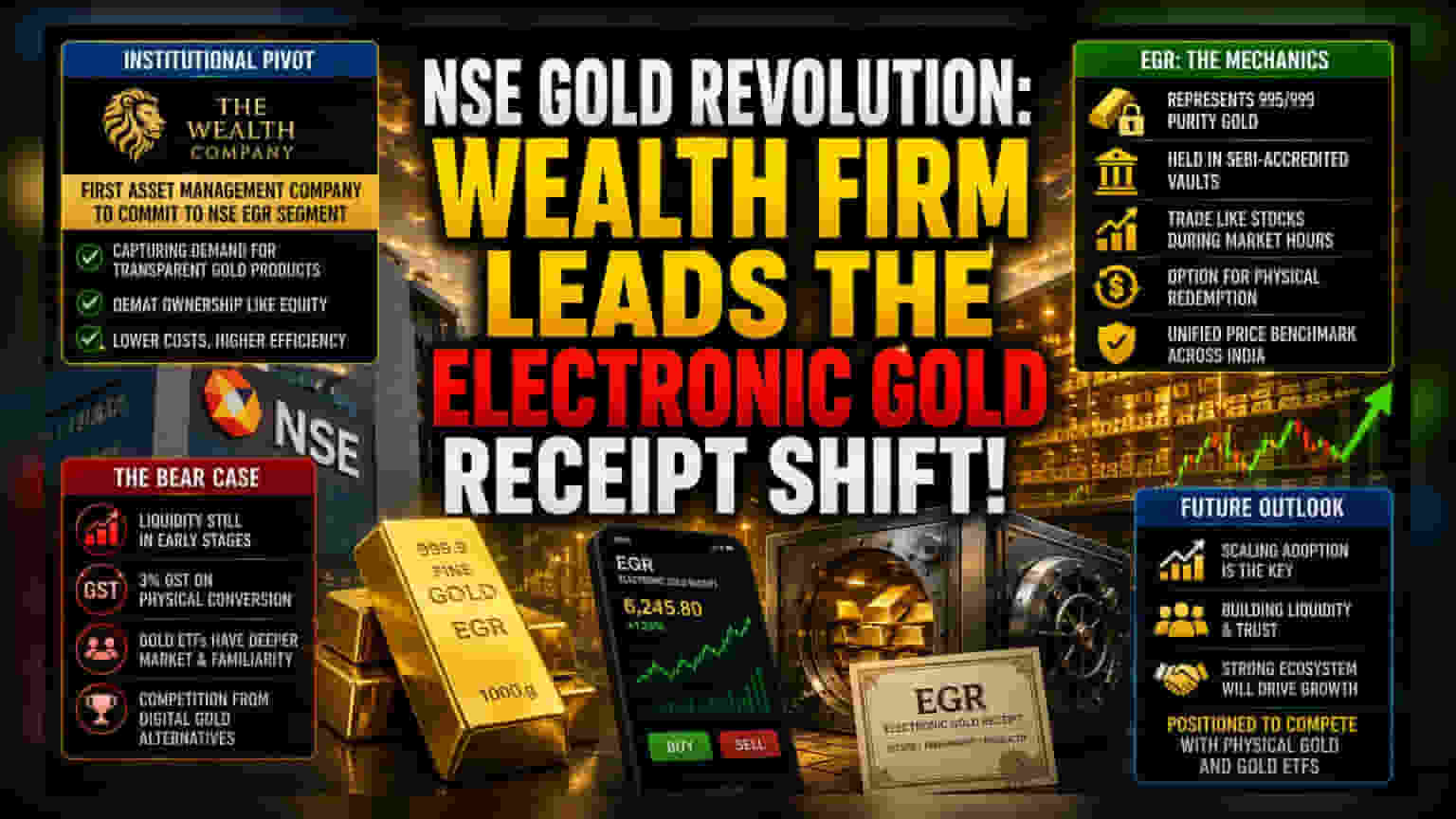


The Institutional Pivot
The decision by The Wealth Company to participate in the National Stock Exchange’s Electronic Gold Receipt (EGR) segment marks a significant shift in how institutional players are approaching India’s gold market. By becoming the first asset management company to commit, in principle, to this platform, the firm is signaling an attempt to capture the growing demand for transparent, financialized gold products. Unlike traditional physical gold, which often carries costs related to making charges, storage, and purity verification, EGRs provide a dematerialized ownership structure that mirrors equity trading, allowing for seamless liquidity and standardized pricing.
The Mechanics of EGR Integration
Electronic Gold Receipts are regulated securities that represent physical gold of 995 or 999 fineness held in SEBI-accredited vaults. The structural advantage here is twofold: it eliminates the logistical risks of physical custody while maintaining the option for physical redemption—a feature missing from traditional Gold Exchange-Traded Funds (ETFs). For institutional investors and high-net-worth clients, this product offers a regulated channel to hold gold that can be traded during market hours with the same ease as stocks. The NSE’s push to deepen this ecosystem is an attempt to create a unified price benchmark for gold across India, effectively reducing the price fragmentation often seen between different local bullion dealers.
The Bear Case: Hurdles for Adoption
Despite the clear regulatory backing, the EGR segment faces structural headwinds. While the promise of transparency is high, liquidity remains a primary concern for new market participants. Historical data from earlier launches of similar gold products suggests that investors prioritize the depth of market and ease of transition, and EGRs are still in the early stages of building volume. Furthermore, while there is no GST on exchange-based trading, the conversion to physical gold triggers a 3% GST levy, creating a potential friction point for retail investors who might be looking for cost-effective physical delivery. Competing instruments, such as Gold ETFs, currently benefit from higher established trading volumes and greater investor familiarity, leaving the EGR product to fight for market share in a crowded field of digital gold alternatives.
Future Outlook
The success of this partnership will likely hinge on the firm's ability to drive investor confidence and scale the product within its own advisory and wealth management ecosystem. As more market participants enter the EGR space, the development of a vibrant trading ecosystem will be essential to ensure these receipts become a viable competitor to both physical gold and Gold ETFs.