

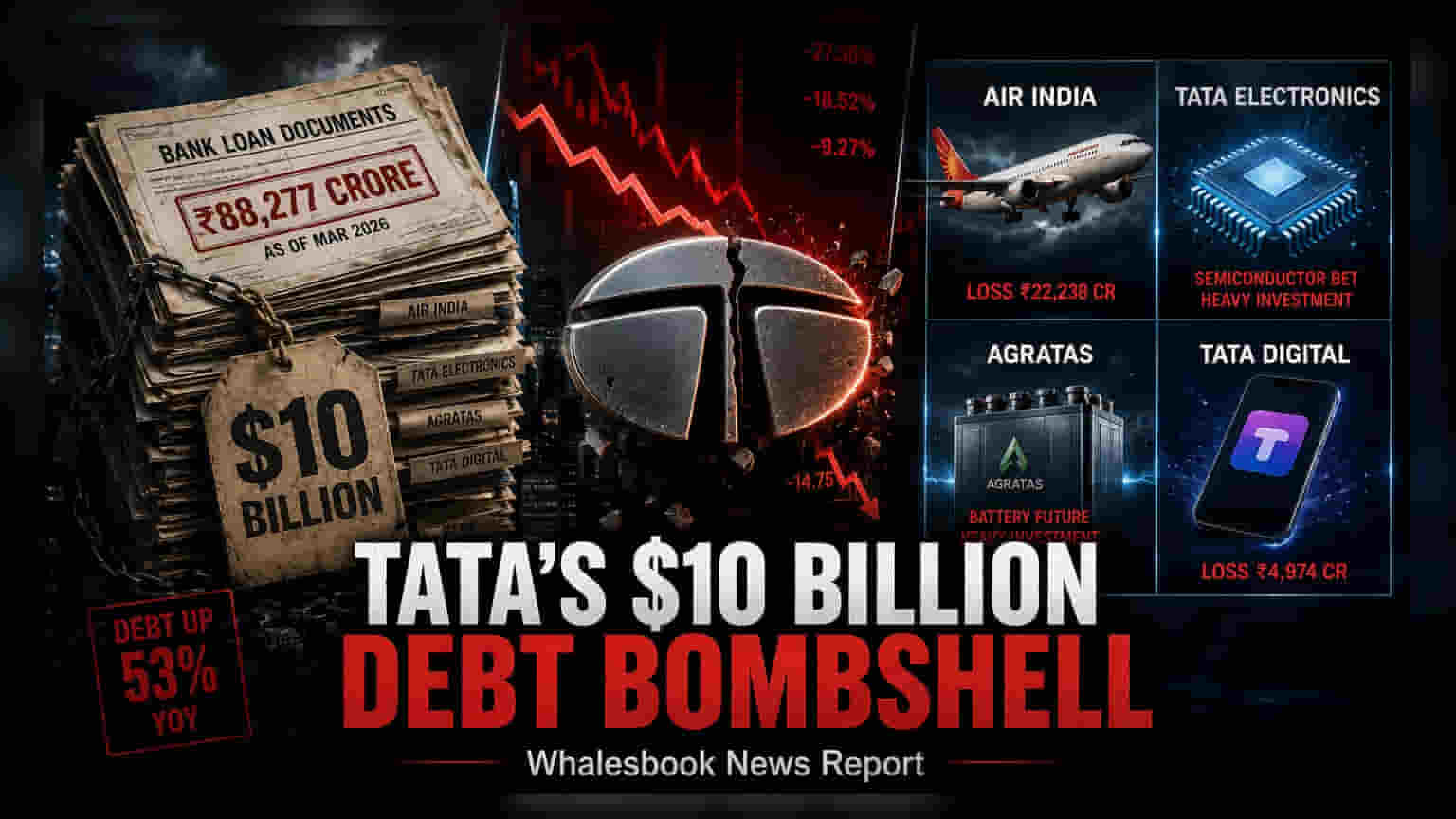
The successor to Tata Sons chairman N. Chandrasekaran will inherit a significant financial challenge as four new, loss-making ventures have piled up ₹88,277 crore in debt. This debt grew by 53% in FY26, raising questions about capital allocation strategies ahead of the leadership transition in February 2027.
The upcoming change in leadership at Tata Sons brings the group’s financial strategy into sharp focus. The person who replaces N. Chandrasekaran, whose tenure ends on February 20, 2027, will need to manage a substantial debt pile linked to four rapidly growing, loss-making businesses. These companies include Air India, Tata Electronics, Agratas, and Tata Digital.
As of the end of March 2026, these four ventures collectively held ₹88,277 crore (approximately $10 billion) in bank debt. This represents a 53% increase in borrowing over the previous year. For comparison, the group's four largest listed companies—which include Tata Steel, Tata Motors, and Tata Power—saw their combined debt rise by 27% during the same period. This indicates that the newer, private businesses are adding debt at a much faster rate than the established, profit-generating arms of the conglomerate.
These new ventures are part of the group's massive push into capital-intensive sectors like semiconductor manufacturing, digital services, aviation, and battery storage. While these areas are designed to drive future growth, they are currently in an investment phase and are not yet consistently profitable. In the 2025-26 fiscal year, these four companies reported a combined loss of ₹29,924 crore. Specifically, the Air India group reported a net loss of ₹22,238 crore, while Tata Digital recorded a loss of ₹4,974 crore.
The rising debt levels at these companies have drawn attention to the group’s capital allocation policy. Because much of this borrowing is backed by the holding company, Tata Sons, the financial health of these ventures is directly tied to the group’s overall credit profile. This has led to internal discussions within the boardroom regarding the speed of expansion and the path to profitability. Reports indicate that Noel Tata, chairman of Tata Trusts, has raised questions regarding the long-term viability and the profitability roadmap for these new businesses.
The next chairman will face the difficult task of balancing the group's aggressive expansion strategy with the need to maintain financial discipline. Observers and stakeholders will likely track how the leadership manages this debt, whether these ventures can improve their operating margins in the coming quarters, and how the holding company prioritizes its investments following the leadership transition.