

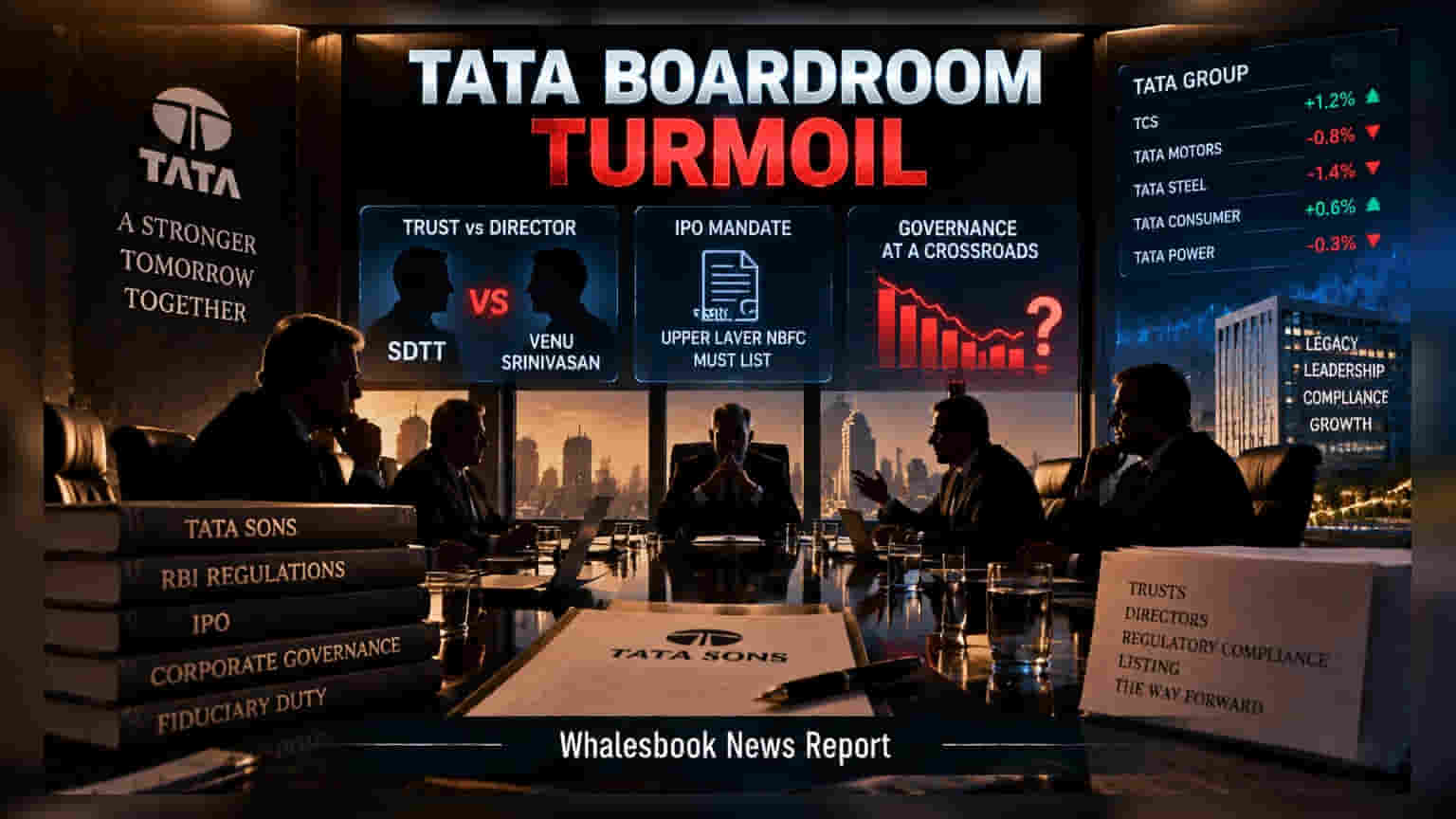
A governance standoff has emerged between Tata Trusts and nominee director Venu Srinivasan over the potential public listing of Tata Sons. The conflict centers on the Reserve Bank of India’s regulatory mandate for the holding company to go public, clashing with the Trusts' internal stance. Investors are watching how this rift affects the future structure of the Tata conglomerate as it navigates compliance with official norms.
A governance conflict has emerged at the top of the Tata conglomerate, with the Sir Dorabji Tata Trust (SDTT) and nominee director Venu Srinivasan at odds over the future of Tata Sons. The disagreement centers on whether the company should proceed with an initial public offering (IPO), a move necessitated by the Reserve Bank of India’s (RBI) classification of Tata Sons as an 'Upper Layer' Non-Banking Financial Company (NBFC). Under RBI regulations, such entities are required to list on public stock exchanges to enhance transparency and governance.
The conflict intensified when the SDTT attempted to issue a directive aimed at preventing Venu Srinivasan from voting on the potential listing. The Trust had previously passed a resolution favoring a strategy to avoid a public market entry, which remains a point of contention within the leadership. Venu Srinivasan, who also serves as the chairman emeritus of TVS Motor, has openly rejected this directive. He has argued that as a nominee director on the Tata Sons board, his primary legal and fiduciary duty is to act in the best interest of the company, rather than adhering to the specific desires of the appointing trust.
This dispute highlights the complex relationship between the Tata Trusts, which hold a majority stake in Tata Sons, and the professional board responsible for governing the entity. Srinivasan’s position asserts that the Trusts cannot unilaterally impose restrictive mandates on directors without proper legal and procedural alignment, particularly when those mandates conflict with regulatory requirements or the director’s fiduciary obligations. By participating in board decisions, including those supporting management continuity, Srinivasan has challenged the influence the Trusts traditionally exert over board-level strategy.
The core of the investor concern lies in the uncertainty regarding how Tata Sons will comply with the RBI's listing timeline. As the central holding company for major group businesses like TCS, Tata Motors, and Tata Steel, any governance instability at this level is significant. The market is closely observing how the group will balance the demands of its institutional shareholders and trusts with the stringent regulatory compliance required of an Upper Layer NBFC.
Moving forward, the situation will likely hinge on legal and governance interpretations of the fiduciary duties of nominee directors. Investors and analysts will be watching for further updates from the board regarding the listing process, the resolution of internal board conflicts, and any further communication from the Reserve Bank of India. The consistency of board decisions and the ability of the conglomerate to maintain internal harmony while meeting external regulatory milestones will be key monitorables for the group's long-term structure.