 Whalesbook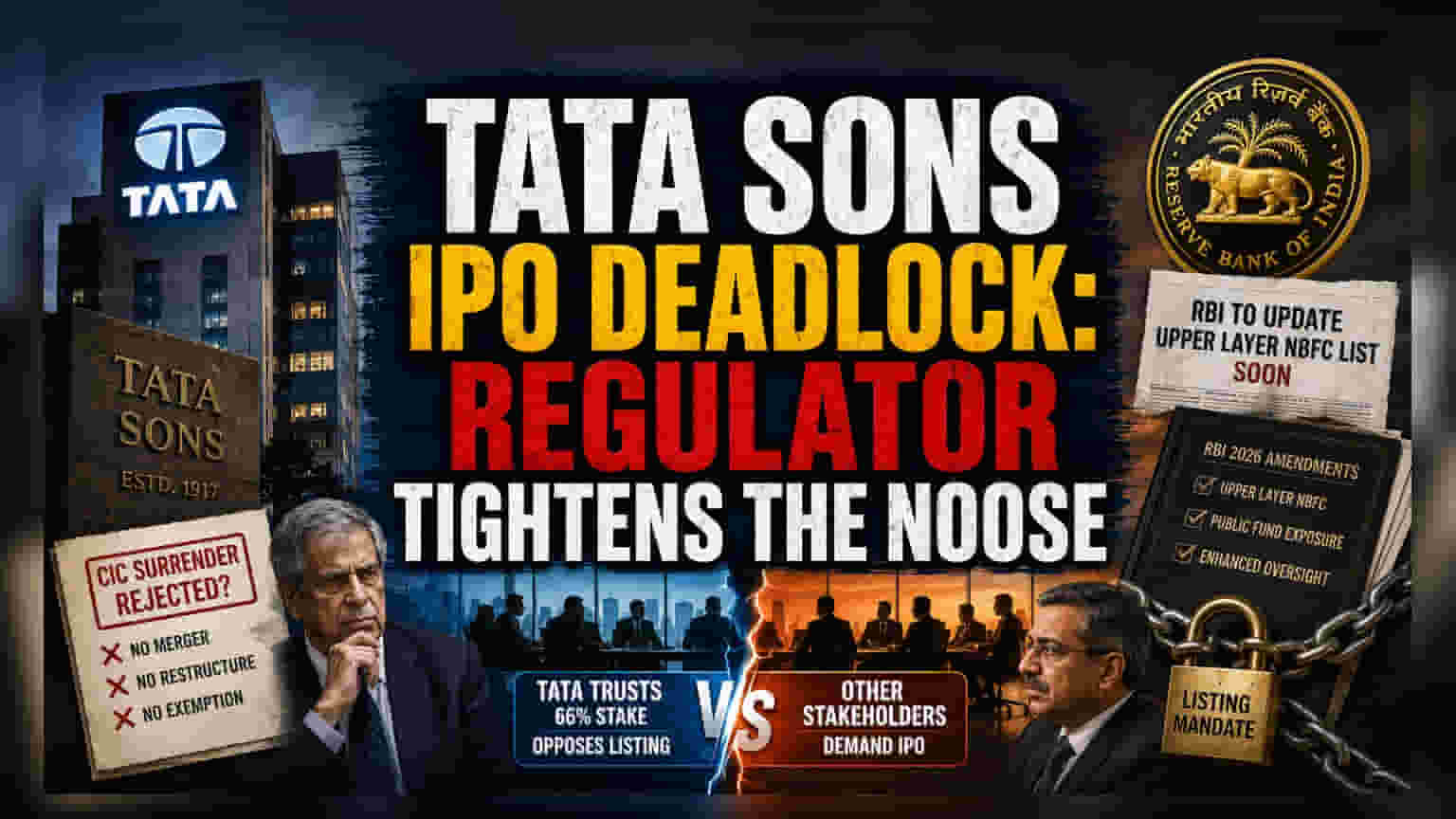


The Regulatory Impasse
The long-standing ambiguity surrounding the potential initial public offering of Tata Sons is nearing a breaking point. Reserve Bank of India Governor Sanjay Malhotra confirmed on Friday that the central bank intends to release an updated list of Upper Layer non-banking financial companies (NBFCs) in the near term. This announcement follows a series of 2026 regulatory amendments that have fundamentally altered the landscape for large holding companies. With a standalone asset base exceeding ₹1.7 lakh crore, Tata Sons remains squarely within the threshold for classification as a systemically important entity, leaving little room for regulatory reprieve.
The Failure of the 'Naked Surrender'
In March 2024, Tata Sons filed an application to surrender its registration as a Core Investment Company (CIC) in a strategic bid to sidestep the mandatory listing obligations tied to its Upper Layer NBFC status. However, market observers and governance advisory firms have characterized this attempt as procedurally inconsistent with the RBI’s recent approach to other major financial entities. Unlike previous cases where surrenders were accepted only upon the restructuring or merger of an entity into a regulated framework, Tata Sons has sought to maintain its existing structure while shedding oversight. Recent directives regarding the treatment of indirect exposure to public funds further undermine the company’s efforts to claim an exemption, rendering the de-registration plea increasingly untenable in the current oversight environment.
Internal Schisms and Stakeholder Pressure
While the regulator moves toward finality, internal divisions within the Tata ecosystem have deepened. A significant rift has emerged between Tata Trusts, which holds a 66% stake and remains largely opposed to listing, and other stakeholders who argue that a public debut is a necessary evolution. The opposition, championed by figures close to Tata Trusts chairman Noel Tata, maintains that public listing would dilute the philanthropic focus of the group. Conversely, minority shareholders, most notably the Shapoorji Pallonji Group, have persistently lobbied for an IPO. Facing significant debt repayment obligations and liquidity constraints, the SP Group views the unlocking of its 18% stake in the conglomerate as a critical financial imperative. This divide has recently extended to the board level, with reported disagreements regarding the strategic direction of various group subsidiaries and the future of current leadership.
The Forensic Bear Case
The central challenge for Tata Sons lies in the potential erosion of its holding company structure if forced to comply with the Securities and Exchange Board of India’s Listing Obligations and Disclosure Requirements. A transition to a public entity would mandate increased transparency in related-party transactions and require a minimum of 50% independent directors on its board. For a sprawling conglomerate, these requirements could trigger an artificial holding-company discount, impacting the valuation of its listed subsidiaries. Furthermore, the persistent delay in securing regulatory clarity has created a vacuum that invites external criticism regarding governance standards, potentially impacting the group’s broader market reputation as it balances its 108-year heritage against modern regulatory and capital-allocation pressures.