

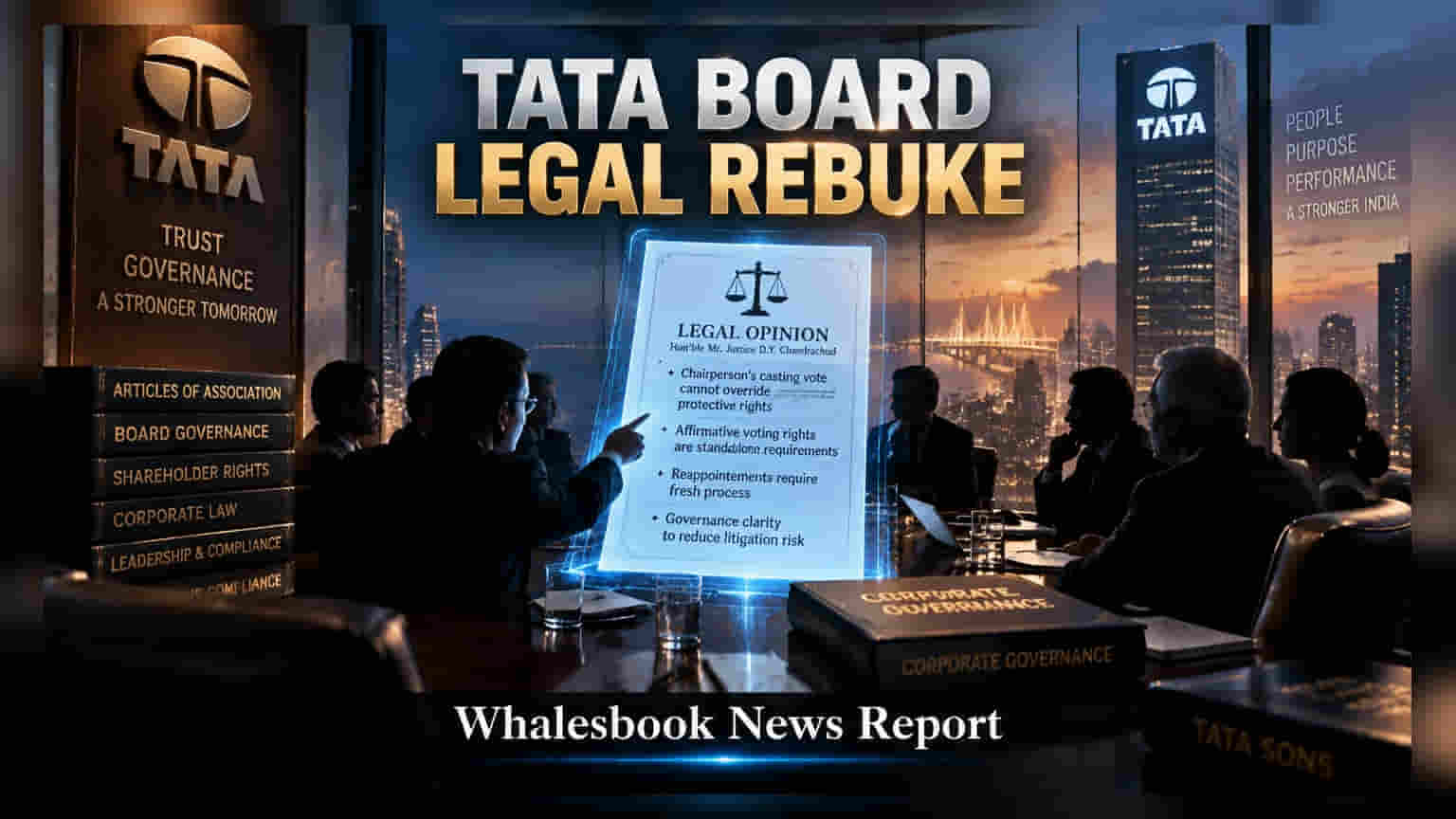
A legal opinion from former CJI DY Chandrachud argues that the Tata Sons Chairperson’s casting vote cannot override specific affirmative rights reserved for nominee directors. This interpretation potentially changes how the conglomerate handles board decisions and leadership appointments. For investors in listed Tata group companies, the opinion highlights governance as a critical area to monitor regarding boardroom processes and corporate checks and balances.
Former Chief Justice of India DY Chandrachud has released a legal opinion regarding the governance framework at Tata Sons. The opinion focuses on the company's Articles of Association (AoA), which serve as the internal governing rules for the conglomerate. The core of the argument revolves around the Chairperson's power to exercise a casting vote during board meetings.
The legal document contends that the Chairperson's casting vote is intended to resolve simple ties in board tallies but cannot be used to bypass specific protective rights. It argues that affirmative voting rights, often held by nominee directors to protect shareholder interests, are standalone requirements. According to the opinion, if a board resolution requires the explicit support of certain directors, the Chairperson cannot use a casting vote to override that requirement or create a majority where it is clearly absent. This interpretation effectively limits executive power in situations where board consensus is a mandatory hurdle.
The opinion also addresses the procedures for leadership reappointments. It suggests that renewing an incumbent's term should be treated as a fresh appointment rather than a simple continuation. The document cautions that failing to follow the strict processes defined in the company's organizational rules creates litigation risks. For a company that manages a vast array of businesses, such legal and procedural clarity is seen as vital for maintaining stable governance.
While Tata Sons is an unlisted private company, it functions as the promoter and holding company for major publicly traded firms including TCS, Tata Motors, Tata Steel, and Tata Power. Governance at this parent level is significant for investors because it influences the strategic direction, capital allocation, and leadership choices that ultimately impact the entire group's listed entities. Historically, legal disputes regarding board control and minority shareholder rights have been pivotal in the conglomerate's corporate history. Investors typically watch these governance developments to assess the strength of the company's internal checks and balances.
The practical impact of this opinion depends on whether the company's board incorporates these legal arguments into its decision-making processes. There is no immediate operational change, but the opinion signals a shift in how corporate governance might be viewed within the group. The next important step for market observers will be any updates or adjustments the company makes to its board protocols and compliance measures in response to these legal insights.