

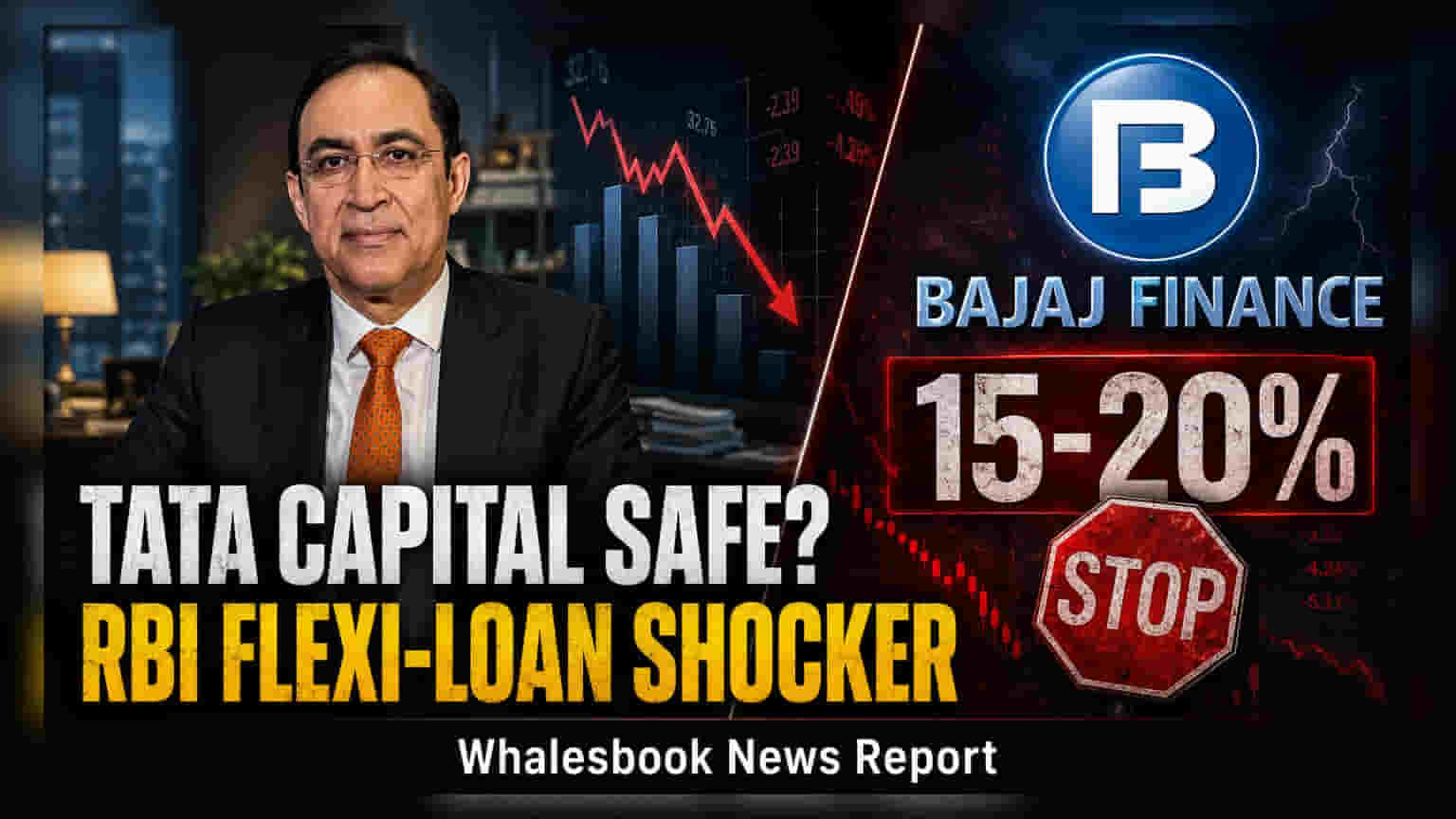
Tata Capital reports its revolving credit exposure is below 5% of its loan book following the RBI’s draft proposal to restrict these products for NBFCs. The regulator aims to curb 'evergreening' of loans by mandating fixed repayment schedules. While peers with higher exposure to flexible credit products may face greater operational adjustments, Tata Capital’s limited reliance positions it to navigate the potential transition more easily.
The Reserve Bank of India (RBI) has issued a draft proposal that could reshape the lending landscape for non-bank lenders. The regulator plans to restrict Non-Banking Financial Companies (NBFCs) from offering revolving credit products, also known as flexi-loans, which allow borrowers to withdraw and repay funds repeatedly from a single credit line. Instead, the RBI wants to enforce strict term loans with fixed repayment schedules.
Following the announcement, Tata Capital's Managing Director and CEO, Rajiv Sabharwal, clarified that the company's exposure to such revolving credit facilities is minimal, accounting for less than 5% of its total loan book. As of the end of June, the lender held a gross loan book of approximately ₹2.86 trillion, with assets under management totaling ₹2.90 trillion. This limited exposure suggests that the proposed regulatory changes may have a restricted direct impact on the company’s current business model.
The RBI’s primary concern is 'evergreening,' a practice where borrowers use new loan drawdowns to pay off existing debt, effectively masking the true quality of a loan. By restricting flexible credit lines, the central bank aims to ensure that NBFCs have better visibility into the actual cash flows of their borrowers, rather than relying on products that can obscure repayment capacity. Credit cards and bullet repayment loans are excluded from these proposed changes.
For investors, the potential impact of these rules varies significantly across the NBFC sector. Analysts have noted that companies with a higher proportion of flexi-loan products in their portfolio may face more pressure to redesign their credit offerings or migrate existing customers to traditional term loan structures. While names like Bajaj Finance are frequently cited as having significantly higher exposure—estimated by some market analysts to be around 15% to 20%—other large lenders such as Cholamandalam Investment and Finance, L&T Finance, and Poonawalla Fincorp are viewed as having negligible exposure to this specific product type.
The regulatory process is currently in the feedback stage. The RBI has invited comments from stakeholders and industry bodies until August 28, 2026. Industry organizations, including the Finance Industry Development Council (FIDC), are expected to engage with the regulator to discuss the operational challenges of moving away from flexible credit lines. The final impact on the sector will depend on the nuances of the final guidelines once they are notified, particularly regarding how existing loan books are treated during any transition period.