

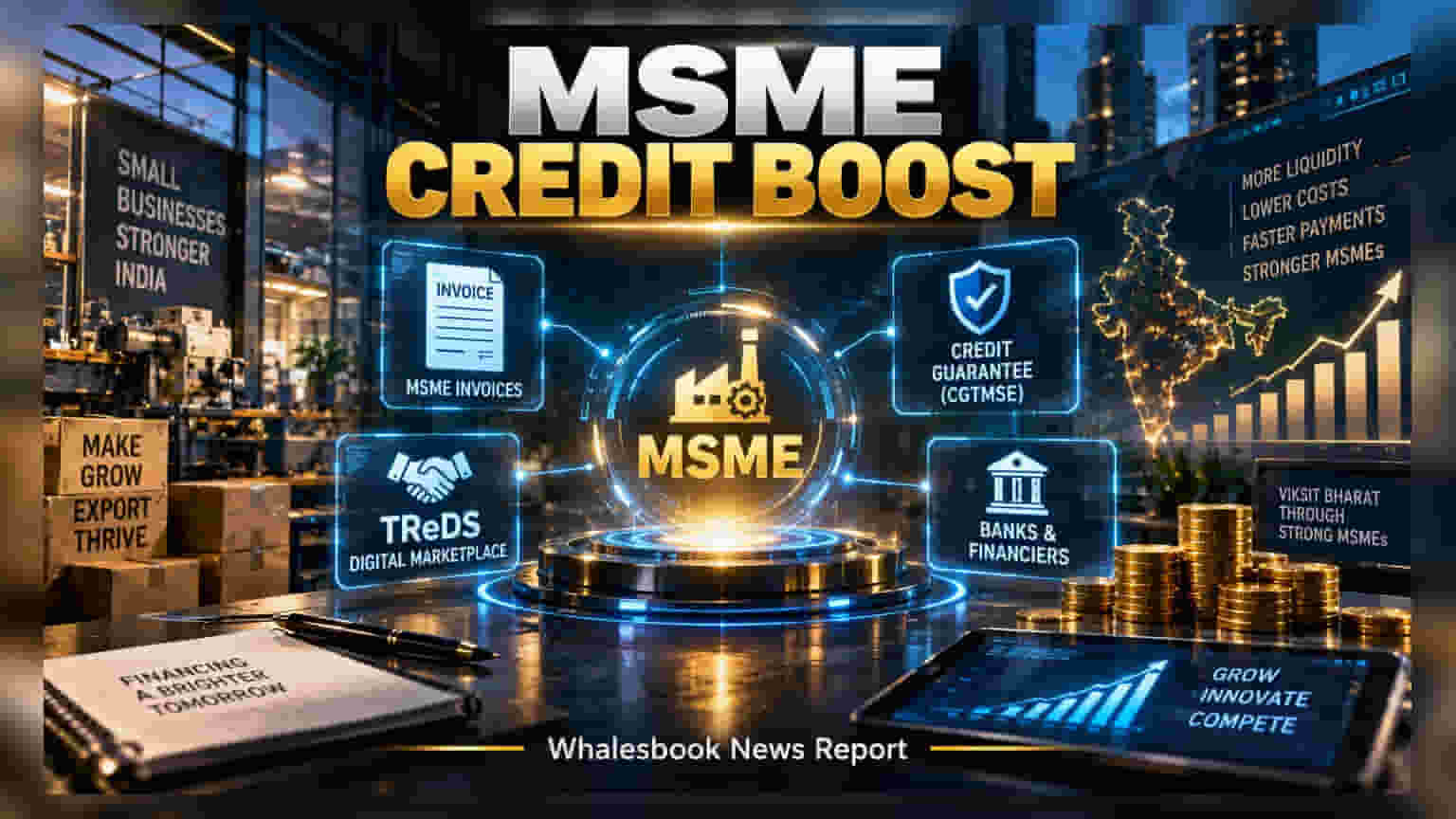
TReDS platforms have integrated CGTMSE government guarantees to reduce risks for lenders financing MSME invoices. By providing a safety net for unpaid bills, the move aims to increase liquidity and lower borrowing costs for small businesses. M1xchange has become the first to execute a transaction under this new digital framework.
The Indian government’s move to allow the Credit Guarantee Fund Trust for Micro and Small Enterprises (CGTMSE) to cover invoices on Trade Receivables Discounting System (TReDS) platforms marks a shift in how small businesses access credit. Under this new framework, banks and financiers on TReDS platforms can now receive a partial guarantee from the government if an invoice remains unpaid by the corporate buyer. This change addresses the primary barrier that has historically kept banks away from invoice discounting: the risk of non-payment.
TReDS platforms act as an online marketplace where micro and small enterprises (MSMEs) can sell their unpaid invoices to lenders to get cash immediately. Traditionally, because MSMEs often have limited credit history, lenders viewed discounting these invoices as risky, leading to higher costs or rejection. With the CGTMSE guarantee, the risk is partially mitigated, allowing banks to feel more confident in providing funds to smaller players. M1xchange has already completed the first transaction using this integrated guarantee system.
For MSMEs, this integration is expected to reduce the time spent waiting for payments. When large companies delay payments, MSMEs face cash flow stress, which affects their day-to-day operations. By speeding up access to cash, this move helps stabilize their business cycles.
For the financial sector, the success of this initiative will depend on how quickly banks and other lenders adopt the system. While the government provides the guarantee, the operational speed and the cost of the guarantee fee will be critical factors. Lenders must balance the cost of obtaining this coverage against the interest income they earn from the discounting service. If the fees are kept competitive, it could lead to higher participation from banks that were previously hesitant to enter the segment.
The Reserve Bank of India has been encouraging such digital infrastructure to formalize the MSME supply chain. By integrating CGTMSE into TReDS, the government is essentially digitizing credit protection. This is part of a broader push to ensure that small firms are not excluded from formal credit markets due to high perceived risk. The Ministry of MSME expects this move to lower the cost of borrowing by encouraging more competitive bidding among lenders for MSME invoices.
Going forward, the key factor to watch is the adoption rate among public and private sector banks. A significant uptick in transaction volumes on TReDS platforms would indicate that the guarantee is effectively attracting more liquidity into the system. The speed at which platforms scale this feature will be a reliable indicator of the initiative’s success in lowering the cost of borrowing for the MSME sector.