

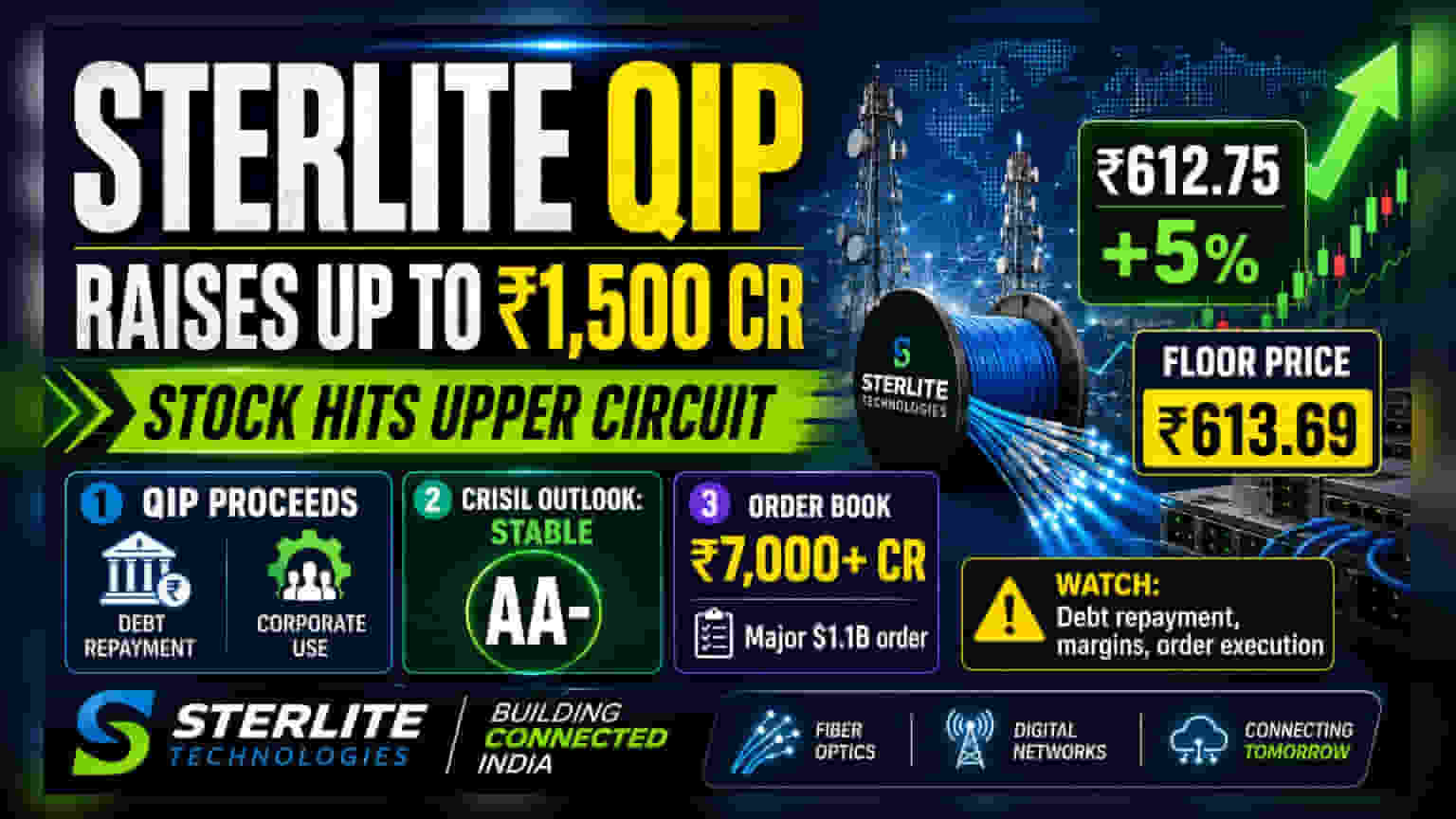
Sterlite Technologies has initiated a Qualified Institutional Placement (QIP) with a floor price of ₹613.69 per share to raise up to ₹1,500 crore. The funds are aimed at reducing debt, as the company reports improving operational margins. Shares hit an upper circuit, continuing a strong six-month rally, though investors should note that the stock remains in a restricted trading segment.
What Happened
Sterlite Technologies has launched a Qualified Institutional Placement (QIP) to raise up to ₹1,500 crore. The company set the floor price at ₹613.69 per equity share. The board approved this fundraising on June 24, 2026. This process allows the company to raise capital by issuing shares to qualified institutional buyers. According to the announcement, the proceeds will be primarily used to repay outstanding borrowings and for general corporate purposes.
Understanding The Stock's Movement
The stock rose 5% on the BSE to hit the upper circuit, closing at ₹612.75. This rally follows a period of significant growth, with the stock rising 495% over the last six months. However, investors need to be aware of the trading structure. Sterlite Technologies currently trades in the 'T' group on the BSE and the 'BE' segment on the NSE. This is a crucial detail: these categories mean that all trades must result in the delivery of shares. Intraday trading is not permitted, and the shares cannot be bought and sold on the same day. This restriction is generally used by exchanges for stocks experiencing high volatility.
Financial Health And Credit Rating
Alongside the fundraising news, Crisil Ratings updated its outlook on the company’s long-term bank facilities and debentures to 'Stable' from 'Negative', while keeping the rating at 'AA-'. This rating action follows an improvement in performance during the March 2026 quarter (Q4FY26). The company reported revenue of ₹1,441 crore and an EBITDA margin of 15.1% for the quarter, marking a recovery in profitability compared to the third quarter of the fiscal year.
Business Context And Risks
The company has been working to improve its financial position and has secured a large order book exceeding ₹7,000 crore. This includes a major $1.1 billion order secured in May 2026, which is expected to be executed over three years. Despite the positive order flow, there are risks to consider. The company’s focus on the US market exposes it to potential tariffs and geopolitical cost pressures. These factors can influence the price of raw materials and impact profit margins. Whether the company can maintain its 15.1% margin in the face of these global cost pressures remains a key area for investors to watch.
What Investors Should Track
The immediate monitorables are the progress of debt repayment using the QIP proceeds and the finalization of the fundraising amount. Beyond this, investors should track the execution of the large order book and whether the current profit margin trend is sustainable. Any updates regarding global trade policies or tariffs will also be important, as these can directly affect the company's cost structure and profitability in export markets.