

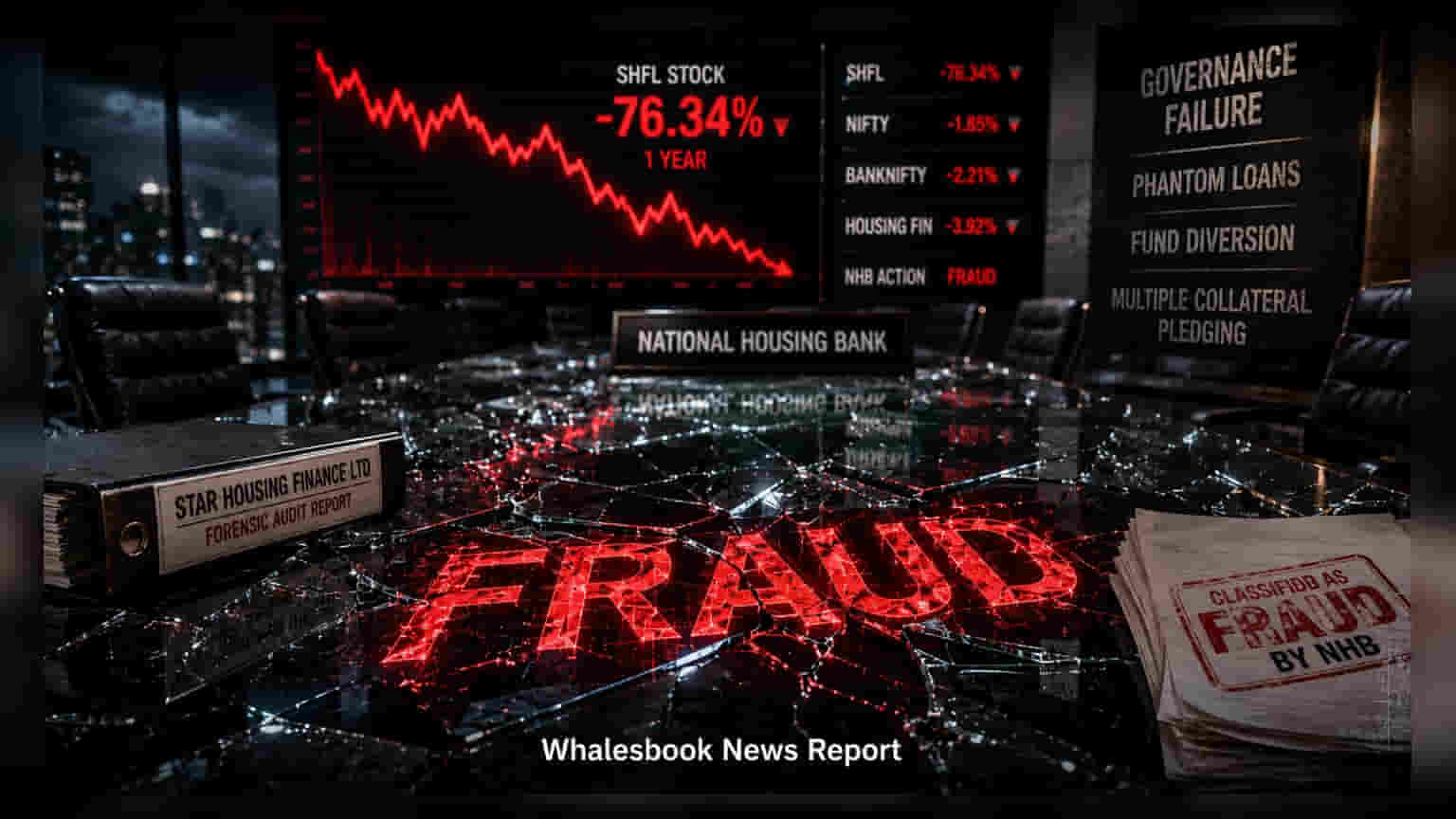
The National Housing Bank has classified Star Housing Finance’s refinance account as fraud following a forensic audit that uncovered phantom loans and financial irregularities. The lender faces severe liquidity issues and a credit rating downgrade to default status. Investors are currently dealing with a major erosion in share value and leadership exits, with a potential ownership change now in the works.
The National Housing Bank (NHB) has officially classified the refinance account of Star Housing Finance Ltd (SHFL) as fraud. This regulatory decision follows a comprehensive forensic audit that highlighted significant governance failures and financial malpractice within the firm. The classification marks a critical intervention by the regulator to address systemic risks, following a series of irregularities that have left the company in a precarious position.
Forensic Audit Reveals Systemic Irregularities
The NHB’s action is based on a detailed forensic audit conducted by the firm Ravi Rajan & Co LLP. The investigation uncovered a network of financial issues, most notably the existence of "phantom" loan accounts. These were loan records that existed on the company’s books but did not represent actual customers. According to the audit, these accounts were allegedly used to siphon funds, manipulate share prices, and provide unsecured loans to employees. Back in April 2026, the company had filed a Fraud Monitoring Report (FMR-1) acknowledging a suspected phantom loan book of approximately ₹120 crore, which had already raised serious questions about the company's internal controls.
Credit Rating Downgrade and Financial Stress
The impact of these findings has severely affected the company's financial standing. India Ratings & Research has downgraded the company's debt instruments and bank loan facilities to 'IND D.' In financial terms, an 'IND D' rating indicates that the company is currently in default, meaning it has failed to meet its debt obligations or is struggling to service its loans on time. This liquidity crunch, combined with the loss of regulatory trust, has made it difficult for the lender to maintain normal operations. The situation is further complicated by the fact that the same collateral was reportedly pledged to multiple lenders, leading to significant complications for the company's creditors.
Ownership Transition and Leadership Challenges
Amid this regulatory and financial turmoil, Star Housing Finance is attempting a restructuring. The company is actively pursuing a complete ownership transition, with potential investors in talks to acquire a majority stake from the existing promoters, including Ashish Jain, Kavish Jain, and Nirmal Kumar Jain, alongside the largest shareholder, Anil Sachidanand. The goal of this deal is to inject fresh capital to stabilize the balance sheet.
However, this transition is happening during a period of high instability. The company has seen significant leadership attrition, including the recent departures of its chief executive and chief financial officer. Investors have reacted sharply to these developments, with the stock price falling by more than 76% over the past year. The key monitorable for the market will be the success of the proposed ownership change and whether the new management can navigate the severe regulatory scrutiny and liquidity pressure that the company currently faces.