

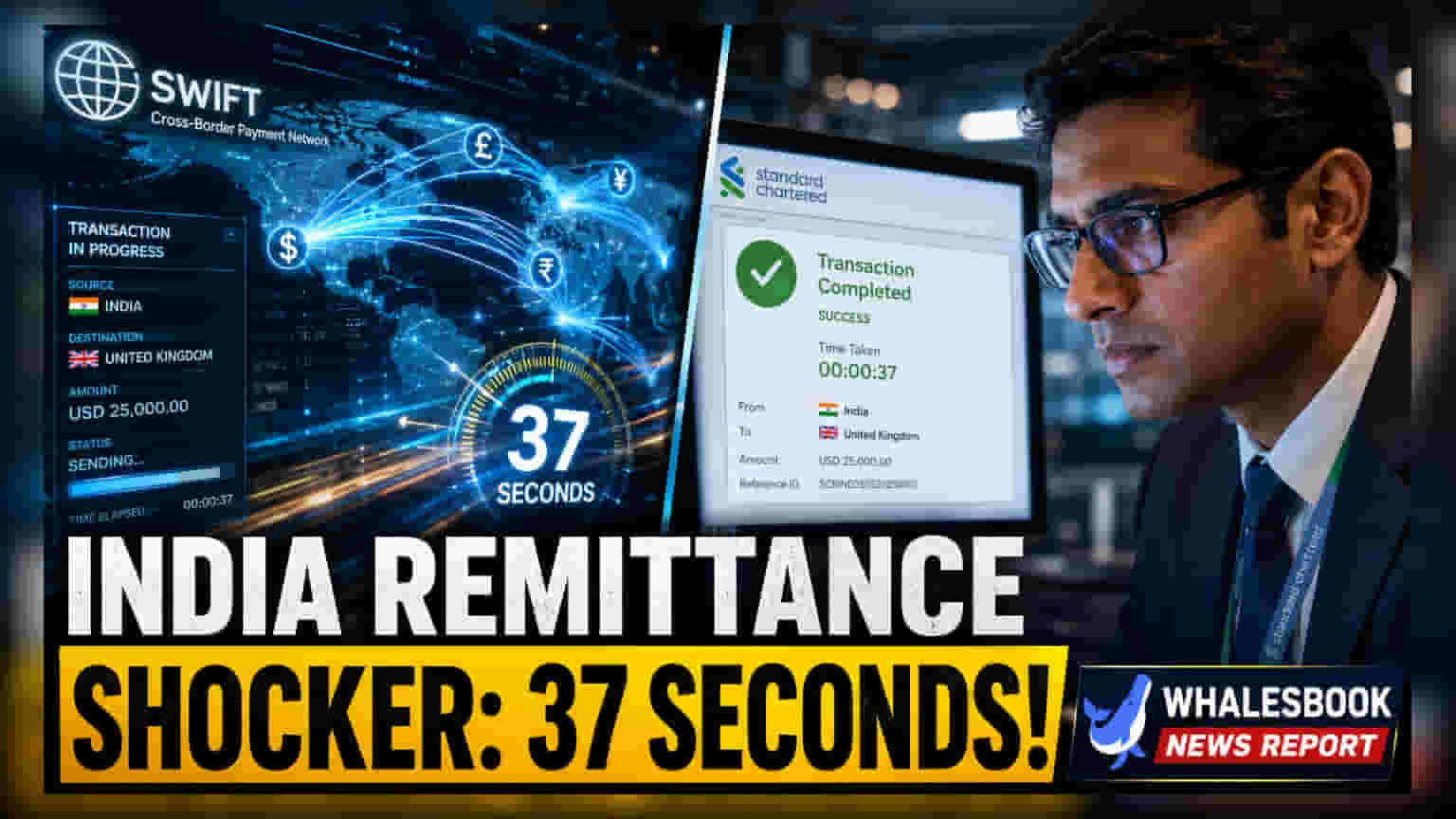
Standard Chartered has successfully processed a cross-border payment to India in 37 seconds using SWIFT's new retail payments framework. This speed milestone is significant for India, the world's largest recipient of global remittances. The move reflects efforts by traditional banking institutions to improve efficiency and compete with faster digital payment alternatives.
What Happened
Standard Chartered has successfully processed an international remittance to India in just 37 seconds. The transaction originated from Westpac in Australia and was settled in India using the new retail payments framework provided by SWIFT, the global messaging network for financial institutions. This development marks a shift in how cross-border money transfers are handled, moving toward near-real-time processing compared to the traditional timeline, which often took days.
Why The Speed Matters For India
India consistently ranks as the world's largest recipient of remittances. For millions of Indian families relying on these funds, faster processing times provide quicker access to cash. Historically, cross-border transfers faced delays due to the need for multiple intermediary bank checks. By reducing this time to seconds, banks like Standard Chartered are aiming to provide a customer experience that matches the simplicity of domestic instant payment systems.
The Role Of Technology In Banking
This initiative utilizes the updated SWIFT retail payments framework. Beyond speed, the framework is designed to provide better tracking for the sender and clearer visibility on upfront fees. For banks, this technology integration is a crucial step in maintaining relevance. Traditional lenders have been under pressure to innovate as fintech companies and digital platforms offer faster, often cheaper, international transfer options. By adopting these systems, banks can reduce the complexity of the back-end process, which can lead to cost efficiencies in the long run.
Competitive And Operational Context
The financial services sector has seen intense competition regarding transaction speed and transparency. While this specific demonstration shows that traditional banking infrastructure can meet modern digital speed requirements, the challenge lies in scaling this globally. The reliance on the SWIFT network means that both the sending and receiving banks must adopt the necessary technical standards to achieve such speeds. Standard Chartered's successful test indicates that the infrastructure is now capable of handling these requests, provided the participating banks in the chain are upgraded.
Risks And Implementation
While faster settlements are beneficial, they also raise the need for robust real-time compliance systems. Cross-border payments are subject to strict Anti-Money Laundering (AML) and Know Your Customer (KYC) regulations. As transaction speeds increase, banks must ensure that their automated security and fraud detection systems are equally fast to verify transactions without causing delays.
What To Watch Next
Investors and banking observers should monitor the adoption rate of this framework across other banks. The key monitorable is not just the speed of a single test transaction, but whether this becomes the standard for high-volume corridors. Future updates regarding the cost-per-transaction and the bank's ability to maintain these speeds during peak volume periods will be important for assessing the long-term impact on operational margins.