 Whalesbook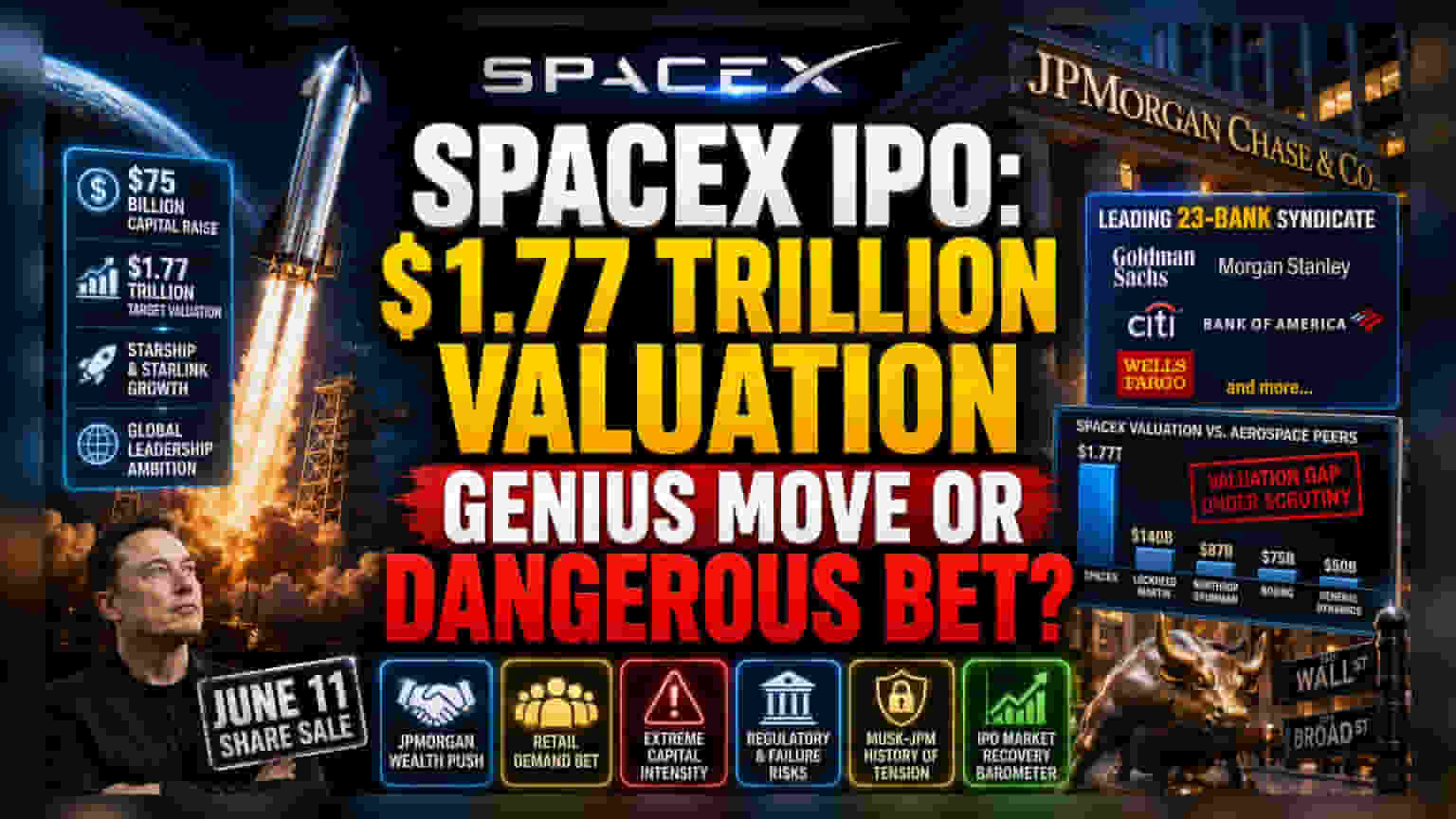


The Valuation Mirage
JPMorgan Chase is orchestrating a high-stakes campaign to capture demand for the impending SpaceX public debut, leveraging its vast private wealth network to cement its position in a 23-bank syndicate. While the firm targets a $1.77 trillion valuation for the aerospace titan, institutional analysts are beginning to question the sustainability of such aggressive pricing. The proposed $75 billion capital raise would dwarf recent market activity, creating an immense liquidity absorption event that could pressure broader equity markets. JPMorgan’s strategy of broadcasting these discussions to thousands of high-net-worth individuals suggests a tactical pivot toward retail-led demand to counterbalance potential institutional hesitation regarding the firm’s long-term capital intensity.
Strategic Alliances and Competitive Dynamics
The involvement of Goldman Sachs and Morgan Stanley as lead underwriters establishes a conventional power structure, yet the scramble among secondary banks like Citigroup and Bank of America highlights the intensity of the competition for prestige mandates. Unlike the tech IPOs of the previous decade, the current market climate favors companies with established revenue streams, yet SpaceX faces a unique challenge: the extreme capital-heavy nature of its Starship program and satellite expansion. Benchmarking against traditional aerospace defense contractors, which typically trade at much lower earnings multiples, reveals a massive valuation gap that relies entirely on the speculative success of its interplanetary objectives and Starlink dominance.
The Forensic Bear Case
Beyond the hype, significant structural risks remain. The relationship between JPMorgan and Elon Musk is marked by recent volatility, specifically the 2021 litigation regarding Tesla stock warrants that only concluded in late 2024. While both parties have moved toward a state of strategic alignment, the history of antagonism creates a layer of institutional friction that could complicate governance oversight post-IPO. Furthermore, SpaceX operates in a sector prone to regulatory hurdles and high failure rates, which are rarely reflected in the enthusiastic rhetoric of wealth management roadshows. Investors should be wary of the lock-up periods and the potential for supply-chain bottlenecks to derail the company’s ambitious launch cadence, which is essential to justifying its premium valuation.
Future Market Outlook
The upcoming June 11 share sale is viewed by many as a barometer for the broader IPO market recovery, potentially signaling a window for other high-profile AI and tech debuts like OpenAI. However, historical performance of such high-profile, heavily anticipated listings suggests a high probability of initial volatility as the market reconciles the gap between private-market hype and the cold realities of public-market scrutiny. While brokerage consensus remains focused on the long-term potential of Musk’s ecosystem, the immediate focus will be on the subscription levels and the secondary-market support provided by the syndication group.