 Whalesbook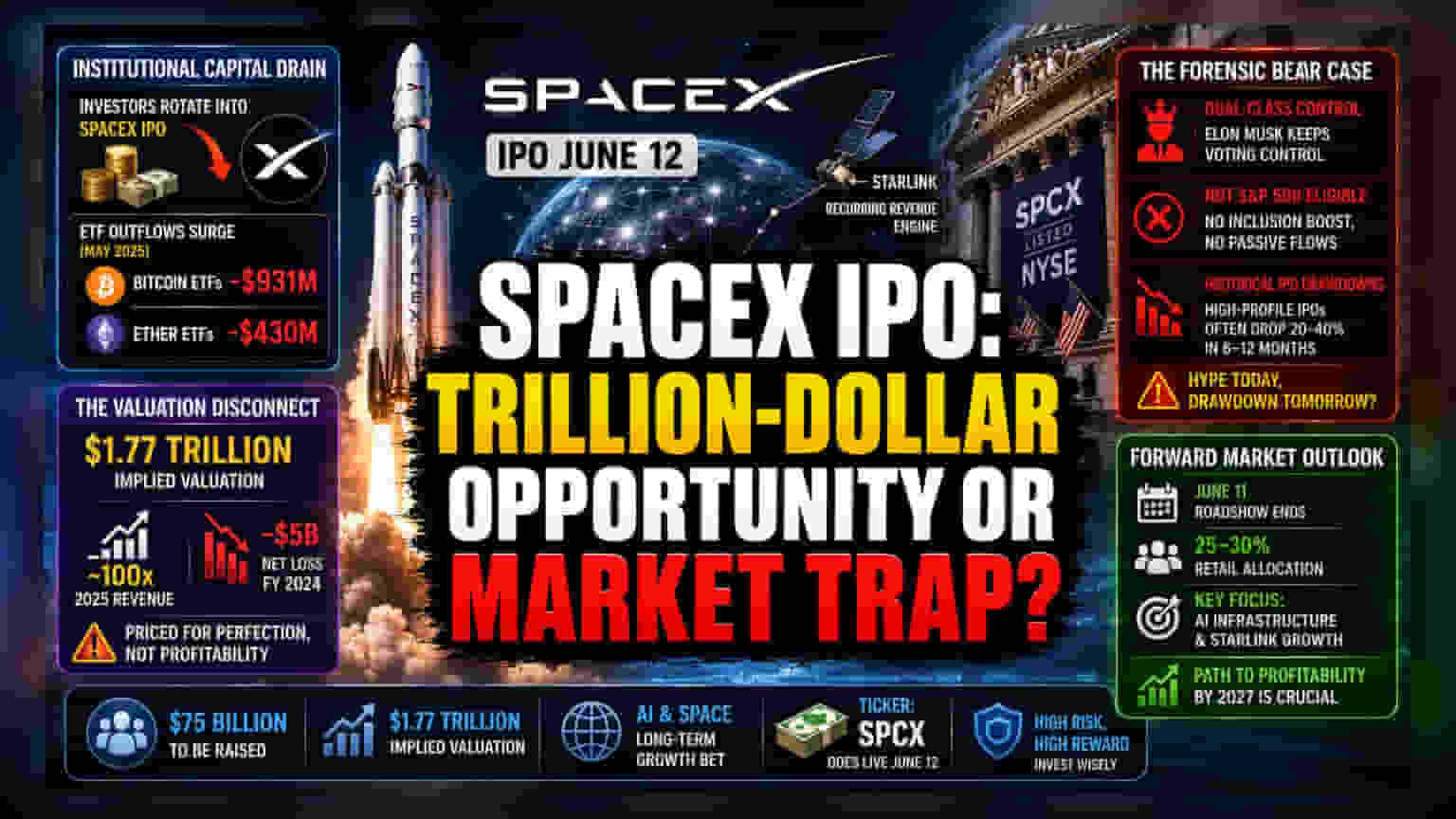


The Institutional Capital Drain
The anticipation surrounding the SpaceX initial public offering has triggered a measurable shift in market liquidity, with retail and institutional investors alike liquidating positions to secure cash for the June 12 debut. As SpaceX prepares to raise $75 billion at an implied valuation of approximately $1.77 trillion, the broader financial market is experiencing a ripple effect. This capital rotation is particularly evident in the digital asset sector, where spot Bitcoin and Ether ETFs have suffered consistent outflows as investors pivot toward what many characterize as a generational opportunity in aerospace and artificial intelligence infrastructure.
The Valuation Disconnect
While the market anticipates a historic listing, the proposed $1.77 trillion valuation rests on aggressive long-term projections. Unlike traditional mature IPOs, SpaceX is being priced at nearly 100 times its 2025 revenue. Skeptics, including analysis from Morningstar, suggest this price point implies high-growth success in speculative ventures like orbital AI data centers and the company's nascent multi-planetary aspirations. With the company reporting a net loss of nearly $5 billion in the previous fiscal year, the valuation relies heavily on the 'Elon Factor' and the company's ability to dominate the recurring revenue market via Starlink, which currently accounts for a dominant share of total revenue.
The Forensic Bear Case
Investors should look past the marketing hype to identify structural risks that could dampen post-listing sentiment. First, the dual-class share structure ensures that Elon Musk retains effective voting control regardless of equity dilution, a governance model that limits influence for public shareholders. Second, SpaceX does not currently qualify for S&P 500 inclusion due to its recent net losses and a lack of the required 'seasoning' period. This removes the mechanical floor of passive index fund buying that typically provides support for new mega-cap listings. Furthermore, historical data from Truist Securities suggests that high-profile IPOs often face significant drawdowns in the six to twelve months following their debut, as the initial frenzy of retail demand subsides and institutional investors rotate into more stable cash-flow-positive assets.
Forward Market Outlook
With the institutional roadshow finalizing on June 11, the market is bracing for significant short-term volatility. The unprecedented 25-30% retail allocation—designed to circumvent traditional institutional gatekeepers—could lead to fragmented trading patterns once the ticker SPCX goes live. While Wall Street is divided on the immediate upside, with some analysts citing potential for multi-trillion-dollar valuations in the coming years, the immediate outlook remains tied to the success of AI infrastructure integration and the company's capacity to convert massive capital expenditures into consistent operating profitability by 2027.