

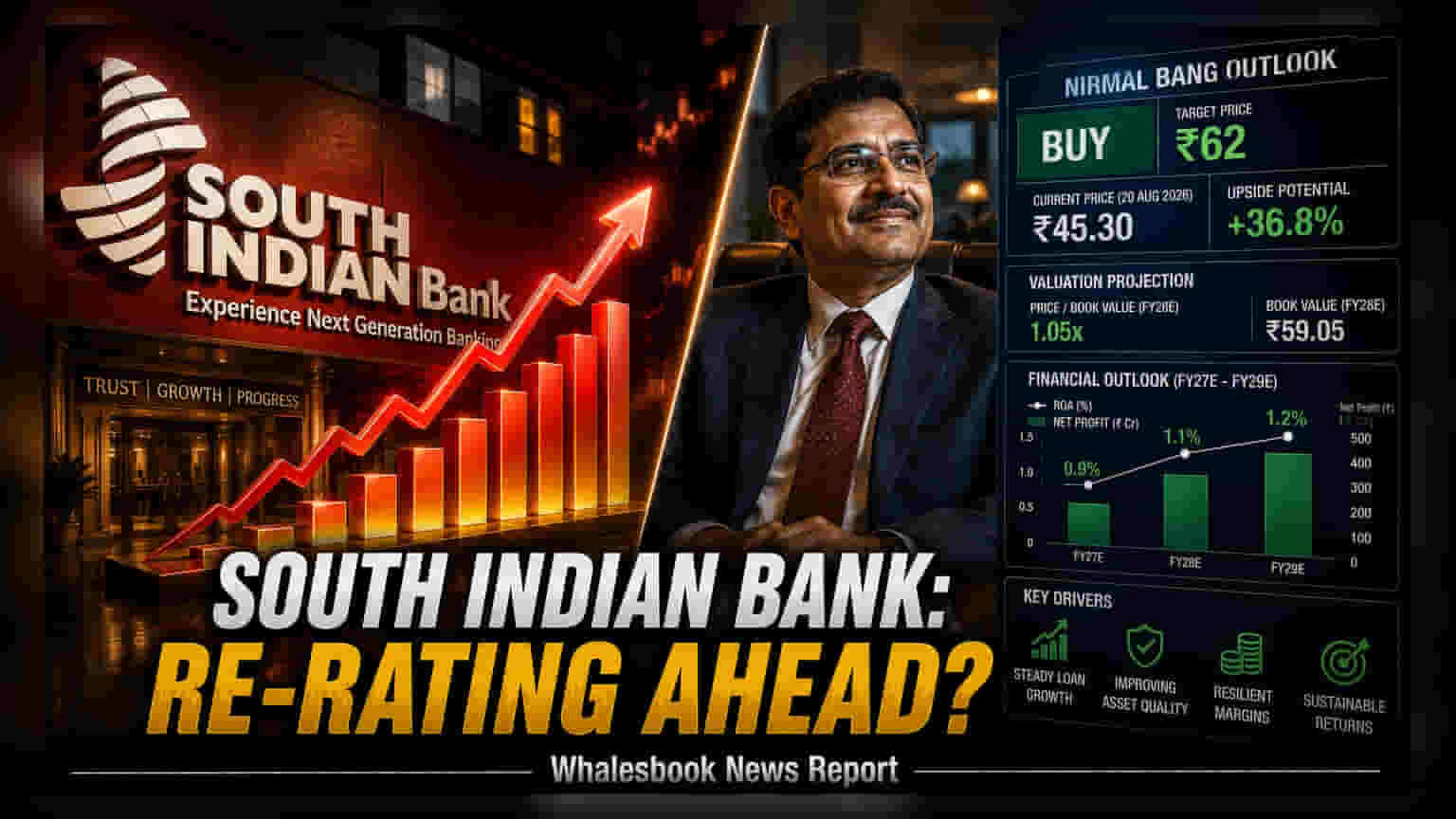
Nirmal Bang has maintained a 'Buy' rating on South Indian Bank, projecting a valuation re-rating driven by sustainable profitability and healthy margins. The bank recently reported a 17% jump in Q1 FY27 net profit.
Nirmal Bang has maintained its positive outlook on South Indian Bank, keeping a 'Buy' rating and a target price of Rs 62. The brokerage believes the lender is positioned for a valuation re-rating as it shifts from a turnaround phase to one of structurally sustainable returns.
Profitability and Performance Metrics
The brokerage's optimism is supported by the bank's ability to maintain resilient profit margins, coupled with steady loan growth and manageable credit costs. Nirmal Bang projects that these factors will help the bank achieve a sustainable Return on Assets (RoA) of approximately 1.2%. The lender’s recent financial performance reinforces this, with the bank reporting a 17% year-on-year increase in net profit to Rs 378 crore for the first quarter of the 2027 fiscal year. Additionally, asset quality has improved, with gross non-performing assets (NPAs) moderating to 1.38% as of the same period.
Valuation Context
As of August 20, 2026, shares of South Indian Bank are trading around Rs 45.30. The brokerage’s target price of Rs 62 suggests a potential valuation of 1.05 times the bank’s projected book value for June 2028. This outlook assumes that the market will gradually gain confidence in the durability of the bank's transformed operations and its capacity to consistently deliver superior returns.
Potential Risks to Monitor
While the outlook is positive, the banking sector faces inherent risks that investors typically track. These include the impact of fluctuating interest rates on net interest margins, which could affect profitability if not managed effectively. Furthermore, any unexpected slowdown in loan growth or a deterioration in asset quality could challenge the bank's performance. As with any financial institution, macroeconomic conditions and broader market volatility also play a significant role in determining the stock's future movement. The primary monitorable for investors will be whether the bank can maintain its current trajectory of operational efficiency and credit growth in the coming quarters.