

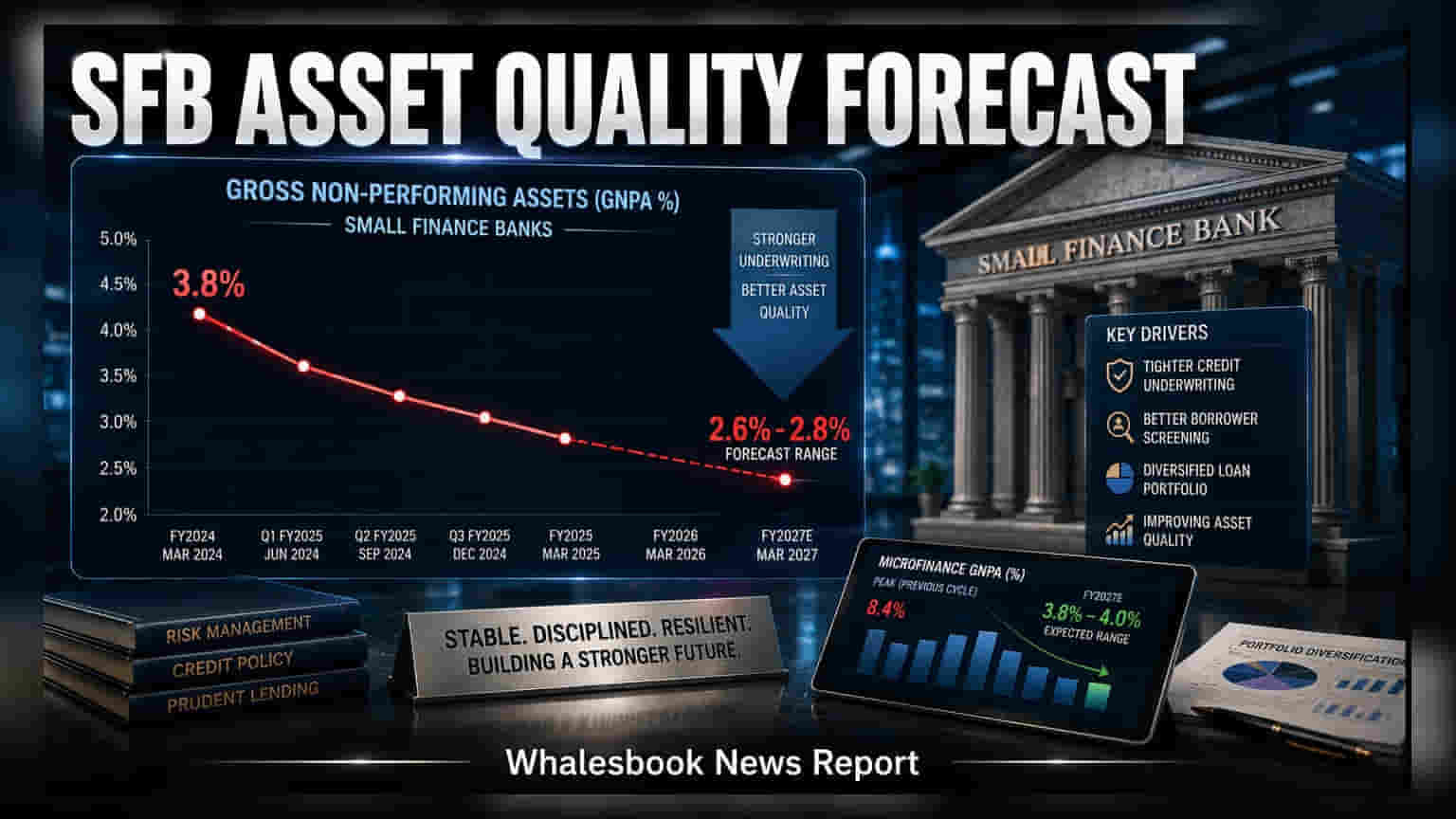
Small finance banks are projected to see a decline in bad loans by March 2027, with Crisil Ratings forecasting gross non-performing assets (GNPA) to drop to 2.6%-2.8%. This improvement is driven by tighter lending controls and a strategic shift toward stable, non-microfinance portfolios. For investors, this signals potential earnings stability, though macroeconomic headwinds and portfolio seasoning remain key risks to monitor.
Small finance banks in India are witnessing a structural improvement in their credit books, with expectations for bad loans to decline significantly by March 2027. According to recent projections from Crisil Ratings, gross non-performing assets (GNPA) for the sector are expected to fall to a range of 2.6% to 2.8%. This marks a meaningful recovery from the 3.8% level reported at the end of the previous fiscal year, reflecting a sector-wide transition toward more resilient business models.
Structural Shift in Lending Strategy
The anticipated improvement in asset quality is largely due to internal changes in how these banks manage risk. Small finance banks have tightened their lending controls, moving toward more rigorous screening of borrowers to ensure their repayment capacity is sound, particularly in the microfinance segment. This focus on underwriting quality is designed to filter out over-leveraged borrowers, who were a primary source of instability in earlier cycles.
Historically, the sector faced significant volatility because a disproportionate share of its loan book was tied to unsecured microfinance. Banks are now actively diversifying their loan portfolios by expanding into non-microfinance categories. These segments, which include secured products, provide a more stable foundation and are generally less susceptible to the sharp cyclical shocks that affect small-ticket, unsecured loans. Industry data indicates that the microfinance segment’s GNPA is expected to settle between 3.8% and 4%, a substantial improvement from the peaks of 8.4% recorded in previous periods.
Balancing Growth with Caution
While the trend toward lower bad loans is positive, investors must consider the underlying risks. The transition to new loan segments brings a different set of challenges, particularly the need for portfolio seasoning. This means that newer loan books—such as those in retail or small business segments—have not yet been fully tested through a complete economic downturn. If the economy faces a slowdown, these newer portfolios could face unexpected repayment delays.
Furthermore, macroeconomic factors continue to exert pressure on the sector. Persistent inflation can erode the disposable income of the smaller, vulnerable borrowers these banks typically serve, potentially impacting their ability to service debt. Investors should carefully watch how these banks maintain their asset quality as they grow. The key monitorable in the coming quarters will be the speed at which these banks expand their non-microfinance portfolios without compromising on credit standards. Future quarterly results and management commentary regarding credit costs and the health of diversified loan books will provide the best indicators of whether this recovery in asset quality will be sustained over the long term.