 Whalesbook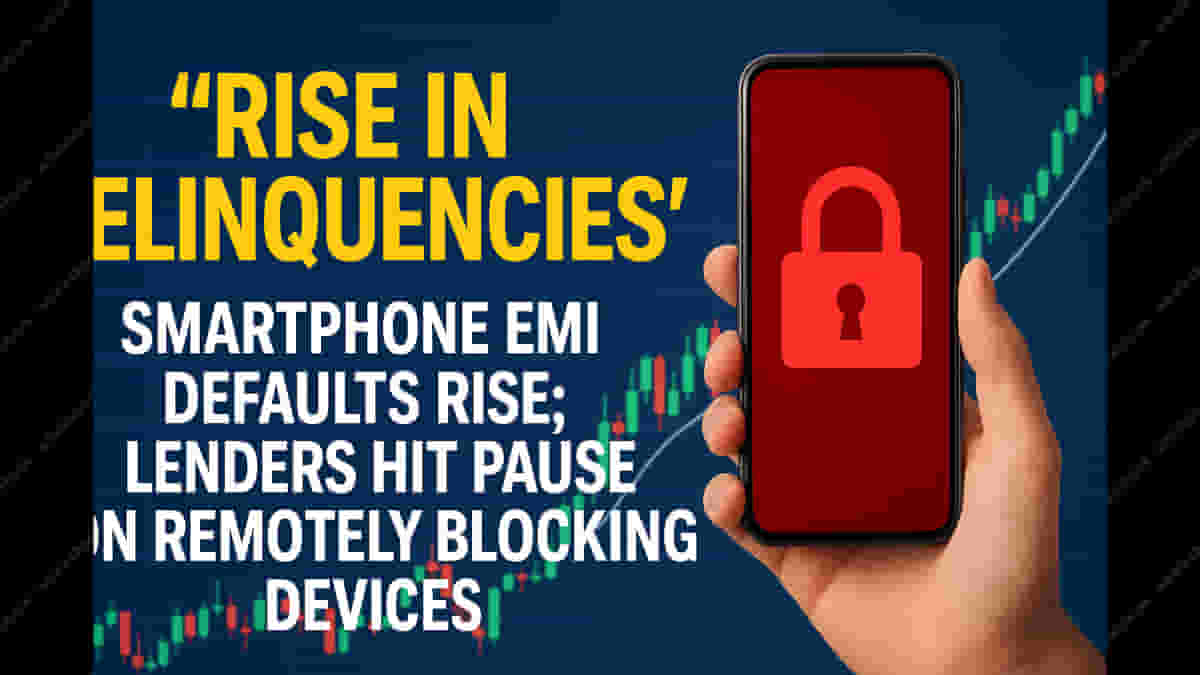
India's booming smartphone financing sector is grappling with a sharp rise in loan defaults, primarily driven by a recent regulatory clampdown by the Reserve Bank of India (RBI).
The central bank's move to prevent non-banking finance companies (NBFCs) from remotely blocking smartphones of borrowers who miss payments has unmasked significant stress within these loan portfolios.
Background Details
- Previously, lenders partnered with smartphone manufacturers. These manufacturers used in-built apps to remotely disable devices upon loan default, acting as a strong recovery mechanism.
- The RBI halted this practice late last year, citing concerns over data sharing between lenders and Original Equipment Manufacturers (OEMs) regarding customer defaults.
- RBI Governor Sanjay Malhotra stated the central bank is still evaluating the mechanism's pros and cons.
Key Numbers or Data
- Industry executives report a 20% month-on-month increase in delinquencies specifically within the smartphone financing category.
- Smartphone loans constitute a substantial portion, estimated at nearly 50%, of the total consumer durable loan book.
- Broader consumer durable loans saw a decline, with outstanding amounts at Rs 22,279 crore as of September 19, down from Rs 23,264 crore year-on-year.
- Credit bureau Crif Highmark reported a 4.7% year-on-year fall in outstanding consumer durable loans to 95.5 million in the September quarter of FY26.
Reactions or Official Statements
- Ananth Shroff, founder of DPD Zero, noted that the "underlying health of portfolios has started to surface more clearly" post-RBI's directive.
- An anonymous founder of another debt collections startup confirmed that lenders exposed to smartphone financing have significantly reduced new loan disbursements.
- A Mumbai-based digital lending startup founder highlighted concerns over data sharing for device locking.
Importance of the Event
- Smartphones are frequent purchases, often serving multiple family members, making them a crucial segment in consumer financing.
- The rise in defaults directly impacts the profitability and risk management strategies of NBFCs and other lenders in this space.
- Lenders are now re-evaluating their underwriting and collection processes in light of the removed device-blocking facility.
Latest Updates
- Lenders heavily exposed to smartphone financing have begun sharply scaling back fresh disbursals.
- While defaults are rising, industry leaders suggest the situation is currently manageable and not systemic.
Risks or Concerns
- The loss of the device-blocking mechanism removes a key tool for lenders, increasing potential losses on defaulted loans.
- NBFCs might face higher operating costs for collections if they rely more on traditional methods like tele-calling.
- A sustained increase in delinquencies could tighten credit availability for consumer durables.
Impact
- Impact Rating: 7/10
- Non-banking finance companies and other entities heavily involved in consumer durable loans, especially smartphones, are likely to experience increased credit costs and potentially slower growth.
- Consumers may face stricter eligibility criteria for future smartphone loans or higher interest rates as lenders price in increased risk.
- The overall credit market might see a reassessment of risk for unsecured consumer loans.
Difficult Terms Explained
- EMI: Equated Monthly Installment; a fixed amount paid by a borrower to a lender at a specified date each month.
- RBI: Reserve Bank of India; India's central banking institution responsible for the regulation of the Indian banking system.
- Non-banking financiers/NBFCs: Financial institutions that provide banking-like services but do not hold a full banking license.
- Defaults/Delinquencies: Failure to make payments on a loan or debt obligation as agreed.
- Loan Portfolio: The collection of loans owned by a financial institution.
- Remote Blocking: The ability for a lender or manufacturer to disable a device (like a smartphone) over a network connection due to non-payment of associated loans.
- Monetary Policy Press Conference: A meeting where the central bank (like RBI) announces decisions and provides context on interest rates and economic outlook.
- Disbursals: The act of paying out money for a loan.
- Consumer Durable Segment: Loans taken to purchase durable goods such as refrigerators, television sets, and smartphones.
- Unsecured Loans: Loans that are not backed by collateral.
- Lien: A right to keep possession of property belonging to another person until a debt owed by that person is discharged.
- OEM: Original Equipment Manufacturer; a company that manufactures products based on designs supplied by another company or that assembles products under its own brand.
- Systemic: Relating to or affecting a whole system, especially a financial system.
- NPAs: Non-Performing Assets; loans on which interest or principal payments have not been received for a specified period, typically 90 days.
- Credit Bureau: An organization that collects and sells information on the creditworthiness of individuals and businesses.