

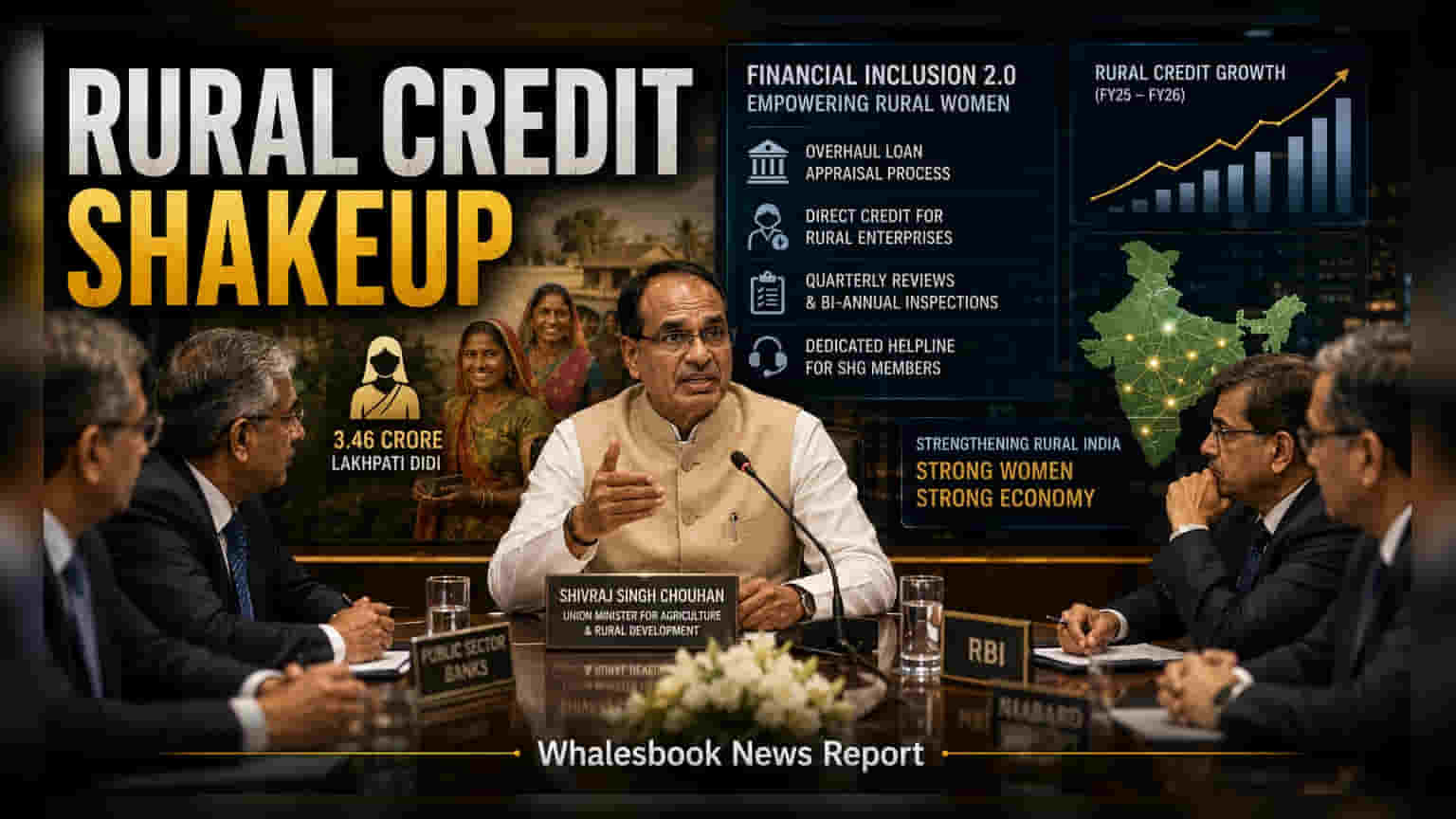
Union Minister Shivraj Singh Chouhan has directed banks to eliminate operational bottlenecks in credit delivery for rural women entrepreneurs. The move aims to streamline loan processing for Self-Help Groups (SHGs) and individual entrepreneurs under the DAY-NRLM scheme. With over ₹13.67 lakh crore already disbursed, the government is focusing on the 'Lakhpati Didi' initiative to boost financial inclusion and support grassroots-level business growth.
Union Minister for Agriculture and Rural Development Shivraj Singh Chouhan held a high-level summit in Mumbai on September 3, 2026, to address persistent challenges in credit access for rural women. During the meeting with executives from public and private sector banks, the Reserve Bank of India, and NABARD, the Minister called for an immediate overhaul of the loan appraisal process. The government aims to resolve systemic issues that have historically delayed credit flow to Self-Help Groups (SHGs) and individual rural women entrepreneurs.
The initiative is part of a broader push to scale the 'Lakhpati Didi' program. Official data indicates that 3.46 crore women have already achieved 'Lakhpati Didi' status—defined as those earning an annual income of at least ₹1 lakh. The Ministry is now aiming to broaden this reach, with specific focus on supporting women who manage their own micro-enterprises. This shift forms the core of the government's 'Financial Inclusion 2.0' agenda, which seeks to transition from group-based lending to providing direct financial leverage for individual rural enterprises.
To ensure accountability, the government has mandated quarterly virtual reviews and bi-annual physical inspections of bank branches. The Ministry has also introduced a dedicated helpline, allowing SHG members to report instances of credit denial or bureaucratic delays directly. This move is designed to bypass the traditional red tape that has often prevented rural borrowers from accessing institutional finance.
While the push for credit expansion is significant, the banking sector faces practical challenges in implementation. Industry observations highlight that operational bottlenecks at the branch level, such as complex paperwork requirements, continue to hinder the speed of loan approvals. Furthermore, regional disparities in credit availability remain a persistent issue, particularly in geographically underserved areas where rural infrastructure is limited.
For the banking sector, the primary challenge lies in scaling lending operations while maintaining credit quality. Balancing the government’s ambitious financial inclusion targets with the need for sustainable enterprise financing requires robust appraisal systems. If banks can effectively streamline their processes and reduce processing times, they may see an increase in their rural loan books. However, investors and market observers will likely monitor whether these rapid scaling efforts introduce any long-term pressure on asset quality or require additional capital allocation to manage potential risks in micro-lending portfolios.
The next phase of this initiative will be closely monitored by stakeholders, with specific attention on how private sector lenders adapt to the government’s call for more active participation in District Level Consultative Committee meetings. Success will depend on the banking system's ability to simplify documentation, improve reach in remote districts, and effectively assess the creditworthiness of individual rural enterprises without compromising on financial prudence.