

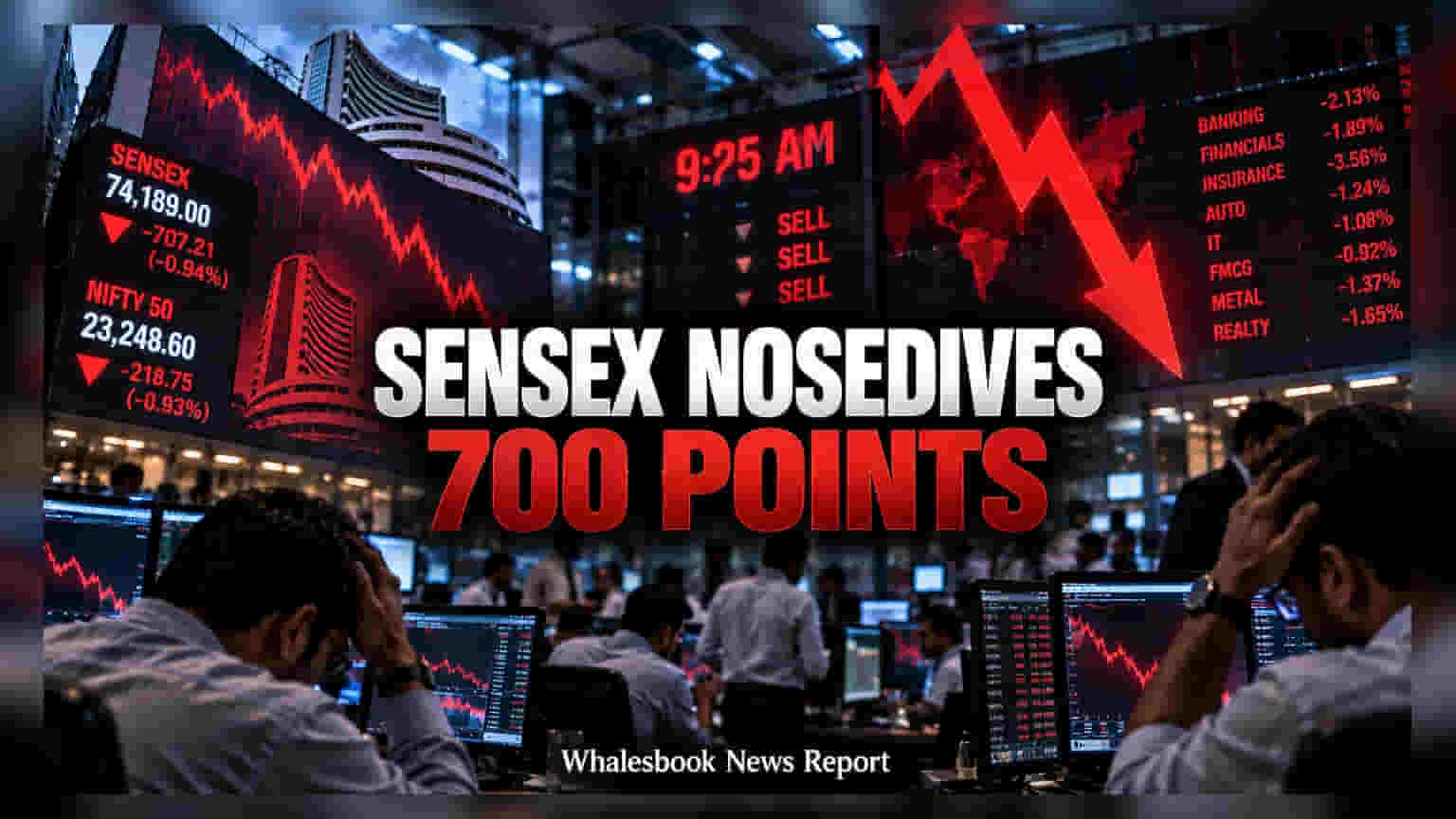
Indian benchmark indices saw a sharp decline on Thursday, with the Sensex falling 707 points and the Nifty dropping below 23,250. The market reacted to a combination of rising US bond yields, high oil prices, and proposed regulatory changes in the insurance sector.
The Indian stock market witnessed a broad-based sell-off on Thursday, with key indices recording significant losses. The BSE Sensex fell 707 points, closing the session lower, while the Nifty 50 slipped below the crucial 23,250 support level. Investors reacted to a combination of global macroeconomic headwinds and domestic regulatory news that weighed heavily on sentiment throughout the day.
Financial stocks, which carry significant weight in the major indices, led the decline. The selling pressure was triggered by news regarding proposed changes by the Insurance Regulatory and Development Authority of India. The regulator is reportedly considering a cap on commission payouts for insurers to standardize distribution costs. While this is a proposal, it created uncertainty for major financial players, including HDFC Life, Bajaj Finance, and Axis Bank, which all saw notable declines during the session.
Global factors also played a major role in the negative market sentiment. US 10-year Treasury yields reached 5.11 percent, a level not seen since 2007. When US bond yields rise, it typically makes emerging market equities less attractive for global investors, leading to capital outflows. This puts persistent pressure on stock valuations in markets like India.
Adding to the concern was the continued rise in energy costs. Brent crude oil prices remained above $102 per barrel due to ongoing geopolitical tensions. For India, which is a major importer of energy, higher oil prices often signal inflationary risks and can put pressure on the current account deficit, which is why investors often view sustained high oil prices as a negative for the domestic market.
Most sectors faced selling pressure, with the notable exception of the pharmaceutical industry, which bucked the trend. The market breadth remained weak, reflecting caution among institutional investors. Given the current volatility, investors may monitor how the Nifty 50 performs near its support levels in the coming sessions. The path ahead will likely depend on whether global bond yields stabilize, oil prices soften, and whether the proposed insurance commission rules undergo further consultation or clarification by the regulator.