

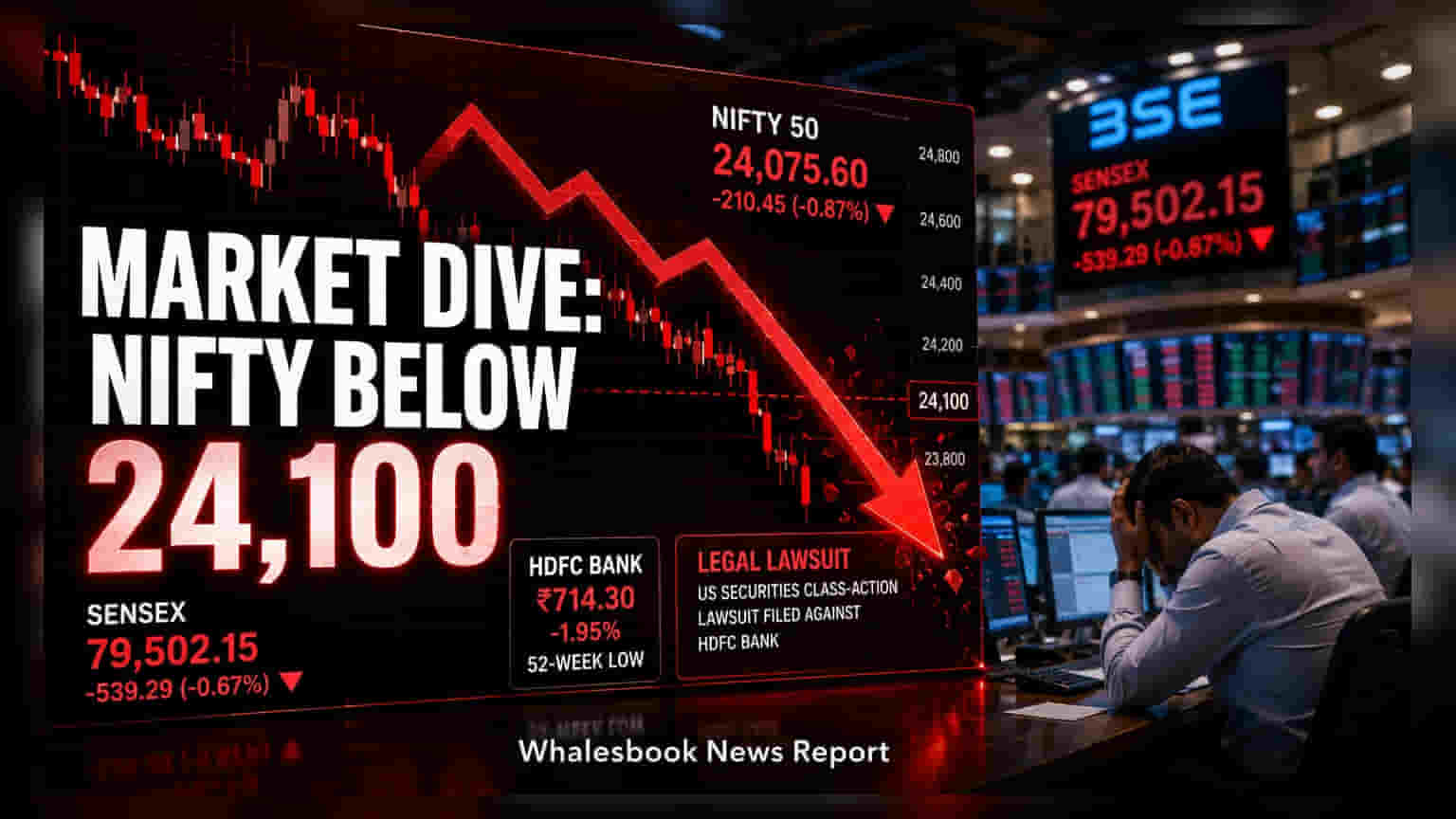
Indian markets turned negative on August 27, 2026, as the Nifty slipped below 24,100. The decline was largely driven by HDFC Bank, which dropped 2% to a 52-week low following reports of a US securities class-action lawsuit.
Indian equity markets faced a sharp downturn during today’s trading session, with the BSE Sensex shedding 539 points. The broader Nifty 50 index also lost momentum, breaching the 24,100 support level and erasing the gains seen earlier in the morning. This decline marked a shift in market sentiment, moving from early optimism to broad-based caution.
The primary driver of this selling pressure was HDFC Bank. Shares of the country’s largest private lender fell nearly 2% during trade, hitting a new 52-week low of ₹714.30 on the NSE. Because HDFC Bank holds significant weight in both major indices, its price drop acted as a heavy anchor, directly dragging the benchmark indices lower.
The weakness in the stock follows reports of a securities class-action lawsuit filed in the United States. In response to these reports, the bank has issued a statement noting that it intends to vigorously defend itself against the claims, characterizing the lawsuit as meritless. For shareholders, this legal development introduces a layer of uncertainty, which appears to have prompted institutional investors to trim their exposure to the stock.
This negative movement in the banking sector overshadowed otherwise supportive global cues. Early in the trading day, Indian markets were trading in the green, buoyed by strong earnings results from the global technology giant Nvidia and a recent decline in Brent crude oil prices. However, the weight of the HDFC Bank news proved too strong, leading to selective selling that pulled the entire market lower.
From a technical standpoint, the breach of the 24,100 mark on the Nifty 50 is a level that many traders watch closely, as falling below such thresholds can sometimes trigger further technical selling. With this level now broken, market attention has turned toward potential support areas lower down the charts. Investors will likely continue to track the legal proceedings surrounding the lawsuit, as well as institutional flow data, to understand whether this sell-off is a temporary reaction to news or the start of a more sustained period of volatility.