

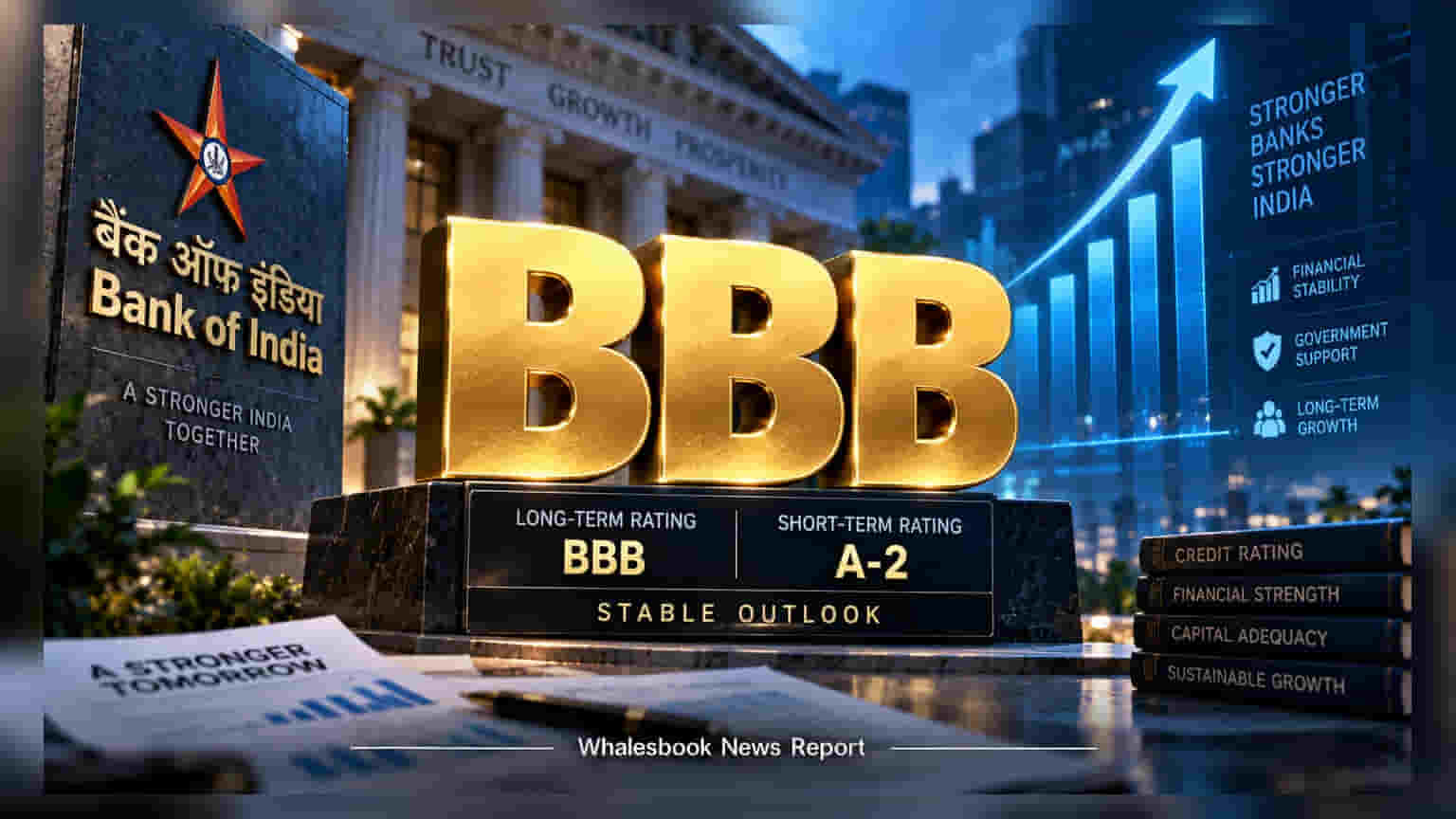
S&P Global Ratings has assigned a 'BBB' long-term credit rating to Bank of India, supported by the state-run lender's strong liquidity and expected government backing. While the stable outlook signals systemic confidence, the agency noted that profitability and asset quality metrics currently lag behind industry peers, which remains a key area for investors to monitor.
S&P Global Ratings has assigned a 'BBB' long-term and 'A-2' short-term issuer credit rating to Bank of India. The bank officially notified the National Stock Exchange (NSE) and the Bombay Stock Exchange (BSE) of this development on September 8, 2026. This rating, which carries a stable outlook, acknowledges the lender's solid funding position and healthy capital adequacy, which the agency views as robust.
Stability Driven by Government Backing
The rating reflects the agency's assessment of a very high likelihood that the Indian government would provide extraordinary support if the bank faced financial stress. This expectation of sovereign backing provides a critical layer of safety, placing the bank's credit profile one notch above its standalone financial strength. For investors, this confirms the bank's systemic importance and its ability to maintain stable operations in the competitive domestic banking sector.
Performance Constraints to Monitor
While the credit rating is investment grade, S&P Global Ratings highlighted that Bank of India's current profitability and asset quality metrics remain below the average of its industry peers. These performance gaps act as constraints on the bank's standalone credit profile. The agency's stable outlook suggests it expects the bank's internal risk management to remain effective, but the ability to improve operational efficiency and recover asset quality will be critical for the bank to bridge the performance gap with higher-performing public sector lenders.
Market and Investor Outlook
As of September 8, 2026, shares of Bank of India were trading at approximately ₹142.00. The market's reaction to this news will likely be influenced by the broader banking sector's trends, particularly as investors weigh the balance between the bank's government-backed stability and its need to improve core profitability.
Looking ahead, investors may watch upcoming quarterly financial results for signs of improvement in net interest margins and gross non-performing assets. The consistency of credit growth and whether the bank can enhance its return ratios while maintaining its liquidity position will be the primary metrics to track in the coming quarters.