

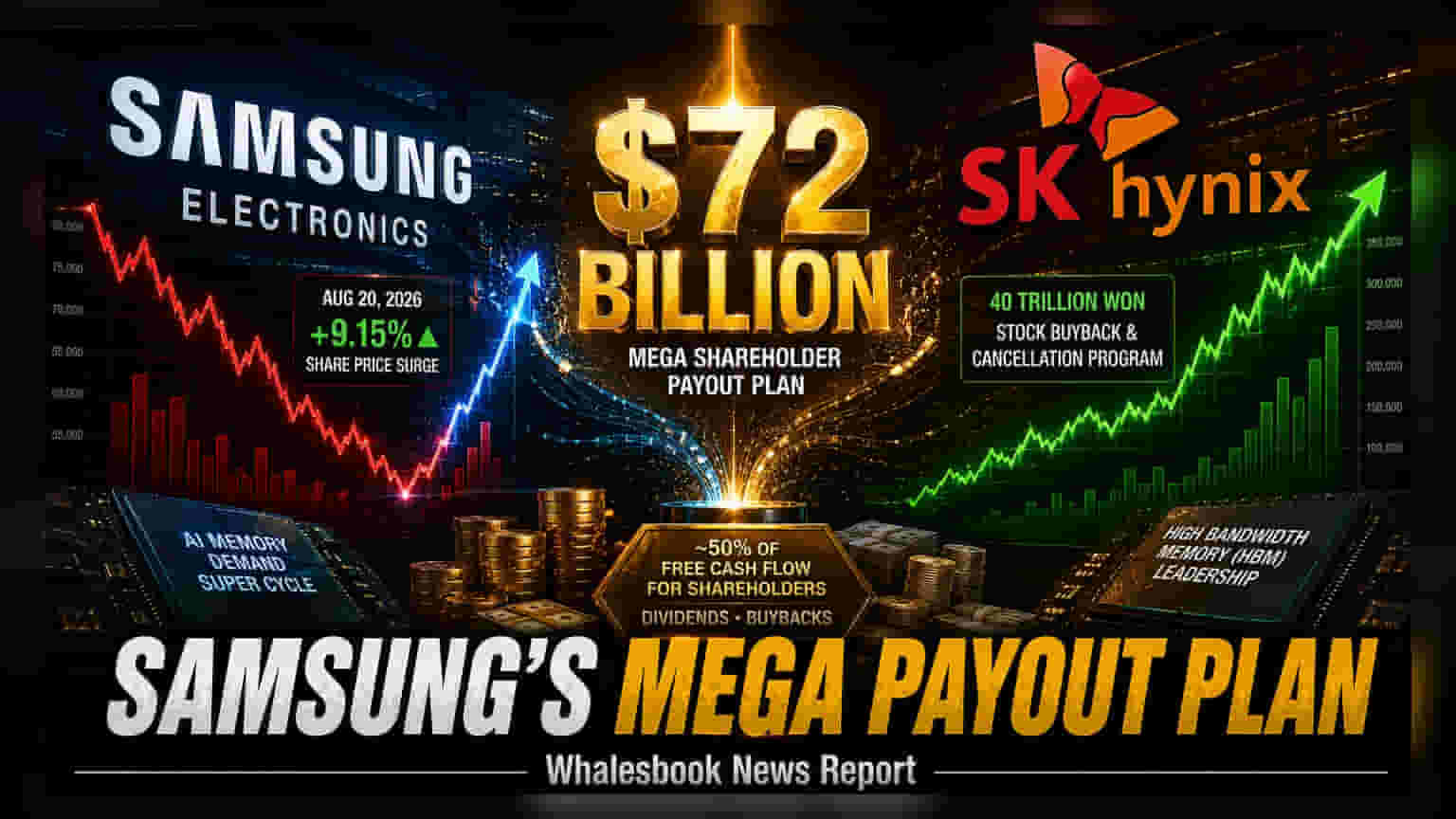
Samsung Electronics is planning a major shareholder return program of 100 trillion won (approx. $72 billion), aiming to pay out 50% of its free cash flow. This strategy, following a similar move by rival SK Hynix, highlights the company's confidence in the current AI-driven chip demand. Investors reacted positively to the news, pushing the stock up by over 9% on August 20.
Samsung Electronics is planning to launch a significant shareholder return initiative, targeting a payout of over 100 trillion won, which equals about $72 billion. Following reports of this plan, the company's stock price surged more than 9% on August 20, 2026. The move marks a new phase for the semiconductor giant, which has been benefiting from the global demand for AI-related memory chips.
The proposal aims to dedicate roughly half of the company's free cash flow—the cash remaining after daily operations and essential expansion costs—to rewarding shareholders. This is expected to come in the form of higher dividends or stock buybacks. This direction is consistent with comments made by Chief Financial Officer Park Sooncheol during the July earnings call, where he highlighted the need to find an optimal balance between rewarding investors and keeping enough funds for future technological growth.
This development follows a similar strategy by competitor SK Hynix, which recently announced a 40 trillion won stock repurchase and cancellation program. By following such moves, Samsung is signaling that the current "supercycle" in the memory chip market is generating enough surplus cash to keep investors happy while maintaining its business edge. The market reaction indicates that investors view these payout plans as a sign of confidence in the company's long-term financial health.
While shareholders are responding positively, the company faces a complex balancing act. Samsung is currently spending massive amounts on global facility expansion, including its high-profile project in Taylor, Texas. These large capital investments are necessary to keep pace with competitors, but they also compete for the same cash reserves that are now being earmarked for shareholder payouts. If the semiconductor market cycle turns or if the demand for AI chips slows down, the company's ability to maintain such high levels of cash distribution could be tested.
The semiconductor sector is notoriously cyclical, meaning it goes through periods of high and low demand. Consequently, investors will be monitoring whether this payout strategy remains sustainable if global market conditions tighten. The next important update will be the official details of the policy, which are expected to be finalized after a board meeting scheduled for later this month.