

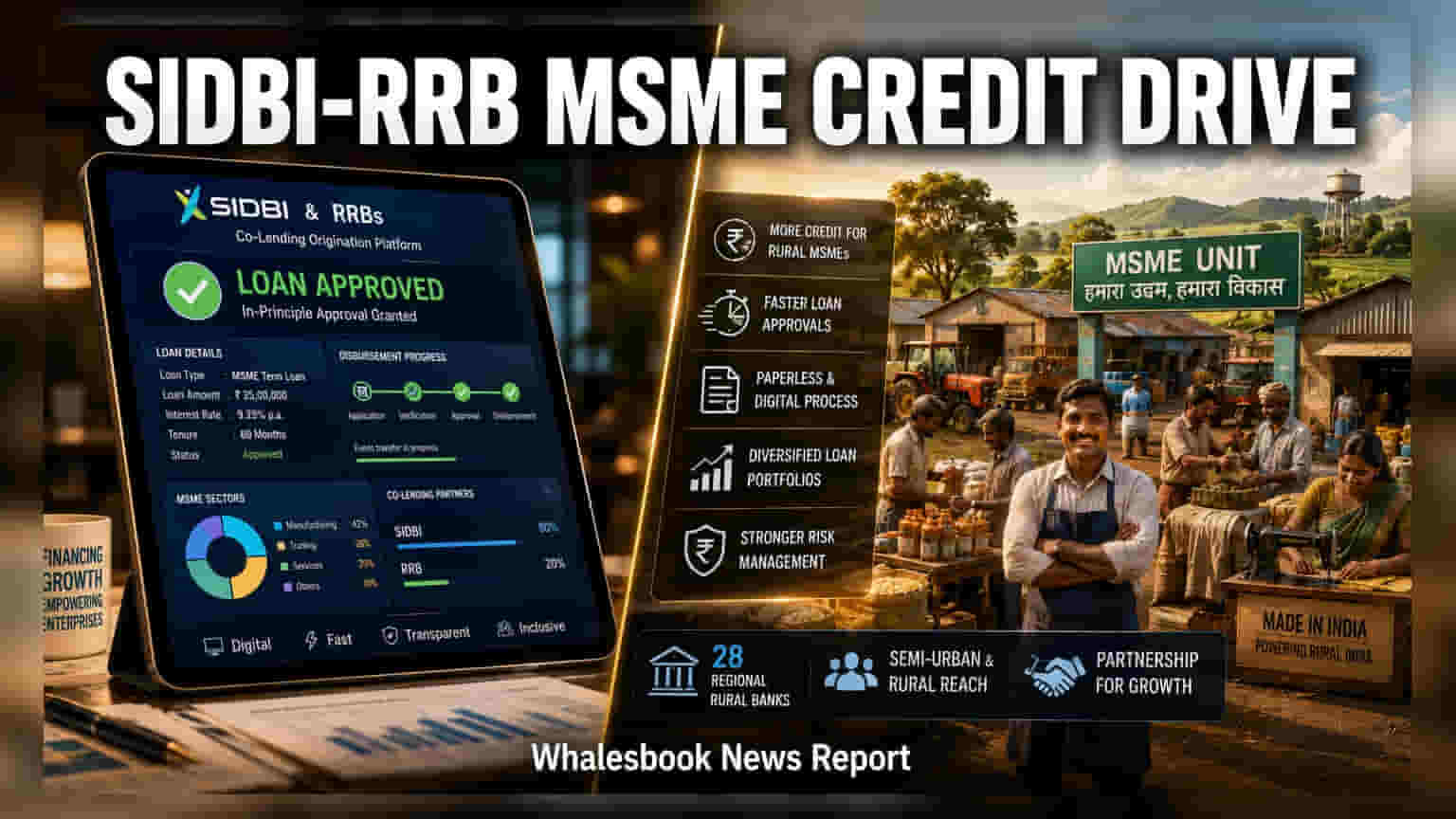
The Small Industries Development Bank of India and 28 Regional Rural Banks are rolling out a joint lending model to increase credit access for MSMEs. This digital initiative allows rural banks to diversify their loan portfolios beyond traditional agriculture. The success of this move will depend on how effectively these banks manage asset quality and integrate digital systems with their existing branch networks.
The Small Industries Development Bank of India (SIDBI) and 28 Regional Rural Banks (RRBs) have announced an expansion of their co-lending framework, aiming to bring more credit to micro, small, and medium enterprises (MSMEs) in semi-urban and rural India. This initiative, finalized at a recent conclave in New Delhi, seeks to bridge the gap between rural businesses and formal credit sources.
At the heart of this strategy is the SIDBI Co-Lending Origination Platform. This digital tool is designed to replace manual, paper-heavy loan processing with an automated, rule-based system. For borrowers, this means they can get in-principle loan approvals and faster fund transfers. For the banks, it reduces the operational cost of managing small-ticket loans across scattered rural branches.
For Regional Rural Banks, this partnership is a significant strategic shift. Historically, these banks have relied heavily on agricultural lending, which can sometimes lead to concentrated risks based on seasonal harvests or weather conditions. By moving into MSME lending, these institutions can diversify their loan books. This shift aims to make their overall business model more stable by balancing agriculture-related loans with business loans.
While the initiative aims to boost growth, it also brings specific execution challenges. Lending to rural and semi-urban MSMEs carries inherent credit risks. Unlike corporate lending, these small loans require careful assessment to ensure that borrowers can repay. To manage this, the government is focusing on rule-based underwriting to maintain asset quality. Investors and sector watchers will be monitoring whether these automated systems can effectively filter out risky borrowers, especially given that some rural banks have previously faced challenges with high bad loans in other segments, such as education.
SIDBI, which acts as the apex body for MSME credit in India, plays a key role in providing the technology and capital backing for this model. The institution recently reported a net profit of ₹5,493 crore for the financial year 2026, which demonstrates a stable financial base to support such large-scale co-lending operations.
The real test for this partnership will be the speed and quality of implementation. Because RRBs operate with legacy systems, integrating SIDBI’s modern digital platform with their existing infrastructure is a critical step. If successful, this model could create a more formal, credit-backed manufacturing and service ecosystem in deeper markets. Stakeholders will be watching for updates on loan disbursement volumes and the performance of these new MSME portfolios in the coming quarters.