

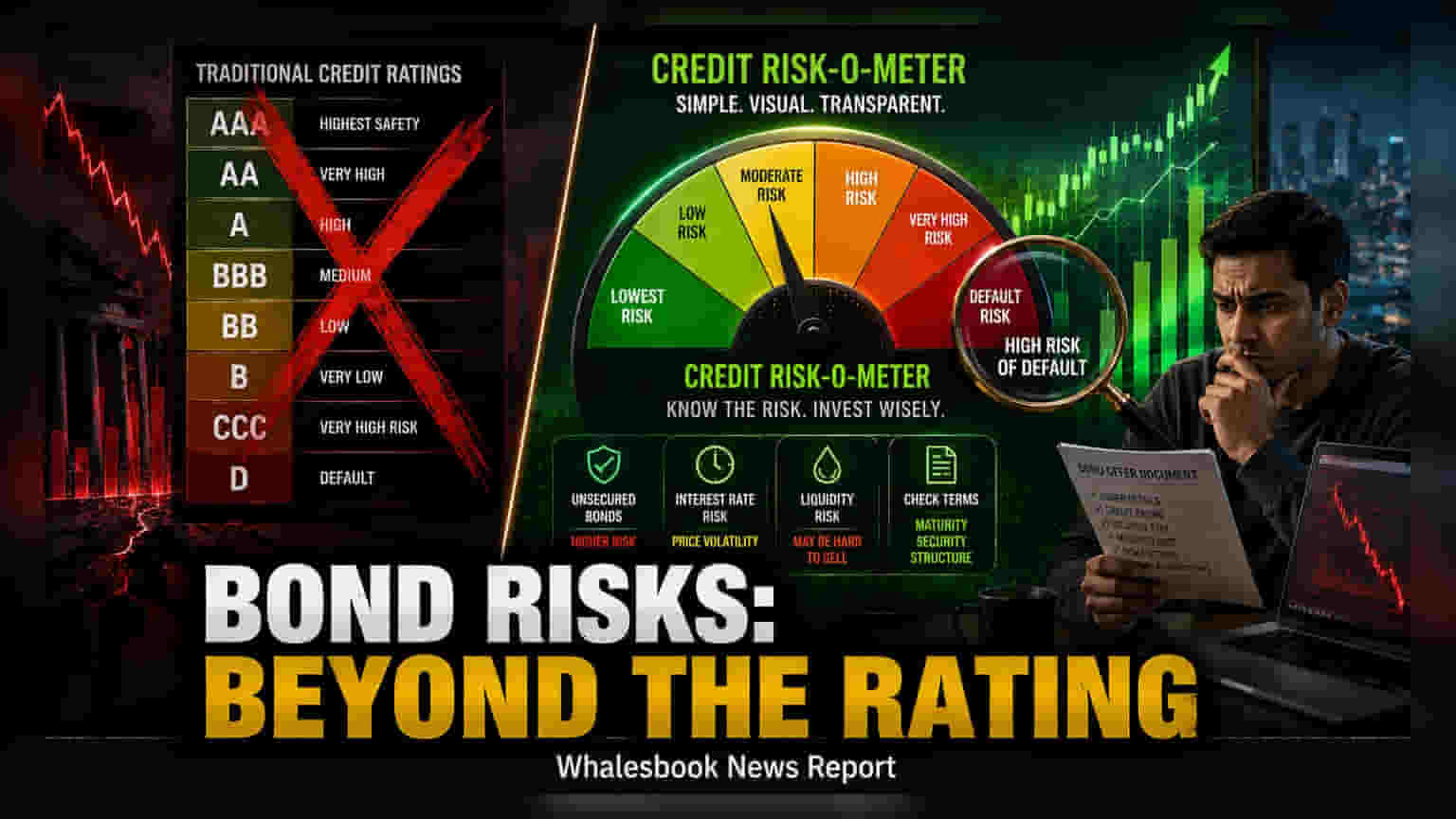
To protect retail investors, SEBI has proposed a mandatory color-coded 'Credit Risk-o-Meter' for bond documents. The system aims to visually represent credit risk, but experts warn it only covers default risk, not market hazards like interest rate fluctuations or liquidity issues. Investors must still look beyond the rating before making decisions.
The Securities and Exchange Board of India (SEBI) is working on a new initiative to help retail investors better understand the risks associated with bond investments. The regulator has proposed a mandatory color-coded 'Credit Risk-o-Meter,' a visual tool designed to simplify how credit risk is communicated in offer documents, advertisements, and trading platforms.
Simplifying Risk Communication
The proposed system is similar to the existing risk-o-meter used in mutual funds. It would map various credit ratings, ranging from the highest safety (AAA) to the highest risk (D), into six distinct color-coded bands. In this system, 'green' would signify the lowest credit risk, while 'red' would indicate a high risk of default. If a bond has multiple ratings, the lowest rating will determine the color band to ensure the most conservative representation of risk. Additionally, the proposal mandates that bonds classified as 'unsecured' must be prominently labeled, and platforms must ensure that any changes in ratings are reflected in the risk meter within 24 hours.
While this initiative is designed to lower the barrier for new investors by making risk levels more intuitive, financial experts emphasize that it serves as only a partial picture of the potential dangers involved in debt investing.
Why Credit Ratings Are Not Enough
A credit rating primarily evaluates an issuer's ability to repay its debt obligations. It does not provide information on several other factors that can significantly impact the value of a bond investment. Retail investors often mistakenly equate a high rating, such as AAA, with total safety. However, a bond with an AAA rating is still susceptible to market forces.
One significant factor is interest rate risk. When general market interest rates rise, existing bonds with lower interest rates typically lose value in the secondary market. If an investor needs to sell their bond before the maturity date, they might be forced to sell at a lower price, leading to a loss of capital, even if the issuer is financially stable.
Another critical element is liquidity risk, which refers to the ease with which an investor can sell a bond without affecting its price. Many corporate bonds in India are not actively traded, meaning investors might find it difficult to exit their positions quickly if they need cash, or they may have to accept a significant discount to find a buyer.
The Importance of Structural Details
Beyond external market risks, investors should also pay attention to the specific structure of the bond. Not all debt instruments issued by the same company are equal. A company might issue senior bonds, which have a priority claim on assets, alongside riskier perpetual or subordinated instruments. The proposed risk meter may simplify credit risk, but it does not replace the need for thorough due diligence. Investors are encouraged to examine whether a bond is secured or unsecured, check its maturity date, and understand its specific terms before committing capital. A higher yield usually compensates for higher risk, and understanding exactly what that risk entails is essential for long-term portfolio health.