

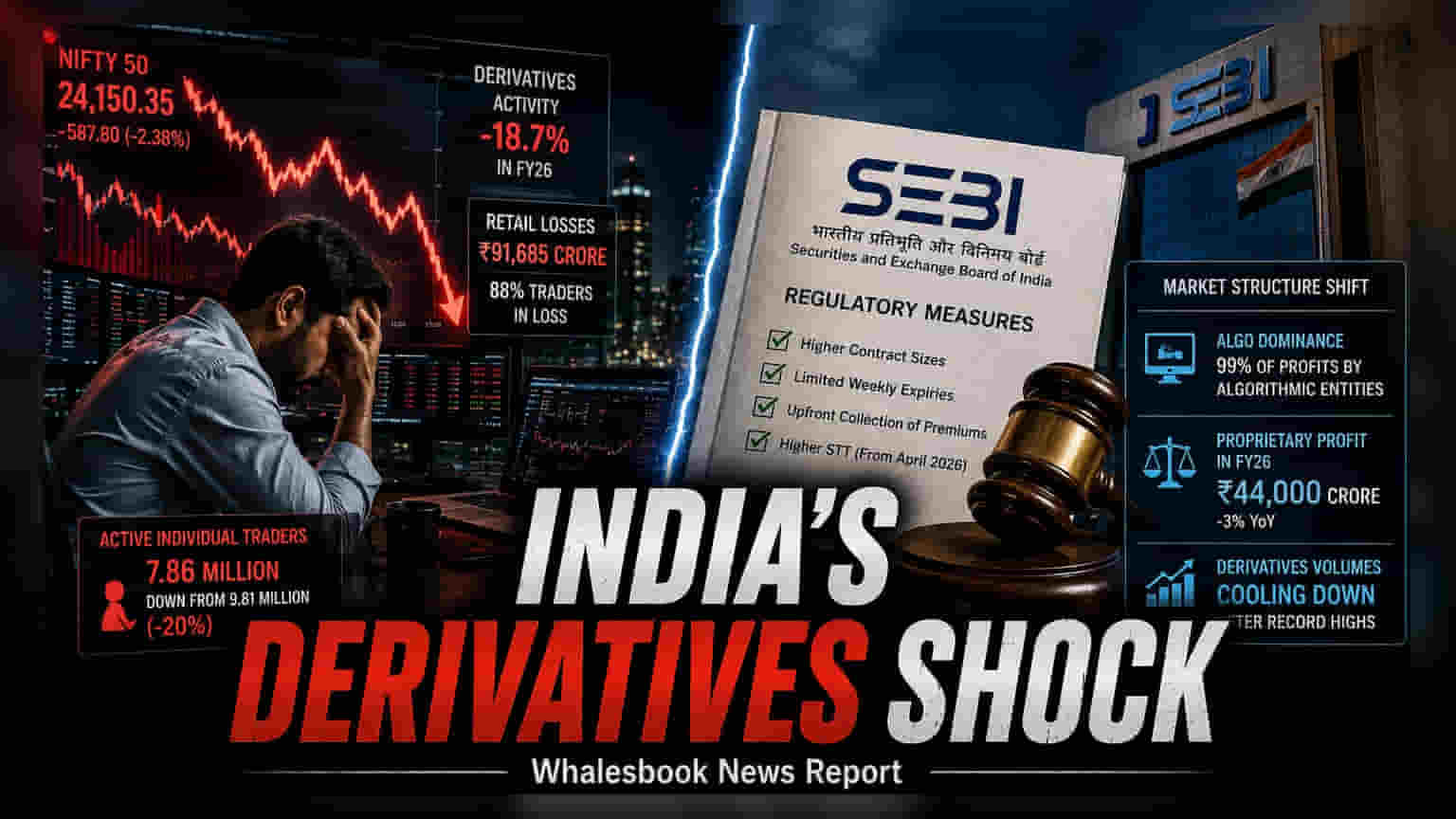
India's equity derivatives market has cooled following SEBI's regulatory measures, with proprietary trading firm profits dropping by 3% in FY26. Retail trader participation also shrunk significantly, though individual investors still suffered heavy aggregate losses of ₹91,685 crore.
The rapid pace of India's equity derivatives market has slowed, with data for the fiscal year 2026 showing a meaningful cooling in activity. Proprietary trading firms, which make trades for their own profit rather than for clients, saw their gross profits from derivatives fall to approximately ₹44,000 crore, marking a 3% decline from the previous year. This shift follows a series of proactive regulatory measures introduced by the Securities and Exchange Board of India (SEBI) to manage excessive speculation that had previously driven record trading volumes.
Retail Participation and Losses
The market environment has become more challenging for individual traders. During the year, active individual participation in equity derivatives declined by nearly 20%, with the number of active traders falling to 7.86 million from 9.81 million in the prior year. Despite this reduction in participants, the financial reality for those who remained active was difficult. SEBI's data indicates that nearly 88% of individual traders still recorded net losses in their derivative bets. The aggregate net losses for these individual traders amounted to ₹91,685 crore, and the average loss per trader saw a marginal increase to ₹1.17 lakh.
Algo Dominance and Market Structure
A critical factor in the current derivatives landscape is the concentration of power among automated players. About 99% of the profits earned by proprietary firms and foreign portfolio investors were generated by algorithmic entities, or computer programs designed to execute trades at high speeds. This creates a challenging environment for manual retail traders, who are competing against high-frequency automated systems that often dominate expiry days, leading to significant price volatility and potential for quick losses.
Impact of Regulatory Tightening
To stabilize the market, SEBI implemented several structural changes that have directly influenced trading behavior. These measures included raising contract sizes, limiting the number of weekly index expiries, and mandating the upfront collection of option premiums to prevent over-leveraging. Additionally, the government's decision to increase the Securities Transaction Tax (STT) starting in April 2026 has added to the cost of frequent trading, further discouraging short-term speculative bets. While these actions have successfully reduced the total volume of activity, they have also fundamentally changed how market participants approach the derivative segment.
Investors and market participants will continue to monitor how these regulatory changes affect market liquidity and volatility. The trend toward lower retail participation suggests a potential shift in the composition of market participants, with the focus now shifting toward the long-term impact of these rules on market stability and the sustainability of high-frequency trading dominance.