

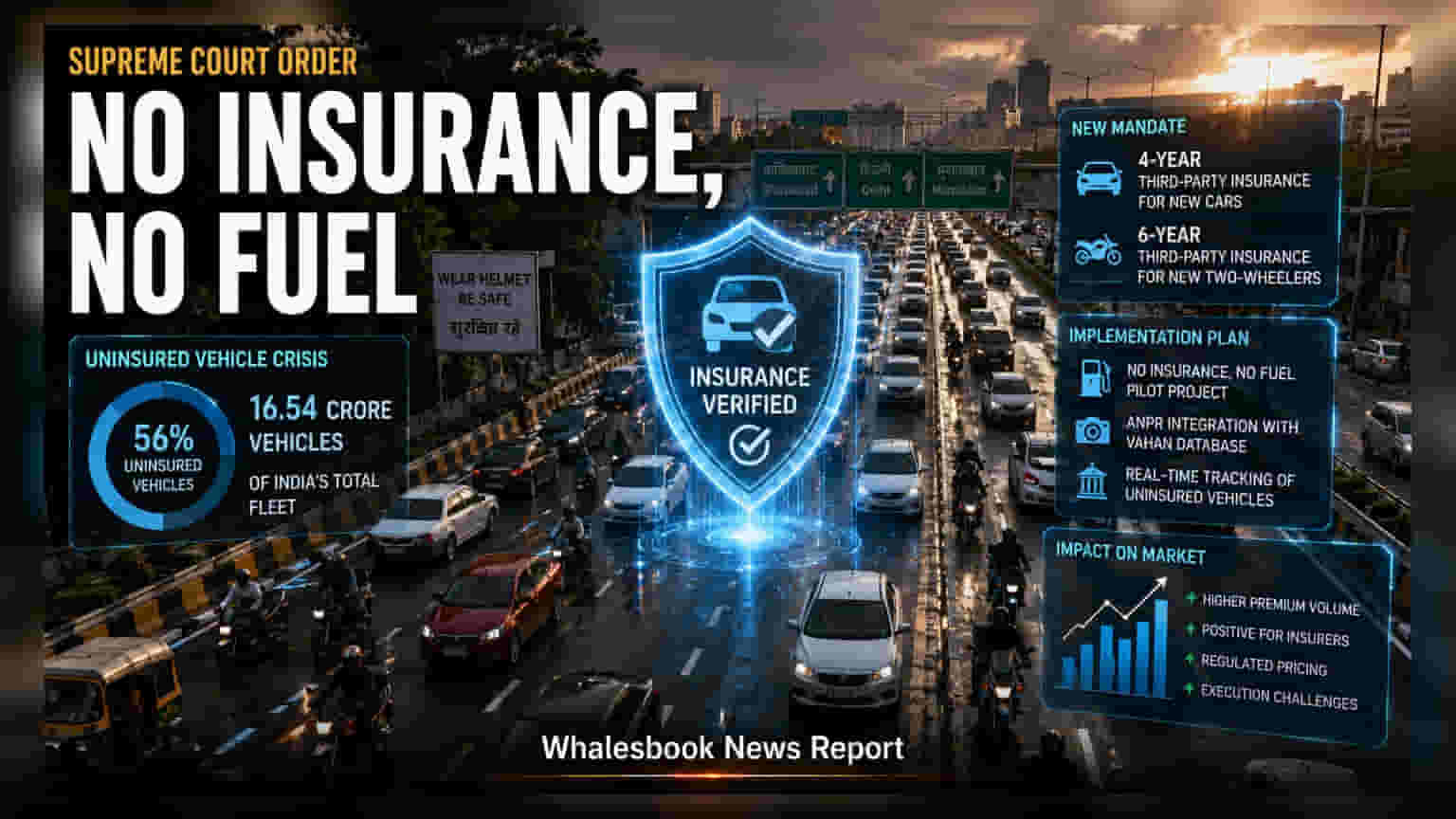
The Supreme Court has mandated longer insurance tenures for new vehicles to address the 16.54 crore uninsured vehicles in India. This move aims to boost insurance premiums and improve compliance through technology like the 'No Insurance, No Fuel' pilot, though insurers face challenges regarding regulated pricing and implementation.
On August 4, 2026, the Supreme Court of India passed a significant order to address the massive uninsured vehicle crisis in the country. Official data highlighted in the judgment shows that approximately 16.54 crore vehicles, or 56% of India’s total fleet, currently operate without valid insurance. To force higher compliance, the court directed that new private car owners must now purchase four-year third-party insurance, while new two-wheeler owners must secure six-year coverage.
The ruling is expected to drive higher premium collection for general insurance companies, as it increases the mandatory coverage period for new vehicles. Following the announcement on August 5, 2026, shares of major players such as ICICI Lombard, New India Assurance, and Go Digit saw a positive market reaction. Investors view this as a potential volume driver, as compulsory long-term insurance ensures a more predictable flow of revenue for insurance providers.
However, the path to implementation involves complex challenges. The court proposed a 'No Insurance, No Fuel' pilot project, which would link fuel purchases at petrol pumps to a valid insurance status. Additionally, the judiciary ordered the integration of Automatic Number Plate Recognition systems with the central VAHAN database to track uninsured vehicles in real-time. The success of these measures depends heavily on coordination between the government, technology providers, and oil marketing companies, making the timeline for nationwide implementation uncertain.
From a financial perspective, investors should note that motor third-party insurance pricing in India is heavily regulated by the IRDAI. While the mandate increases the volume of policies, insurance companies cannot freely increase premiums to boost profitability. If the claims ratio—the money paid out in claims versus the premium collected—increases, it could put pressure on the overall profit margins or combined ratios of these companies.
For the auto sector, the mandate introduces a new variable. The requirement for longer mandatory insurance means higher upfront costs for customers buying new cars and bikes. While this is unlikely to stop long-term demand, it could create short-term cost sensitivity for price-conscious buyers in the entry-level segments.
The immediate monitorables for shareholders and the market will be the government’s notification process and the timeline for the 'No Insurance, No Fuel' pilot rollout. Investors should also watch for management commentary in upcoming earnings calls regarding how these regulatory changes affect their underwriting costs and long-term claim liabilities.