

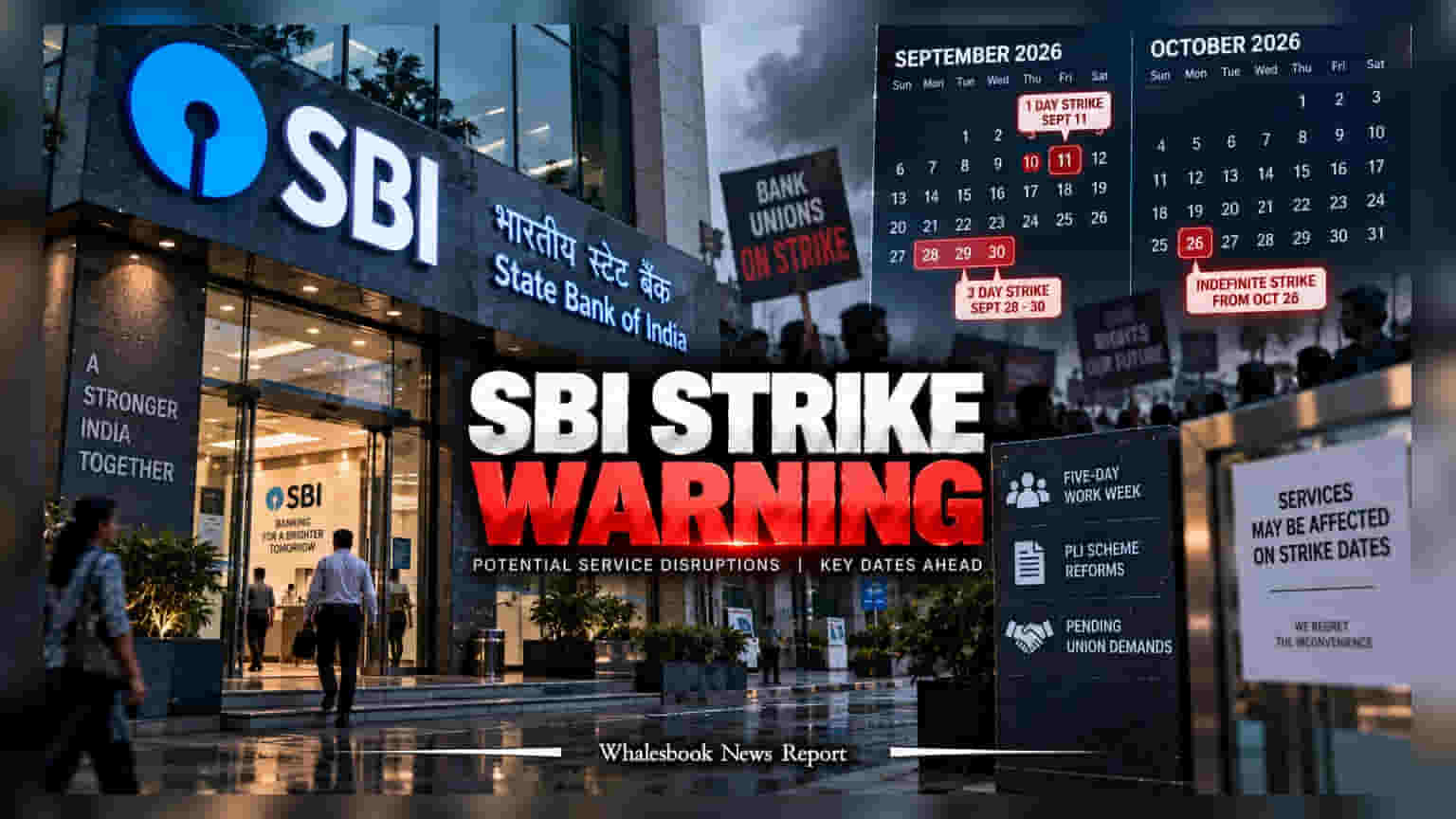
State Bank of India has informed stock exchanges of planned nationwide strikes by bank unions starting September 11, 2026. The protests, which could extend into October, may impact clearing services and branch operations, prompting the lender to activate contingency plans.
State Bank of India (SBI) has officially disclosed to the stock exchanges that various bank unions have scheduled a series of strikes across September and October 2026. The bank filed this notice under Regulation 30 of the SEBI listing regulations, signaling that these labor actions could affect its day-to-day operations.
The strike schedule includes a one-day work stoppage on September 11, followed by a three-day walkout from September 28 to 30. The United Forum of Bank Unions (UFBU), which represents seven major employee organizations including the All India Bank Employees' Association and the All India Bank Officers' Confederation, has also warned of an indefinite, continuous strike set to begin on October 26, 2026.
Core Union Demands and Context
The primary driver for this agitation is a set of pending demands that unions claim remain unaddressed. A key point of contention is the implementation of a five-day work week, a topic that has been under discussion since the banking industry’s wage settlement in March 2024. Additionally, the unions are seeking modifications to the Performance Linked Incentive (PLI) scheme. As the country's largest public sector lender, SBI serves as a vital link for government disbursements and millions of retail customers, making the scale of these strikes particularly significant for the banking ecosystem.
Operational Impact for Customers
SBI management has acknowledged that the strikes will likely cause operational friction. While the bank has stated it is implementing contingency measures to ensure continuity, customers should be prepared for potential delays in clearing services, cash transactions, and administrative processing on the affected dates. Because SBI handles a significant volume of India’s retail and corporate transactions, any reduction in manpower at branches could create temporary bottlenecks in service delivery.
Investors monitoring the situation may note that the bank's exchange filing is a proactive measure to ensure transparency regarding potential service disruptions. The key monitorable for the coming weeks will be any progress in negotiations between the unions, the Indian Banks' Association, and relevant government authorities, which could potentially avert the strikes or mitigate their duration. The bank has not indicated any material change to its financial guidance, but the potential for operational delays remains an important factor for both customers and market participants to track as these dates approach.