

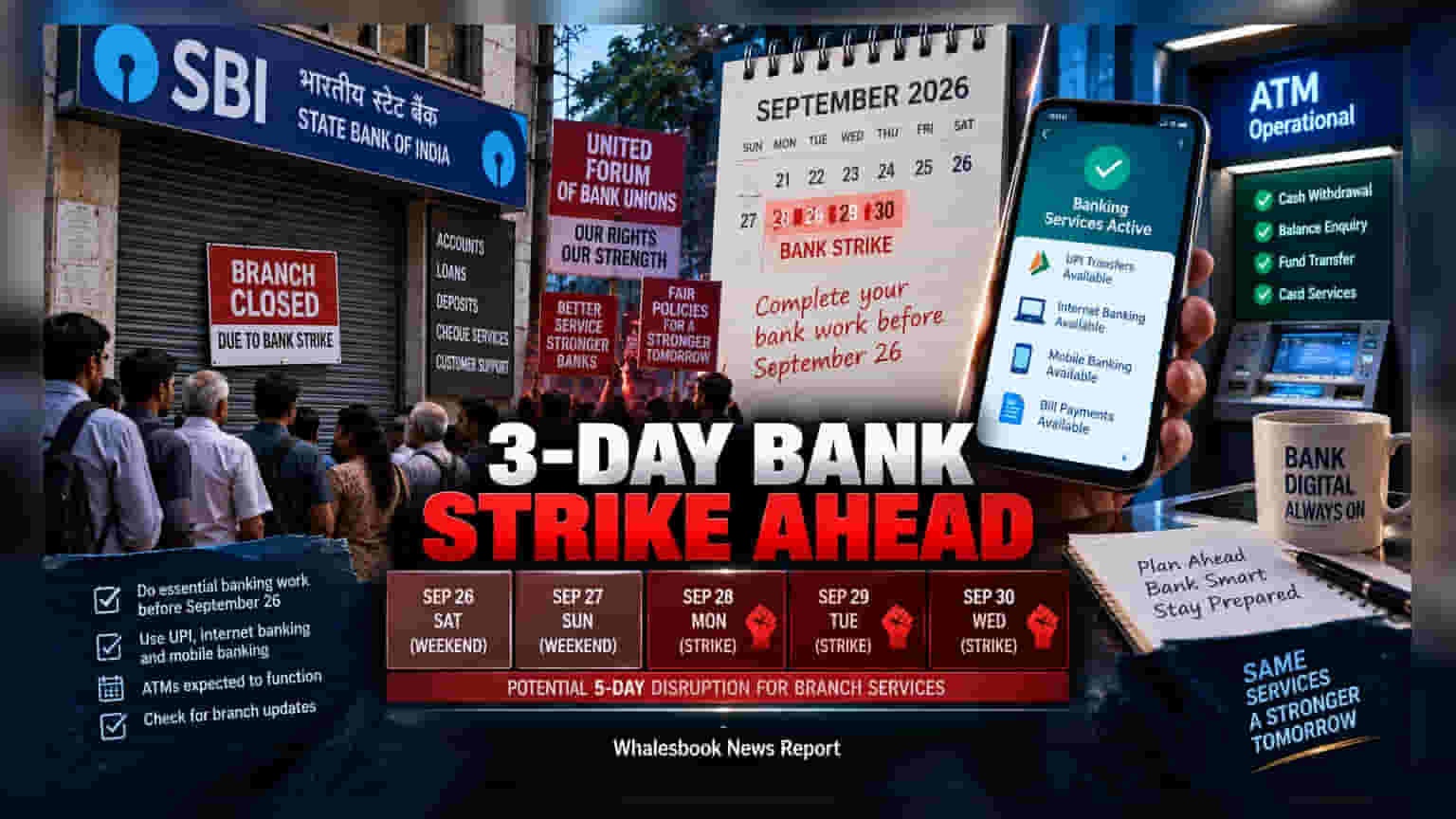
State Bank of India has alerted customers to prepare for potential service disruptions at branches due to a nationwide bank strike scheduled from September 28 to 30, 2026. While branch operations face uncertainty, digital services, ATMs, and UPI are expected to remain operational. Customers should plan time-sensitive tasks, such as cheque clearing or documentation, before the weekend to avoid a five-day delay.
State Bank of India has issued a public notice regarding a proposed nationwide bank strike organized by the United Forum of Bank Unions. The industrial action is scheduled to take place between September 28 and September 30, 2026. Because these dates follow a weekend, customers are being advised to complete essential bank-related work, such as documentation and physical cheque submissions, before September 26 to avoid delays.
The timing of the strike creates a potential five-day window where physical branch access may be restricted. With September 26 and 27 falling on a Saturday and Sunday, followed by the three-day strike, traditional in-branch banking services could experience significant interruptions. The actual impact on any specific branch will depend on the level of employee participation in the strike action, which is part of an ongoing series of protests by bank employee organizations.
Digital Channels as a Backup
While branch services may be constrained, SBI has emphasized that its digital infrastructure will continue to support customers. Services such as internet banking, the YONO mobile platform, UPI payments, and mobile banking applications are expected to remain functional. Customers are encouraged to shift toward these digital channels for routine financial transfers and payments during the strike period. ATMs and Customer Service Points are also expected to provide cash access, though replenishment schedules at some locations could be affected by the staff absence.
Operational Context for Investors
For SBI, the challenge posed by these recurring strikes is primarily operational. While digital adoption has grown significantly, reducing the reliance on physical branches for routine transactions, specific banking services—such as loan processing, complex documentation, and certain types of trade finance—still require staff intervention. These disruptions can temporarily increase customer complaints and service wait times, which the bank manages by rerouting work where possible.
This strike follows a one-day action held on September 11 and is part of a broader schedule that includes potential future strikes, including one proposed for late October. From a business perspective, these events are typical of the public sector banking environment, where wage revisions and employee policy negotiations often lead to union-led industrial action. While these strikes do not impact the bank's core balance sheet or profitability in the long term, they can lead to short-term service inefficiencies. Investors should track how the bank manages service continuity during such periods, as the strength of digital platforms like YONO continues to be the primary buffer against physical branch shutdowns.