

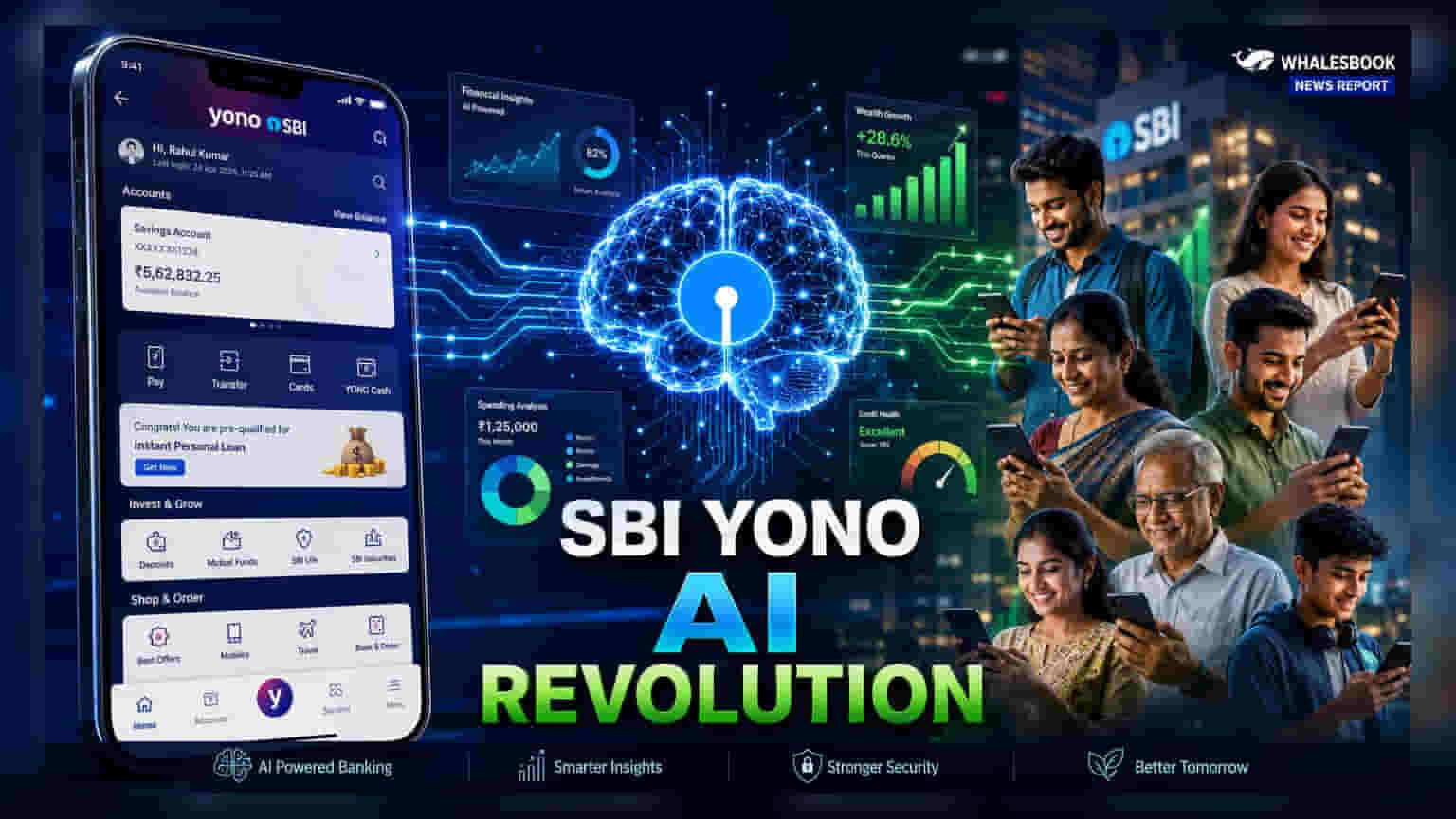
State Bank of India has updated its YONO platform with AI-driven tools, including unified account opening and new business banking features. For investors, this move is aimed at improving cross-selling efficiency and reducing customer acquisition costs by keeping users within the bank's digital ecosystem.
What Happened
State Bank of India (SBI) has launched a significant update to its YONO digital platform, introducing several artificial intelligence (AI) features for its 53 crore customer base. The upgrades focus on three main areas: simplifying how new customers join, offering existing customers better account management, and adding specialized tools for business clients.
Most notably, the bank has integrated a unified onboarding process. New customers can now open a savings account and a demat-trading account in one digital flow, thanks to a partnership with SBICAP Securities. For business clients, the bank introduced 'YONO Ji', an AI-powered assistant designed to handle trade finance queries and simplify the authorization of import and export transactions directly on the mobile app.
Why This Matters For Investors
For shareholders, the primary value of these digital upgrades lies in efficiency and cross-selling. Banks earn more money when they successfully sell multiple products to the same customer—such as selling a trading account to a savings account holder, or insurance and loans to salary account users. By making the onboarding process "unified" or combined, SBI is trying to reduce the time and cost required to acquire and activate a new customer.
Features like the 'Financial Fitness' score and 'Sustainability Journey' are designed to increase engagement. By providing actionable insights on a user's financial health, the bank hopes to increase the time customers spend on the app, which creates more opportunities to market other financial products like loans, credit cards, or mutual funds.
The Business Reality Check
While these features are aimed at growth, they also function as a response to the intense digital competition in the Indian banking sector. Both private and public sector banks are racing to provide the smoothest mobile experience to capture the growing population of digital-native retail investors. The success of this upgrade will depend on how many users actually utilize these new integrated features versus sticking to traditional banking habits.
Technology And Operational Risks
There are inherent risks in scaling digital services for such a large user base. Any technical instability, server downtime, or glitches in the new AI features can lead to immediate customer frustration and reputational damage. Furthermore, as the bank centralizes more data to create 'Financial Fitness' scores and integrated banking views, cybersecurity remains a high-priority monitorable. Any data security breach would be a significant negative event for the bank.
What Investors Should Track Next
Investors may look for updates in future analyst calls regarding the 'cost-to-income ratio.' If the digital platform is successful, it should theoretically help the bank lower its cost of customer acquisition over time. Additionally, management commentary on the growth of the cross-sell ratio—specifically how many new savings account holders are successfully converting into active trading or loan customers through the YONO app—will be a key metric to watch. Monitoring user feedback and app store ratings in the coming months will also provide a real-world pulse on how effectively these new features are being adopted.